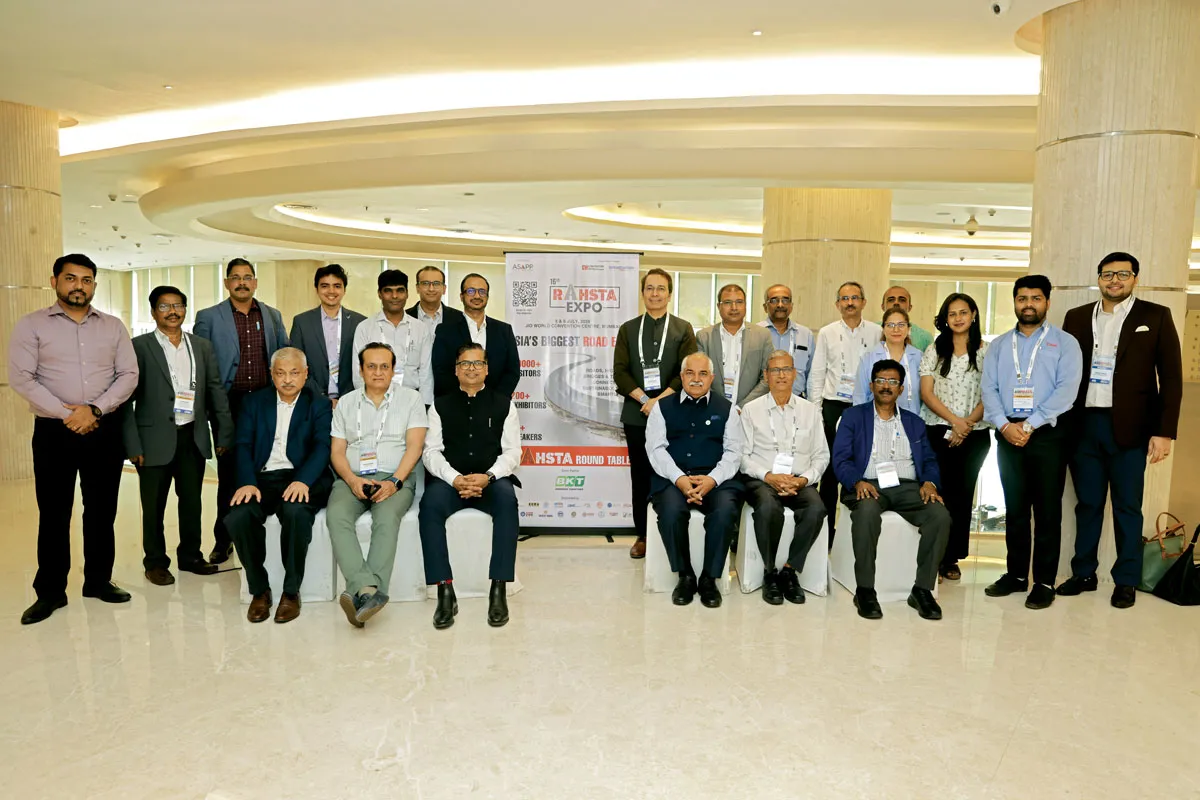
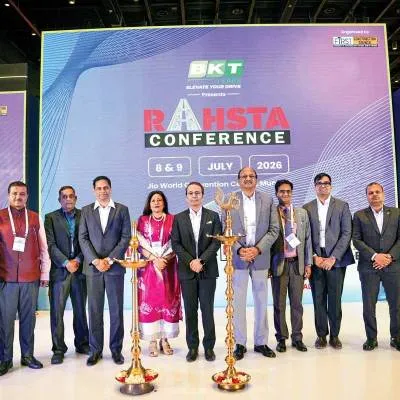
India’s highway story is entering a decisive new phase. For over a decade, the sector was defined by scale – record kilometres built, expanding expressways and aggressive project awards. Today, that narrative is evolving. The industry is moving beyond speed, towards durability, financial discipline and execution excellence.What is emerging is a more nuanced ecosystem, where contractors are becoming selective, states are taking centre stage, technology gaps are slowing ambition and sustainability is no longer optional.Contractor mindset shiftAt the core of this transition is a visible shift in contractor behaviour. Sudhir Hoshing, Director, Ceigall, captures this change succinctly: Contractors are no longer chasing every project – they are choosing them. “You are working for profit,” he emphasises, reflecting a more disciplined, risk-aware approach to bidding. This selectivity is rooted in ground realities. While central agencies offer structured processes and payment security, state-level projects present a far more varied landscape. Contractors are increasingly evaluating risks around funding, land acquisition and administrative delays before committing resources.Adding to this perspective, Suhas Eklahare, Associate Director, NCC, highlights the importance of institutional capability. Project outcomes are directly influenced by the intent and efficiency of the client organisation. “Standard documentation and clarity in contract conditions are critical,” he says, pointing out that inconsistencies across state agencies often lead to disputes and delays.From the execution front, Dr Lakshmana Rao Mantri, Deputy General Manager, Afcons Infrastructure, underscores that while contractors continue to deliver quality projects across geographies, each state presents a different set of challenges – policy constraints, local issues and execution bottlenecks. The complexity becomes even more pronounced in underground infrastructure.Strategic reality checkBuilding on these ground-level perspectives, Lt. Gen. Rajeev Chaudhury brings a broader, strategic lens to the discussion. He points out that the sector is transitioning into a more complex phase. The ‘easy’ highway projects – straightforward expansions and brownfield upgrades – are largely behind us. What lies ahead are high-value, technically demanding projects in challenging terrains, including border and coastal regions.This shift, he suggests, requires a fundamental change in approach. Collaboration across stakeholders – contractors, policymakers, financiers and technology providers – will be critical. Equally important is a willingness within the industry to confront systemic issues, rather than work around them.Chaudhary also emphasises upon the need for a more integrated ecosystem. From financiers to policymakers, every stakeholder must be part of the conversation if infrastructure development is to be both efficient and sustainable.The technology gapAs project complexity increases, the industry is running into a critical bottleneck: technology availability.Dr Lakshmana Rao highlights the acute shortage of tunnel boring machines (TBMs), which is delaying several large-scale infrastructure projects. With thousands of kilometres of tunnels planned across India, dependence on a limited number of global suppliers is becoming a serious constraint.Projects are ready. Execution teams are mobilised. Yet progress stalls owing to the unavailability of specialised equipment. This has triggered a growing consensus on the need for domestic manufacturing capabilities – not just for TBMs but across the construction equipment spectrum.Echoing this, B Seshnath, CEO and MD, Walvoil Fluid Power India, points to the evolution of construction equipment towards energy-efficient technologies such as load-sensing hydraulics. However, limited domestic production continues to restrict adoption, highlighting the need for localisation.Durability vs. costIf speed defined the last decade, durability is set to define the next. Himanshu Agarwal, COO - Road & Infrastructure, Zydex Group India, raises a critical concern: Are roads being designed for longevity or merely for cost-efficiency?Aggressive bidding and deep discounting, he suggests, often compromise long-term performance. The result is a cycle of frequent repairs and escalating lifecycle costs.The industry is now calling for a shift in mindset:• Designing roads for longer lifecycles• Prioritising resilience over lowest cost• Moving towards performance-based specifications.Unless durability becomes central to decision-making, the sector risks undermining its own progress.Unlocking India’s hidden advantageOne of the most promising transformations is unfolding in the materials space. India produces vast quantities of industrial byproducts – fly ash, slag, plastic waste – that can significantly enhance road durability. Yet, their adoption remains inconsistent.Dr LR Manjunatha, Vice President, JSW Cement, emphasises that these materials are readily available and technically viable. The challenge lies in integrating them into official specifications, enabling contractors to use them at scale.Complementing this, Dr V Ramachandra, President, Indian Concrete Institute, advocates a shift towards performance-based standards. Instead of prescribing materials, specifications should focus on the performance of the final asset.This approach would allow greater flexibility, encourage innovation and improve long-term outcomes.Policy, finance and the system imperativeWhile execution challenges dominate the ground, structural issues continue to shape the sector. Phani Prasad Mandalaparthy, Associate Director - Transport, Mobility & Logistics Practice Leader, CRISIL Intelligence, explains that the slowdown in project awards reflects a strategic shift towards high-value corridors that offer greater economic returns.However, private participation remains limited. BOT and TOT models have yet to regain traction, largely because of risk concerns. From an investor’s perspective, predictability is key. Dr Zafar Khan, Joint CEO, Vertis Infrastructure Trust, highlights the absence of robust escalation and dispute resolution mechanisms at the state level, making projects riskier compared to those under central agencies.States take the leadStates are increasingly driving infrastructure growth, but their performance varies widely. Some states are demonstrating strong execution capabilities and proactive governance, while others continue to struggle with delays and inefficiencies.This divergence is influencing contractor and investor preferences, making state-level dynamics a key factor in project selection.Technology and dataTechnology is beginning to reshape how infrastructure is built and managed. Rushabh Mamania, Partner & CBO, RoadVision, highlights the growing adoption of AI-driven monitoring systems, enabling real-time insights and predictive maintenance.Digital tools are also improving visibility across project pipelines, helping stakeholders make more informed decisions.The human factor: Capacity and capabilityDespite technological advancements, human capability remains a critical gap. Dharamveer Singh, Professor, Department of Civil Engineering, Indian Institute of Technology - Bombay, points out that while India has access to advanced technologies, their effective implementation is often lacking at the ground level. Bridging this gap requires investment in training, skill development and knowledge dissemination across the workforce.From expansion to evolutionIndia’s road infrastructure journey is evolving. The focus is shifting:• From scale to sustainability• From speed to durability• From cost to lifecycle value• From fragmentation to collaboration.The next phase will not be defined by how many kilometres are built, but by how well they perform over time. If the industry can align its stakeholders around quality, innovation and accountability, India can move from building more roads to building better ones. And that will define the true success of its infrastructure story.(The above insights were shared during the 16th RAHSTA Expo roundtable organised by the First Construction Council, held on March 12, 2026, at Courtyard by Marriott, Mumbai.)