The Critical Path
RAILWAYS & METRO RAIL

The Critical Path

In Ircon International Ltd v. Afcons Infrastructure Ltd, OMP (Comm) 279/2019, the Delhi High Court examined how delay and extension of time (‘EOT’) are to be assessed in construction contracts, particularly in the context of the ‘critical path’ while dealing with challenge to an arbitra...

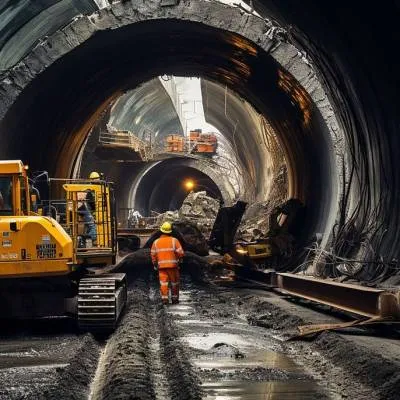
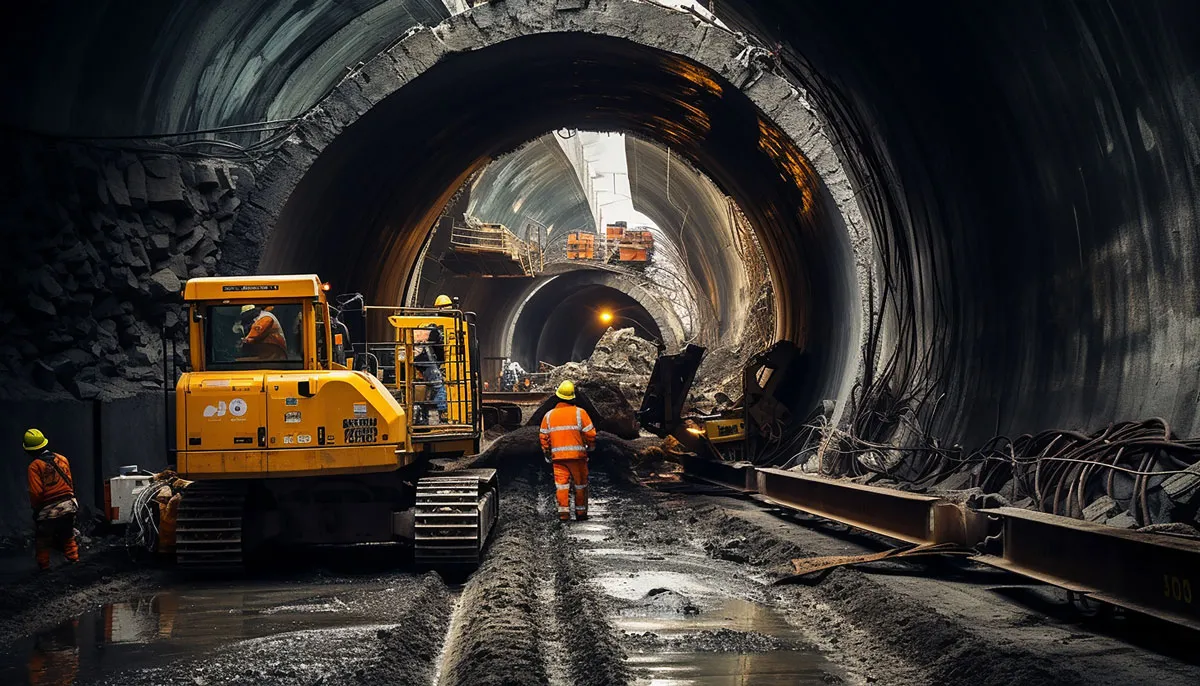
In Ircon International Ltd v. Afcons Infrastructure Ltd, OMP (Comm) 279/2019, the Delhi High Court examined how delay and extension of time (‘EOT’) are to be assessed in construction contracts, particularly in the context of the ‘critical path’ while dealing with challenge to an arbitral award under Section 34 of the Arbitration and Conciliation Act 1996 (‘the Act’). The High Court’s observations regarding the critical path are of significant import for construction and infrastructure projects and related arbitration. The parties entered into a contract for construction of Tunnel T-74R on the Udhampur-Srinagar-Baramulla railway line. The project was to be completed within 33 months from the date of commencement, with 17 ‘key dates’ (KDs) prescribed under Appendix XV of the contract. During the execution of works, several delays were encountered by Afcons and it sought extension of time of 171 days for KD 3 (completion of adit excavation), citing adverse geology, inclement weather and law-and-order issues. Subsequently, Afcons sought further extensions aggregating to 504 days up to September 15, 2016, on similar grounds. However, Ircon granted an extension of only 21 days for KD 3 to Afcons. At the same time, Ircon imposed liquidated damages for delay beyond the extended period, including a sum of Rs 2,67,05,797/- for delay in achieving the relevant KDs, on Afcons. Disputes arose between the parties and Afcons invoked arbitration on November 19, 2016. In its statement of claim, Afcons sought, inter alia, overall extension of time up to September 15, 2016, without levy of liquidated damages and refund of Rs 9,69,18,488/- deducted by Ircon towards liquidated damages. In its defence, Ircon alleged that the delays were attributable to Afcons and justified the levy of damages. After analysing the evidence, the arbitral tribunal granted an extension of 484 days up to September 15, 2016, to Afcons, holding that the delays were not attributable to it. The tribunal identified three principal causes of delay: 847 days on account of adverse geological conditions; 73 days due to inclement weather; and 93 days due to law-and-order issues. Based on this analysis, the tribunal concluded that Afcons was entitled to a net extension of 484 days beyond the originally stipulated duration. A key aspect of the award was the tribunal’s determination of the critical path. It held that completion of the main tunnel Banihal (KD 14) was on the critical path for overall project completion in terms of the key dates stipulated under the contract. It observed that other tunnel works were being executed concurrently and would be completed prior to completion of the Banihal tunnel. Accordingly, delay in the Banihal tunnel would necessarily delay the entire project. On this basis, the tribunal granted the extension of 484 days to the project as a whole and rejected the need for separate extensions for each tunnel. Ircon challenged the award under Section 34 of the Act, contending that the contract did not recognise the concept of critical path; each tunnel had independent key dates requiring separate analysis; and that the tribunal had granted a uniform extension without contractual basis, thereby rewriting the contract. The High Court rejected these contentions and held that the tribunal’s determination of the critical path was based on the sequencing of activities reflected in the key dates and was a plausible interpretation of the contract. The Court held that completion of the main tunnel governed overall completion and, therefore, the tribunal was justified in treating it as the critical activity as it comprised technically qualified members who were capable of determining ‘critical path’ with respect to a construction project. Thus, the challenge to the award was rejected and the petition dismissed. Importance of critical pathThe judgement underscores the significance of the critical path in construction disputes. The critical path represents the sequence of activities that determines the overall duration of the project. Any delay in such activities directly impacts project completion.In the case discussed above, the tribunal’s identification of the main tunnel Banihal as part of the critical path allowed it to assess delay holistically rather than in isolation for each activity. This avoided duplication and ensured that extension of time reflected actual delays. The Court’s acceptance of this approach indicates that even where the contract does not expressly refer to the critical path, it may still be relied upon as a legitimate analytical tool, provided it is grounded in the contractual framework and evidence.About the author: Ronak Desai is a construction lawyer and heads International Construction Law Offices, Mumbai (ICLO). Email: rd@constructionlawoffices.com

Next Story
Infrastructure Urban

HVAC: Cool Advice

India’s Cooling Action Plan forecasts cooling demand to grow nearly eight times in the next 20 years. In light of the fact that cooling is no longer just a comfort product but lies at the intersection of national development, public health, climate action and energy security, this means the HVAC industry shoulders a very serious responsibility. Mihir Sanghavi, Managing Partner, Auro Engineering Company, Immediate Past President RATA, Secretary, ISHRAE, and Regional Representative, ASHRAE Region XV, describes that responsibility as “identifying a system that can serve for 15 to 20 years o..

Next Story
Infrastructure Urban

Wanted: 2 Million Workers

Construction, India’s second largest employer by industry, employs about 50 million workers but could additionally absorb another 40 million workers, according to estimates shared by the Construction Skill Development Council of India (CSDCI) in 2023. Within this, citing trade estimates, Rahul Bahl, Managing Director, Krishna Buildestates, says the shortage of trained, skilled workers is currently about 2 million, and is expected to rise to 5 million by 2030.Not only is the construction industry struggling to find workers but construction labour productivity in India significantly trails glo..

Next Story
Infrastructure Transport

The Critical Path

In Ircon International Ltd v. Afcons Infrastructure Ltd, OMP (Comm) 279/2019, the Delhi High Court examined how delay and extension of time (‘EOT’) are to be assessed in construction contracts, particularly in the context of the ‘critical path’ while dealing with challenge to an arbitral award under Section 34 of the Arbitration and Conciliation Act 1996 (‘the Act’). The High Court’s observations regarding the critical path are of significant import for construction and infrastructure projects and related arbitration. The parties entered into a contract for construction of T..

Advertisement

Subscribe to Our Newsletter

Get daily newsletters around different themes from Construction world.

STAY CONNECTED

Advertisement

Advertisement

Advertisement