

Palfinger launches fresh mechanics truck and crane
Equipment

Palfinger launches fresh mechanics truck and crane

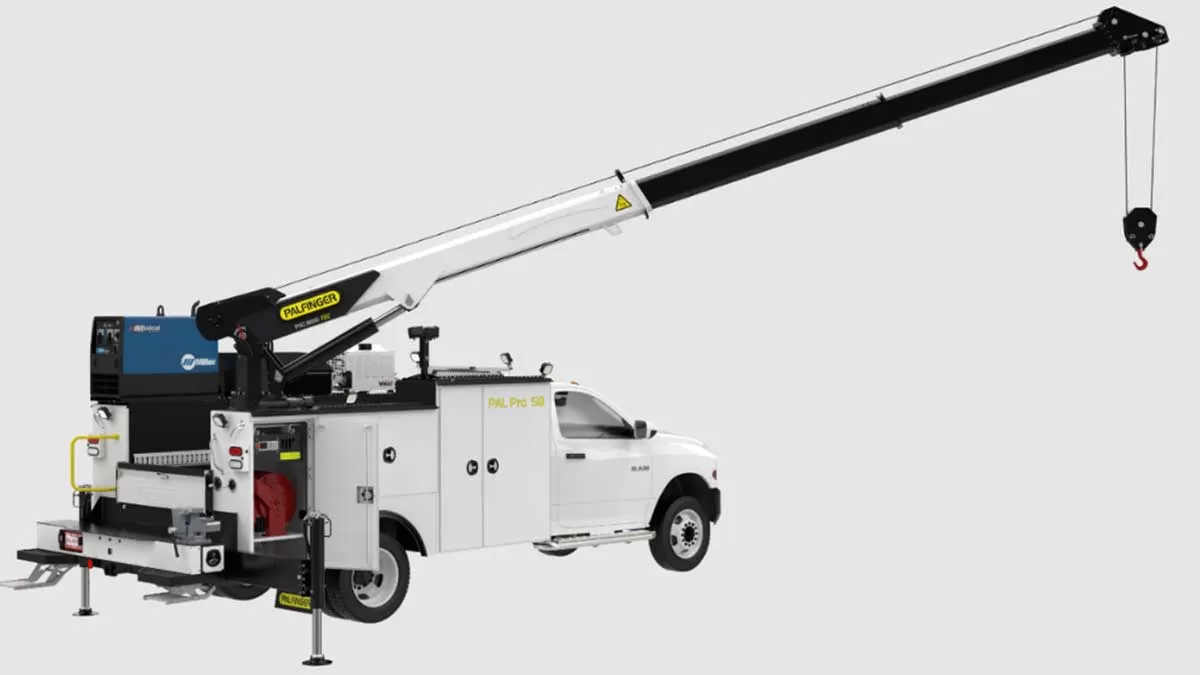
Palfinger recently unveiled two new products, namely the PAL Pro 58 mechanic?s truck and PSC 8600 TEC service crane.

According to Palfinger, the PAL Pro 58 and PSC 8600 TEC service crane are optimized for Class 5 chassis applications, engineered to offer extended reach, lighter weight, and improved performance.

The PAL Pro 58, constructed with 12-gauge all A-60 galvanneal steel and a hybrid torsion box, effectively eliminates frame and side pack deflection, the company claims. They further mentioned that it undergoes a comprehensive 12-step e-coat process for corrosion protection.

Palfinger stated that the Pal Pro 58 is designed to meet various service truck needs, available in 11-foot body configurations. It includes bolt-on mounting locations for accessories like compressors and welders, headache racks, and toolboxes. Additionally, an improved lighting package is provided for remote work and nighttime operations. The PAL Pro 58, along with the PSC 8600 TEC service crane, integrates advanced safety features with an 8,600-pound lift capacity and a 58,000 foot-pounds moment rating.

Regarding the service crane, the winch has been relocated to a boom-mounted position for streamlined operation and to address cable concerns. The integrated overload protection system ensures operational reliability. Load Moment Indication (LMI) is standard with this crane, providing operators with real-time load-on-hook information.

The new crane is available in reaches of 22 and 31 feet, with two interchangeable proportional remote-control styles to fit the operator?s preference.

Both products were reportedly developed through direct engagement with end-users.

Brian Heffron, Palfinger North America vice president for sales and service, service cranes and crane bodies, acknowledged, ?We recognise the unique challenges faced by field mechanics and operators. Their inputs are invaluable in ensuring that these products can surpass their needs for productivity and efficiency, especially under tough conditions. They?re designed to excel in job sites where only the most reliable equipment can succeed."

Palfinger recently unveiled two new products, namely the PAL Pro 58 mechanic?s truck and PSC 8600 TEC service crane. According to Palfinger, the PAL Pro 58 and PSC 8600 TEC service crane are optimized for Class 5 chassis applications, engineered to offer extended reach, lighter weight, and improved performance. The PAL Pro 58, constructed with 12-gauge all A-60 galvanneal steel and a hybrid torsion box, effectively eliminates frame and side pack deflection, the company claims. They further mentioned that it undergoes a comprehensive 12-step e-coat process for corrosion protection. Palfinger stated that the Pal Pro 58 is designed to meet various service truck needs, available in 11-foot body configurations. It includes bolt-on mounting locations for accessories like compressors and welders, headache racks, and toolboxes. Additionally, an improved lighting package is provided for remote work and nighttime operations. The PAL Pro 58, along with the PSC 8600 TEC service crane, integrates advanced safety features with an 8,600-pound lift capacity and a 58,000 foot-pounds moment rating. Regarding the service crane, the winch has been relocated to a boom-mounted position for streamlined operation and to address cable concerns. The integrated overload protection system ensures operational reliability. Load Moment Indication (LMI) is standard with this crane, providing operators with real-time load-on-hook information. The new crane is available in reaches of 22 and 31 feet, with two interchangeable proportional remote-control styles to fit the operator?s preference. Both products were reportedly developed through direct engagement with end-users. Brian Heffron, Palfinger North America vice president for sales and service, service cranes and crane bodies, acknowledged, ?We recognise the unique challenges faced by field mechanics and operators. Their inputs are invaluable in ensuring that these products can surpass their needs for productivity and efficiency, especially under tough conditions. They?re designed to excel in job sites where only the most reliable equipment can succeed.

Next Story
Infrastructure Urban

India Expands Semiconductor Training To 500 Institutions

Under the Chips to Startups programme of the India Semiconductor Mission, the Union minister responsible for Railways, Information and Broadcasting, and Electronics and IT reported notable progress in talent development. He indicated that over the past four years substantial steps have been taken towards a 10-year target of training 85,000 engineers in semiconductor design. World-class EDA tools have been deployed in 315 academic institutions across the country to provide students with practical exposure to chip design. These EDA tools are supported by leading global firms and are accessible t..

Next Story
Infrastructure Urban

Delhi Institutions Support India Semiconductor Mission

The Government of India has prioritised talent development through training, upskilling and workforce development under the Chips to Startups initiative of the India Semiconductor Mission, with officials noting progress in four years towards a 10-year target of training 85,000 engineers in semiconductor design. Electronic design automation tools provided by Synopsys, Cadence, Siemens, Renesas, Ansys and AMD have been deployed in 315 academic institutions, enabling students to gain practical chip design experience. Chips have been fabricated and tested at the Semiconductor Laboratory, Mohali, a..

Next Story
Infrastructure Urban

NHA Announces Winners Of NHCX Hackathon At IIT Hyderabad

The National Health Authority (NHA) has concluded the NHCX Hackathon under the Ayushman Bharat Digital Mission (ABDM) to stimulate innovation around the National Health Claims Exchange (NHCX). The winning teams presented their solutions at the NHCX Innovation Meet held at IIT Hyderabad during a two-day event in March 2026 that also served as the hackathon grand finale. The hackathon itself ran from 22 to 28 February 2026 and aimed to accelerate paperless, transparent claims processing across India. The event was organised with a range of ecosystem partners, including the Insurance Regulatory a..

Advertisement

Subscribe to Our Newsletter

Get daily newsletters around different themes from Construction world.

STAY CONNECTED

Advertisement

Advertisement

Advertisement