Development work under land pooling scheme to begin soon in Delhi
Real Estate

Development work under land pooling scheme to begin soon in Delhi

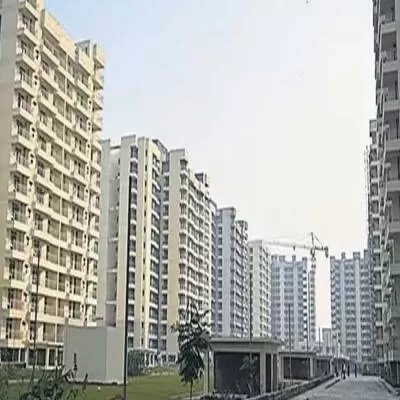
With plans to issue a conditional notice to landowners to form consortiums, development work in the three model sectors under the Delhi Development Authority's (DDA) land-pooling policy could begin soon.

According to the media, the DDA is awaiting approval from the Ministry of Housing and Urban Affairs (MoHUA) before forming consortiums to develop the pooled land.

The central government proposed amendments to the Delhi Development Act, 1957, earlier this month, making it mandatory for landowners to pool their properties once the owners of at least 70% of the developable area in a designated land-pooling sector had registered their holdings.

According to the media, at least 70% of the land in 16 sectors had been pooled in this manner. Sector 10 in Zone N on the outskirts of Rohini sub-city, as well as sectors 2 and 3 in Zone PIl near Alipur in north Delhi, will be the first to be developed under the policy. Nangal Thakran, Bawana, Mukhmelpur, Hiran Kudna, Pooth Kurd, and Daryapur Kalan are among the 16 sectors in the north and northwest Delhi. Around 6,922 applicants have registered 7,275.4 hectares of land under the policy so far.

Mandatory pooling is expected to ensure that land development is timed and planned. When the DDA sends out notices, landowners and developers can join together to form a registered consortium for unified planning, servicing, and development. Under the land pooling policy, creating model sectors will give the development a boost. Some landowners are on the fence right now, but they will be able to participate in land pooling soon, according to the official.

Image Source

Also read: Panchkula civic body to set up 24 sectors under land pooling schemes

With plans to issue a conditional notice to landowners to form consortiums, development work in the three model sectors under the Delhi Development Authority's (DDA) land-pooling policy could begin soon. According to the media, the DDA is awaiting approval from the Ministry of Housing and Urban Affairs (MoHUA) before forming consortiums to develop the pooled land. The central government proposed amendments to the Delhi Development Act, 1957, earlier this month, making it mandatory for landowners to pool their properties once the owners of at least 70% of the developable area in a designated land-pooling sector had registered their holdings. According to the media, at least 70% of the land in 16 sectors had been pooled in this manner. Sector 10 in Zone N on the outskirts of Rohini sub-city, as well as sectors 2 and 3 in Zone PIl near Alipur in north Delhi, will be the first to be developed under the policy. Nangal Thakran, Bawana, Mukhmelpur, Hiran Kudna, Pooth Kurd, and Daryapur Kalan are among the 16 sectors in the north and northwest Delhi. Around 6,922 applicants have registered 7,275.4 hectares of land under the policy so far. Mandatory pooling is expected to ensure that land development is timed and planned. When the DDA sends out notices, landowners and developers can join together to form a registered consortium for unified planning, servicing, and development. Under the land pooling policy, creating model sectors will give the development a boost. Some landowners are on the fence right now, but they will be able to participate in land pooling soon, according to the official. Image Source Also read: Panchkula civic body to set up 24 sectors under land pooling schemes

Next Story
Infrastructure Urban

Implementation Status of Jal Jeevan Mission

Since August 2019 the Government has implemented Jal Jeevan Mission to provide assured potable water through household tap connections in rural India. At the start of the mission only 32.3 million (mn) rural households, representing 16.7 per cent, were reported to have tap water connections. States and union territories have reported that 125.8 mn additional rural households have since been provided with tap connections. As a result, of about 193.6 mn rural households roughly 158.2 mn, or 81.71 per cent, are reported to have tap water supply at home.\n\nThe State, district and village level st..

Next Story
Infrastructure Urban

Jal Jeevan Mission Reaches Eighty One Per Cent Rural Coverage

The Government reported substantial progress under the Jal Jeevan Mission, launched in August 2019 to provide tap water to every rural household. At launch only 32.3 million (mn) rural households had tap connections and states and Union territories reported provision of 125.8 mn additional households by March 2026. Consequently, out of about 193.6 mn rural households around 158.2 mn, or 81.71 per cent, are reported to have tap water at home. The Finance Minister announced extension of the mission until 2028 in the 2025-26 budget speech. The Swachh Bharat Mission Grameen, launched in October 20..

Next Story
Infrastructure Urban

Empowering Local Governance for Sustainable Rural Water Supply

The Ministry of Jal Shakti has aligned the Jal Jeevan Mission (JJM) with the 73rd Amendment to strengthen village level planning and community ownership of water supply. Gram Panchayats, village water and sanitation committees and Pani Samitis are to plan, implement, manage and maintain piped water systems, with gram sabha processes formalising handover and oversight. Implementation support agencies including non government organisations, community based organisations and self help groups have been empanelled to train local committees and promote women participation. Under JJM, the department ..

Advertisement

Subscribe to Our Newsletter

Get daily newsletters around different themes from Construction world.

STAY CONNECTED

Advertisement

Advertisement

Advertisement