+
 Govt generates Rs 9,854 cr revenue from property registrations
Real Estate

Govt generates Rs 9,854 cr revenue from property registrations

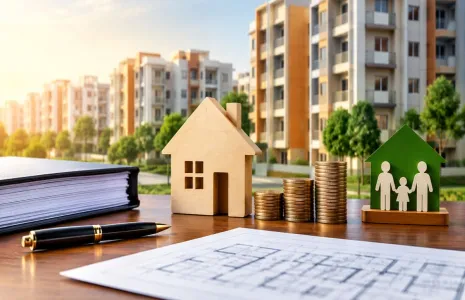
In nine months, the Tamil Nadu government collected Rs 9,854 crore from property registrations, which is the highest in the last five years from 2017.

The revenue was 43% more between April-December, compared to the revenue collected in 2020 and 19% more than the revenue collected in 2019. According to the sources, the revenue generated from property registrations might touch Rs 15,000 crore by March 2022.

December 2021 witnessed the highest revenue collection from land registration in the last four years at Rs 1,405 crore.

Chennai and suburbs are witnessing more registrations from new launches. Over 40% of the revenue from property registrations was from Chennai and adjoining districts.

According to Knight Frank India, Chennai real estate market sold 7,900 housing units between April-December and overall, 12,783 housing units were launched in 2021.

Vice-president of flat promoters association of South Chennai, R S Balaji, said that the supply of housing units was more than demand and many housing projects were completed after the pandemic restrictions were relaxed after the second wave of the Covid-19 pandemic. He said that home buyers have many housing choices in the southern and western suburbs.

President of the Confederation of Real Estate Developers' Associations of India (CREDAI) Tamil Nadu, Suresh Krishn, said that the housing sales would be impacted due to the lockdown restriction due to the third wave of the pandemic. However, the demand will revive after the situation is eased.

Senior Director of Knight Frank India, Tamil Nadu and Kerala, Srinivas Anikipatti, said that the housing bookings would be lower during the lockdown due to the closure of the registration offices.

Image Source

In nine months, the Tamil Nadu government collected Rs 9,854 crore from property registrations, which is the highest in the last five years from 2017. The revenue was 43% more between April-December, compared to the revenue collected in 2020 and 19% more than the revenue collected in 2019. According to the sources, the revenue generated from property registrations might touch Rs 15,000 crore by March 2022. December 2021 witnessed the highest revenue collection from land registration in the last four years at Rs 1,405 crore. Chennai and suburbs are witnessing more registrations from new launches. Over 40% of the revenue from property registrations was from Chennai and adjoining districts. According to Knight Frank India, Chennai real estate market sold 7,900 housing units between April-December and overall, 12,783 housing units were launched in 2021. Vice-president of flat promoters association of South Chennai, R S Balaji, said that the supply of housing units was more than demand and many housing projects were completed after the pandemic restrictions were relaxed after the second wave of the Covid-19 pandemic. He said that home buyers have many housing choices in the southern and western suburbs. President of the Confederation of Real Estate Developers' Associations of India (CREDAI) Tamil Nadu, Suresh Krishn, said that the housing sales would be impacted due to the lockdown restriction due to the third wave of the pandemic. However, the demand will revive after the situation is eased. Senior Director of Knight Frank India, Tamil Nadu and Kerala, Srinivas Anikipatti, said that the housing bookings would be lower during the lockdown due to the closure of the registration offices. Image Source

Next Story
Infrastructure Urban

Implementation Status of Jal Jeevan Mission

Since August 2019 the Government has implemented Jal Jeevan Mission to provide assured potable water through household tap connections in rural India. At the start of the mission only 32.3 million (mn) rural households, representing 16.7 per cent, were reported to have tap water connections. States and union territories have reported that 125.8 mn additional rural households have since been provided with tap connections. As a result, of about 193.6 mn rural households roughly 158.2 mn, or 81.71 per cent, are reported to have tap water supply at home.\n\nThe State, district and village level st..

Next Story
Infrastructure Urban

Jal Jeevan Mission Reaches Eighty One Per Cent Rural Coverage

The Government reported substantial progress under the Jal Jeevan Mission, launched in August 2019 to provide tap water to every rural household. At launch only 32.3 million (mn) rural households had tap connections and states and Union territories reported provision of 125.8 mn additional households by March 2026. Consequently, out of about 193.6 mn rural households around 158.2 mn, or 81.71 per cent, are reported to have tap water at home. The Finance Minister announced extension of the mission until 2028 in the 2025-26 budget speech. The Swachh Bharat Mission Grameen, launched in October 20..

Next Story
Infrastructure Urban

Empowering Local Governance for Sustainable Rural Water Supply

The Ministry of Jal Shakti has aligned the Jal Jeevan Mission (JJM) with the 73rd Amendment to strengthen village level planning and community ownership of water supply. Gram Panchayats, village water and sanitation committees and Pani Samitis are to plan, implement, manage and maintain piped water systems, with gram sabha processes formalising handover and oversight. Implementation support agencies including non government organisations, community based organisations and self help groups have been empanelled to train local committees and promote women participation. Under JJM, the department ..

Advertisement

Subscribe to Our Newsletter

Get daily newsletters around different themes from Construction world.

STAY CONNECTED

Advertisement

Advertisement

Advertisement