+
Average housing prices across the top eight cities were up 10% in Q1
Real Estate

Average housing prices across the top eight cities were up 10% in Q1

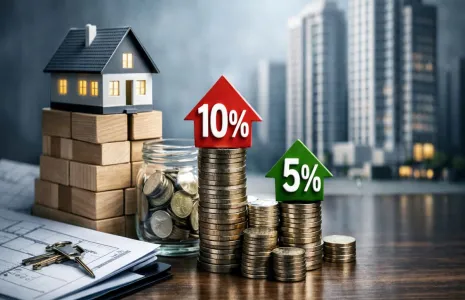
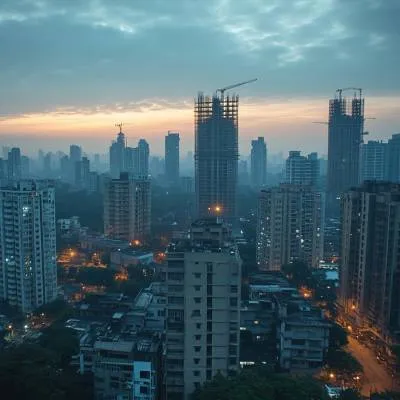
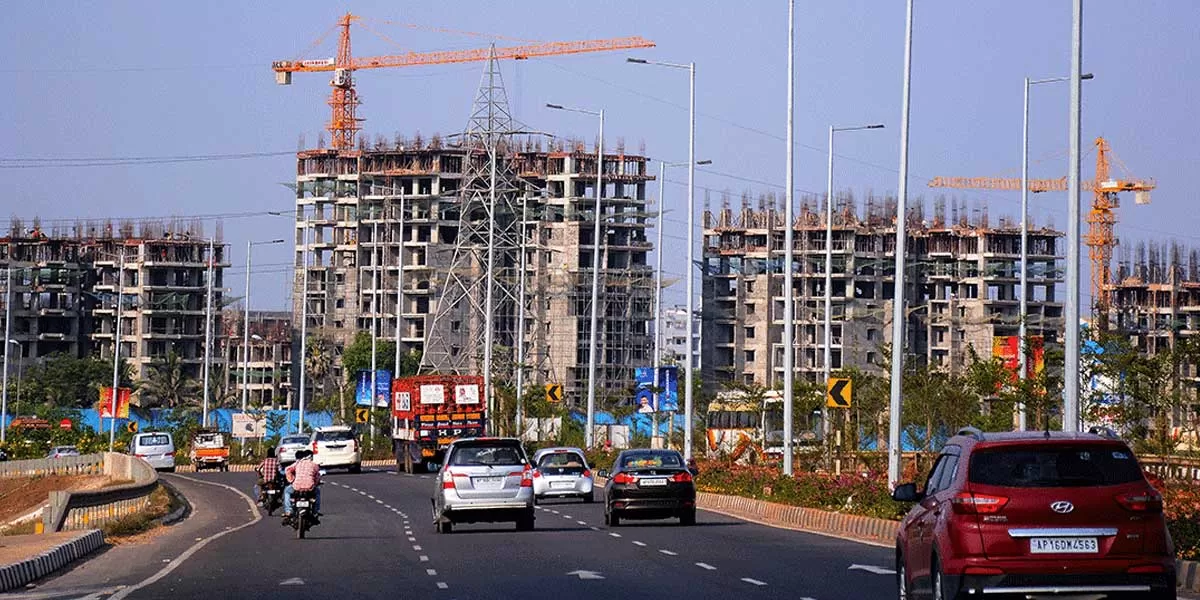
According to a survey by CREDAI National, Colliers, and Liases Foras, the average price of a home increased by 10% yearly during Q1 2024 in the top eight cities: Ahmedabad, Bengaluru, Chennai, Delhi-NCR, Kolkata, Hyderabad, Mumbai, and Pune. Additionally, on a quarterly basis, most of the cities' home prices increased by a notable 2?7%. In India, unsold inventories increased by just 3% over the previous year. Pune stood out for having the largest yearly decrease in unsold inventory, with a notable 10% year-over-year decline. Delhi-NCR and Ahmedabad, with 8% annual reductions apiece, trailed closely behind. Nearly 10 lakh units of unsold inventory were held in the top eight cities as of Q1 2024, with the Mumbai Metropolitan Region (MMR) accounting for nearly 40% of this total. Boman Irani, the president of CREDAI National, stated that the surge in housing prices is a direct consequence of the robust housing demand that they are witnessing, especially in premium and luxury housing, by homebuyers across the country. He mentioned that these are directly linked to not just a stable lending ecosystem but also the emergence of various micro-markets that have been the primary beneficiaries of significant infrastructural projects, which has altered the demand-supply dynamics in residential real estate. He expressed that they do not foresee this momentum slowing down in FY24?25 as well. Boman Irani further noted that Bengaluru witnessed the most significant annual price surge among India's top eight cities, with prices soaring by 19%. Additionally, in Delhi, NCR, housing prices saw a substantial annual increase of 16%. Pankaj Kapoor, the managing director of Liases Foras, stated that, with moderate inflation and interest rates, the real estate sector is expected to maintain demand due to affordability. He mentioned that the prices could increase by 10-15%, bridging the gap between affordability and inflation-adjusted prices.

According to a survey by CREDAI National, Colliers, and Liases Foras, the average price of a home increased by 10% yearly during Q1 2024 in the top eight cities: Ahmedabad, Bengaluru, Chennai, Delhi-NCR, Kolkata, Hyderabad, Mumbai, and Pune. Additionally, on a quarterly basis, most of the cities' home prices increased by a notable 2?7%. In India, unsold inventories increased by just 3% over the previous year. Pune stood out for having the largest yearly decrease in unsold inventory, with a notable 10% year-over-year decline. Delhi-NCR and Ahmedabad, with 8% annual reductions apiece, trailed closely behind. Nearly 10 lakh units of unsold inventory were held in the top eight cities as of Q1 2024, with the Mumbai Metropolitan Region (MMR) accounting for nearly 40% of this total. Boman Irani, the president of CREDAI National, stated that the surge in housing prices is a direct consequence of the robust housing demand that they are witnessing, especially in premium and luxury housing, by homebuyers across the country. He mentioned that these are directly linked to not just a stable lending ecosystem but also the emergence of various micro-markets that have been the primary beneficiaries of significant infrastructural projects, which has altered the demand-supply dynamics in residential real estate. He expressed that they do not foresee this momentum slowing down in FY24?25 as well. Boman Irani further noted that Bengaluru witnessed the most significant annual price surge among India's top eight cities, with prices soaring by 19%. Additionally, in Delhi, NCR, housing prices saw a substantial annual increase of 16%. Pankaj Kapoor, the managing director of Liases Foras, stated that, with moderate inflation and interest rates, the real estate sector is expected to maintain demand due to affordability. He mentioned that the prices could increase by 10-15%, bridging the gap between affordability and inflation-adjusted prices.

Related Stories

Gold Stories
Next Story
Infrastructure Transport

Mumbai-Ahmedabad Bullet Train’s Surat-Vapi Section Set for 2027

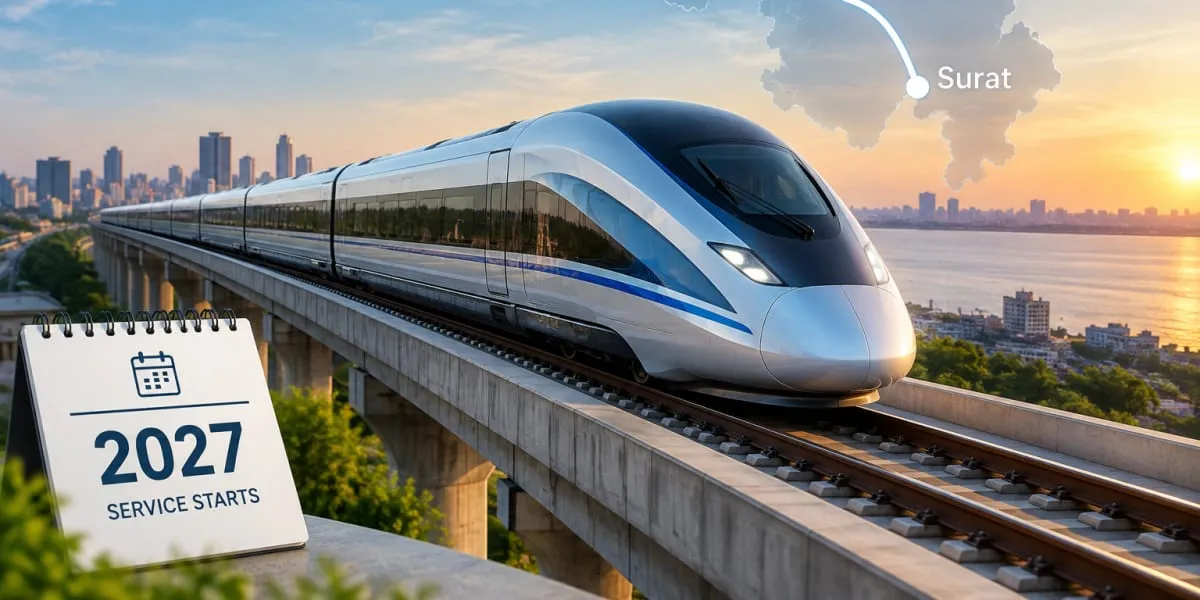
The first section of the Mumbai-Ahmedabad Bullet Train corridor, linking Surat and Vapi, is targeted to begin services in 2027. Construction is expected to be completed by December 2026, while Railway Minister Ashwini Vaishnaw has indicated that an inauguration could take place around the middle of 2027. The National High Speed Rail Corporation (NHSRCL) said the train being manufactured in India is expected to reach the tracks around April or May 2027. The train will undergo extensive testing before the section is opened for passenger services. The project began construction in 2021 and includ..
Next Story
Infrastructure Transport

Indian Railways Approves Four Projects Worth Rs. 7.36 bn Across Four States

Indian Railways has approved four projects with a combined value of Rs. 7.36 bn across Uttar Pradesh, Maharashtra, Andhra Pradesh and Gujarat. The programme covers train protection, signalling, electric traction supply and a road overbridge, with each project assigned to a different railway zone. In Uttar Pradesh, Rs. 2.52 bn has been approved to extend the Kavach 4.0 automatic train protection system across 607.7 km in the Lucknow Division of North Eastern Railway. The system monitors train movements and can apply the brakes if a driver fails to observe a signal or exceeds a safe speed. The w..
Next Story
Infrastructure Urban

Chandru Raheja Sells 1.49% Stake in Mindspace REIT for Rs. 5 bn

Billionaire Chandru Lachmandas Raheja has sold a 1.49 per cent holding in Mindspace Business Parks REIT for Rs. 5 bn through a bulk deal on the BSE. The transaction involved 9.9 mn units and was executed at an average price of Rs. 505 per unit, according to exchange data. Following the sale, units of Mindspace Business Parks REIT were trading 0.18 per cent lower at Rs. 504.05 on Tuesday. Exchange data did not identify the buyers involved in the transaction. Raheja is the chairman of real estate company K Raheja Corp. The sale involved 99,00,990 units, representing 1.49 per cent of the Mumbai-b..

Advertisement

Subscribe to Our Newsletter

Get daily newsletters around different themes from Construction world.

STAY CONNECTED

Advertisement

SPECIAL OFFER
QR Code