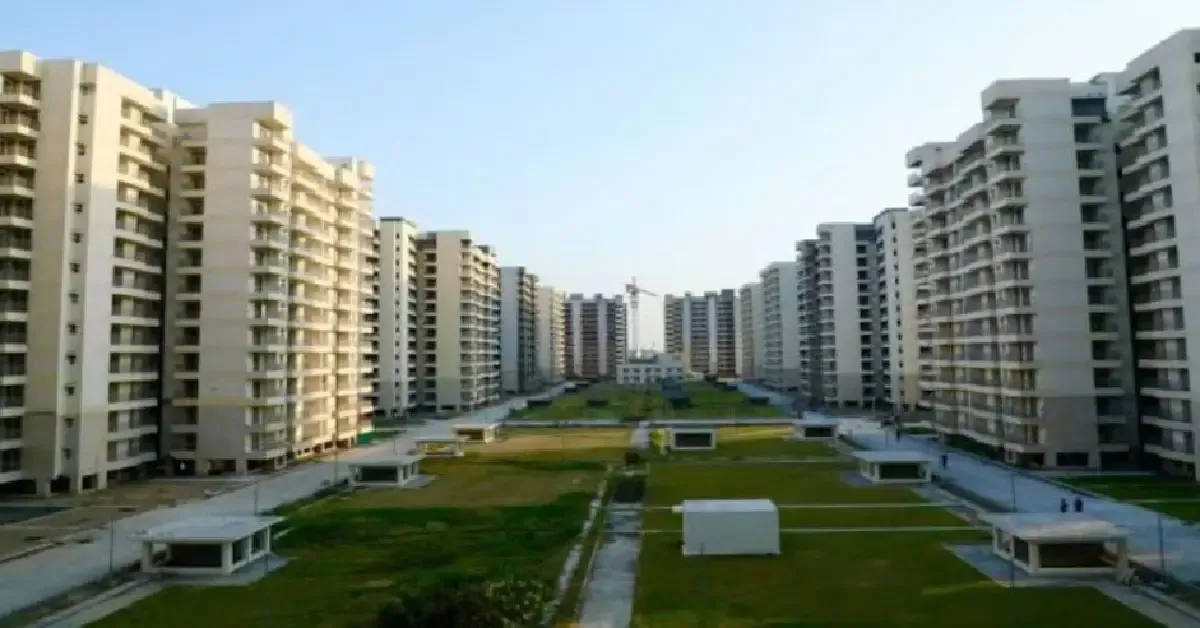
DDA Unveils Major Redevelopment Plan For Delhi Housing Projects
Real Estate

DDA Unveils Major Redevelopment Plan For Delhi Housing Projects

The Delhi Development Authority (DDA) has launched a comprehensive redevelopment plan for group housing complexes, cooperative housing societies and residential projects developed by government agencies. Officials said the initiative aims to upgrade ageing developments in line with safety norms set out in the Master Plan of Delhi 2021 and bring existing structures into alignment with the city’s Transit Oriented Development (TOD) policy.

Under the 2021 Master Plan, the TOD model promotes compact, mixed-use development around existing and upcoming public transport infrastructure, enabling sustainable mobility, higher public transport usage, reduced congestion and lower pollution.

A public notice has been issued inviting companies to prepare redevelopment plans. According to the notice, the objective is to upgrade identified areas based on their existing physical and socio-economic conditions.

The plan permits a maximum overall Floor Area Ratio (FAR) of 50 per cent above the existing permissible FAR on individual plots, capped at 400, as an incentive for redevelopment. Proposed amendments under the TOD framework would also allow construction of 7–8 storey buildings along metro corridors, compared with the current maximum FAR of around 350 in many parts of the city. However, the notice specifies that higher FAR will not be allowed in the Lutyens Bungalow Zone, Civil Lines Bungalows Area or Monument Regulated Zone.

As part of the wider TOD initiative, the DDA is launching its first residential project, DDA Towering Heights, in Karkardooma. The project will offer premium flats, with possession scheduled to begin in July 2026.

The redevelopment plan also introduces flexible planning standards, allowing relaxation of norms relating to housing density, minimum road width and community facilities wherever justified by planning considerations.

The Delhi Development Authority (DDA) has launched a comprehensive redevelopment plan for group housing complexes, cooperative housing societies and residential projects developed by government agencies. Officials said the initiative aims to upgrade ageing developments in line with safety norms set out in the Master Plan of Delhi 2021 and bring existing structures into alignment with the city’s Transit Oriented Development (TOD) policy. Under the 2021 Master Plan, the TOD model promotes compact, mixed-use development around existing and upcoming public transport infrastructure, enabling sustainable mobility, higher public transport usage, reduced congestion and lower pollution. A public notice has been issued inviting companies to prepare redevelopment plans. According to the notice, the objective is to upgrade identified areas based on their existing physical and socio-economic conditions. The plan permits a maximum overall Floor Area Ratio (FAR) of 50 per cent above the existing permissible FAR on individual plots, capped at 400, as an incentive for redevelopment. Proposed amendments under the TOD framework would also allow construction of 7–8 storey buildings along metro corridors, compared with the current maximum FAR of around 350 in many parts of the city. However, the notice specifies that higher FAR will not be allowed in the Lutyens Bungalow Zone, Civil Lines Bungalows Area or Monument Regulated Zone. As part of the wider TOD initiative, the DDA is launching its first residential project, DDA Towering Heights, in Karkardooma. The project will offer premium flats, with possession scheduled to begin in July 2026. The redevelopment plan also introduces flexible planning standards, allowing relaxation of norms relating to housing density, minimum road width and community facilities wherever justified by planning considerations.

Next Story
Real Estate

A Paradigm Shift

The Indian real-estate and construction sector, which employs a significant number of organised and unorganised workers in the country, has embarked on a paradigm shift in its regulatory framework from an employment law perspective. With the four Labour Codes – the Code on Wages, 2019 (Wage Code); the Industrial Relations Code, 2020 (IR Code); the Code on Social Security, 2020 (SS Code) and the Occupational Safety, Health and Working Conditions Code, 2020 (OSH Code) – coming into effect in India from November 21, 2025, the industry is shifting away from a fragmented, contractor- driven com..

Next Story
Technology

We offer end-to-end traceability at scale

mjunction has evolved from an e-auction pioneer into a multi-vertical digital commerce platform with deep expertise in complex steel and coal supply chains. Its end-to-end, AI-led architecture focuses on price discovery, traceability, compliance and scalability, enabling transparent procurement, efficient logistics and data-driven decision-making across geographies. Vinaya Varma, MD, shares more about the company in conversation with CW.From a technology standpoint, what are the core USPs of mjunction today that differentiate it in steel and coal supply chains?mjunction has evolved b..

Next Story
Infrastructure Urban

Henkel, Rotary Recycle PoP Ganesha Idols Under Project HARMONY

Henkel India, in partnership with the Rotary Club of Navi Mumbai – Joy of Giving and with support from the Navi Mumbai Municipal Corporation (NMMC), has advanced circular sustainability through Project HARMONY by recycling Plaster of Paris (PoP) Ganesha idols into community learning assets. The initiative highlights an integrated approach to environmental restoration and social impact.As part of the project, materials collected after Ganesh Visarjan 2025 at Nerul were responsibly diverted from land and water bodies and processed at an authorised recycling facility, with on-ground execution s..

Advertisement

Subscribe to Our Newsletter

Get daily newsletters around different themes from Construction world.

STAY CONNECTED

Advertisement

Advertisement

Advertisement

Advertisement

Open In App