


+
Delhi Plans Rs 20 Billion Twin-Tower Secretariat At ITO
Real Estate

Delhi Plans Rs 20 Billion Twin-Tower Secretariat At ITO

The Public Works Department (PWD) has proposed an ambitious plan to construct a twin-tower secretariat complex at ITO in central Delhi, bringing together all scattered government offices under a single roof. The project, estimated to cost over Rs 20 billion, aims to create a modern governance hub that will reshape the city’s skyline.
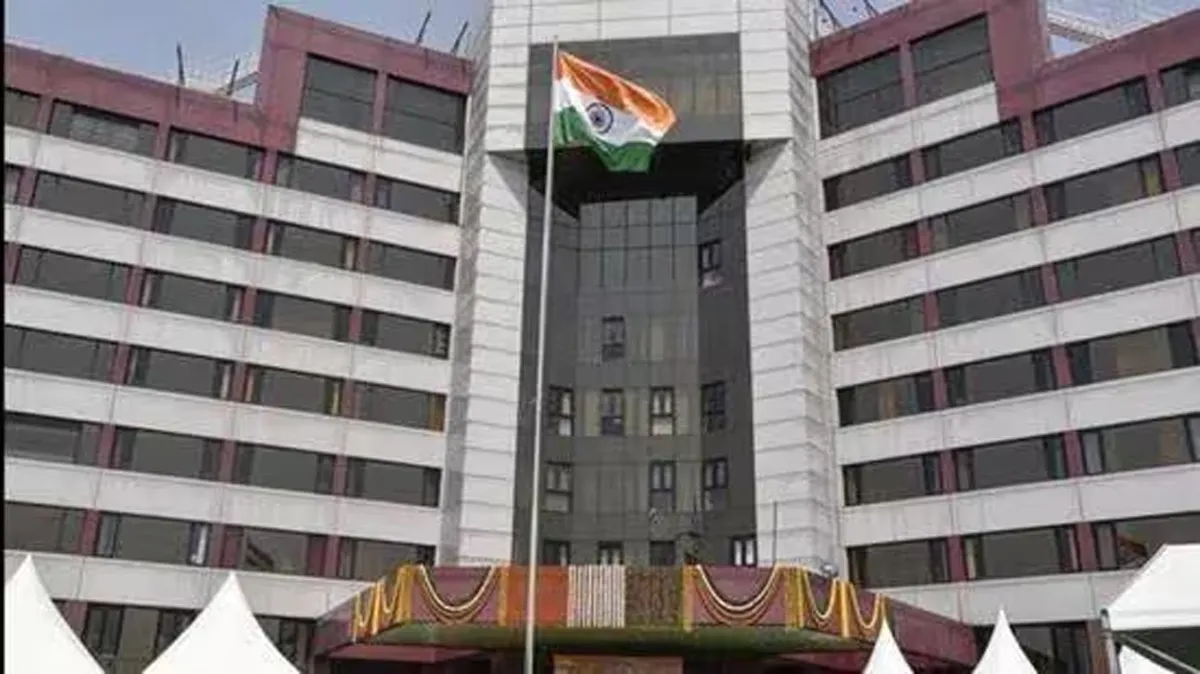
According to officials familiar with the plan, the proposal is awaiting approval from the PWD minister before being presented to the Delhi cabinet. If sanctioned, the new complex will replace Vikas Minar and an adjoining office block that currently houses the Delhi Development Authority (DDA) and the Delhi Urban Shelter Improvement Board (DUSIB).
Spread across 53,603 square metres, the two high-rise towers will be interconnected and designed with advanced fire safety systems, energy-efficient architecture, green building technology, and centralised digital infrastructure.
“This will be the new nerve centre of the Delhi government,” said an official aware of the proposal. “The complex will accommodate the Chief Minister, cabinet ministers, the Chief Secretary, senior bureaucrats, and all key departments under one roof. It will eliminate the inefficiencies of operating from scattered offices across the city.”
The twin towers will be linked via either a sky bridge or an underpass, allowing seamless movement between departments. Once approved, the project is expected to take around 48 months to complete.
The PWD has also sought Rs 520 million to hire a project consultant who will prepare the detailed project report (DPR), including final specifications such as height, design, and number of floors.
The concept of a centralised government secretariat is not new. Earlier proposals in 2022 to redevelop the existing ITO offices were delayed due to design revisions. Last month, Chief Minister Rekha Gupta confirmed that multiple sites were being evaluated for a new administrative complex, with the ITO location emerging as the frontrunner due to its strategic position in the city’s administrative core.
The urgency stems from the limitations of the existing Delhi Secretariat on Vikas Marg, which was originally built in 1982 to house athletes for the Asian Games. The complex, spanning 40,970 square metres, has long exceeded its capacity, forcing many departments to operate from rented or outdated premises such as the Civil Lines office complex.
Key departments—including those of the Revenue Commissioner, Labour Commissioner, GST Commissioner, Education Secretary, Transport Commissioner, Excise Commissioner, and Food and Civil Supplies—remain dispersed across various locations, hampering coordination and efficiency.
“The current building is grossly inadequate,” said another official. “It lacks modern facilities and forces officers to spend hours travelling for meetings. A unified, contemporary space has become essential for effective governance.”
Besides ITO, the PWD has identified a few alternative vacant plots as potential sites for the secretariat. However, the ITO proposal remains the preferred choice due to its central location and infrastructure connectivity.
If approved by the cabinet, tenders will be floated and preparatory work will begin, with completion expected within four years. The new twin-tower secretariat is envisioned as a landmark of administrative efficiency, symbolising Delhi’s transformation into a modern, well-governed capital city.

The Public Works Department (PWD) has proposed an ambitious plan to construct a twin-tower secretariat complex at ITO in central Delhi, bringing together all scattered government offices under a single roof. The project, estimated to cost over Rs 20 billion, aims to create a modern governance hub that will reshape the city’s skyline.According to officials familiar with the plan, the proposal is awaiting approval from the PWD minister before being presented to the Delhi cabinet. If sanctioned, the new complex will replace Vikas Minar and an adjoining office block that currently houses the Delhi Development Authority (DDA) and the Delhi Urban Shelter Improvement Board (DUSIB).Spread across 53,603 square metres, the two high-rise towers will be interconnected and designed with advanced fire safety systems, energy-efficient architecture, green building technology, and centralised digital infrastructure.“This will be the new nerve centre of the Delhi government,” said an official aware of the proposal. “The complex will accommodate the Chief Minister, cabinet ministers, the Chief Secretary, senior bureaucrats, and all key departments under one roof. It will eliminate the inefficiencies of operating from scattered offices across the city.”The twin towers will be linked via either a sky bridge or an underpass, allowing seamless movement between departments. Once approved, the project is expected to take around 48 months to complete.The PWD has also sought Rs 520 million to hire a project consultant who will prepare the detailed project report (DPR), including final specifications such as height, design, and number of floors.The concept of a centralised government secretariat is not new. Earlier proposals in 2022 to redevelop the existing ITO offices were delayed due to design revisions. Last month, Chief Minister Rekha Gupta confirmed that multiple sites were being evaluated for a new administrative complex, with the ITO location emerging as the frontrunner due to its strategic position in the city’s administrative core.The urgency stems from the limitations of the existing Delhi Secretariat on Vikas Marg, which was originally built in 1982 to house athletes for the Asian Games. The complex, spanning 40,970 square metres, has long exceeded its capacity, forcing many departments to operate from rented or outdated premises such as the Civil Lines office complex.Key departments—including those of the Revenue Commissioner, Labour Commissioner, GST Commissioner, Education Secretary, Transport Commissioner, Excise Commissioner, and Food and Civil Supplies—remain dispersed across various locations, hampering coordination and efficiency.“The current building is grossly inadequate,” said another official. “It lacks modern facilities and forces officers to spend hours travelling for meetings. A unified, contemporary space has become essential for effective governance.”Besides ITO, the PWD has identified a few alternative vacant plots as potential sites for the secretariat. However, the ITO proposal remains the preferred choice due to its central location and infrastructure connectivity.If approved by the cabinet, tenders will be floated and preparatory work will begin, with completion expected within four years. The new twin-tower secretariat is envisioned as a landmark of administrative efficiency, symbolising Delhi’s transformation into a modern, well-governed capital city.

Related Stories

Gold Stories

Next Story
Infrastructure Urban

KONE Opens India's First Digital Experience Centre in Pune

KONE, a global elevator and escalator manufacturer, has inaugurated its first Digital Experience Centre (DEC) in India, located in Pune. The facility aims to showcase how artificial intelligence (AI), connectivity and data-driven technologies can enhance customer experiences and improve building operations.The centre was inaugurated by Jussi Herlin, Executive Vice Chair, KONE Corporation; Philippe Delorme, President and CEO, KONE; and Nandan Nilekani, Co-founder and Chairman of the Board, Infosys.Designed as an interactive customer environment, the facility demonstrates digital solutions cover..

Next Story
Infrastructure Urban

CII GreenCo Launches Circularity Guidelines for Indian Industry

The Confederation of Indian Industry (CII) GreenCo Council has launched the CII GreenCo Circularity Guidelines – Pilot Version at the 17th CII GreenCo Waste & Resource Management Summit 2026 in Chennai. The initiative aims to strengthen resource efficiency, waste reduction and circular economy practices across Indian manufacturing and process industries.The guidelines introduce a structured framework with circularity indices covering raw materials, consumables, packaging and other resource inputs. These indicators will help industries assess existing practices, identify opportunities to ..

Next Story
Infrastructure Energy

Global Electronics Association Launches IPC-1783-CO2E Standard

The Global Electronics Association has introduced IPC-1783-CO2E, a new international standard aimed at improving consistency, transparency and comparability in product carbon footprint reporting across the electronics manufacturing industry.The standard, titled International Standard for Data Collection and Reporting of CO2 Equivalent (CO2e) Emissions for the Electronics Manufacturing Supply Chain, provides industry-specific guidance for collecting, estimating and reporting carbon emissions data.With increasing regulatory requirements and customer expectations, electronics manufacturers face c..

Advertisement

Subscribe to Our Newsletter

Get daily newsletters around different themes from Construction world.

STAY CONNECTED

Advertisement

SPECIAL OFFER
QR Code