


India's Office Occupancy Seen at 90% by March 2028
Real Estate

India's Office Occupancy Seen at 90% by March 2028

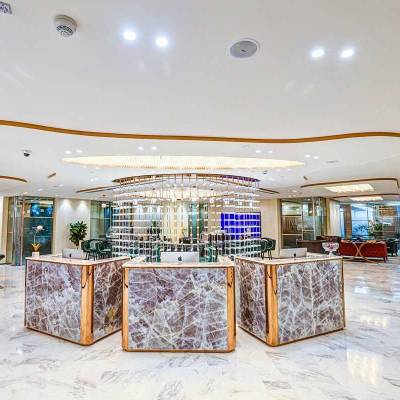
India’s commercial office occupancy is expected to rise to around 90 per cent by March 2028 from the current 88 per cent, according to rating agency ICRA. The improvement is expected to be supported by sustained demand from global capability centres (GCCs), which is projected to keep pace with additions to office supply.

ICRA said the GCC sector was expanding beyond cost arbitrage as global enterprises increased their Indian operations in higher-value areas, including technology, engineering, analytics, research and development, and digital capabilities. The number of GCCs is expected to cross 2,500 by 2030, with the segment projected to account for 45 to 50 per cent of net office absorption in 2027-28.

This demand is expected to provide structural support for occupancy levels despite sizeable new supply. Vacancy rates are projected to decline across five of the six leading office markets by March 2028, although performance is expected to vary significantly between cities.

Bengaluru is projected to remain among the strongest markets, with vacancy estimated at 7.5 to 8 per cent. Hyderabad’s vacancy rate is expected to range from 12.5 to 13 per cent, while Delhi National Capital Region is projected to record a rate of 18 to 18.5 per cent. Chennai and the Mumbai Metropolitan Region are also expected to see lower vacancy, while Pune is likely to remain broadly stable.

Real estate investment trust (REIT) assets under management are projected to more than double to around Rs. 6.5 tn by 2030-31 from approximately Rs. 3.1 tn currently. ICRA said bank lending could provide an additional funding source for the sector. Upcoming non-convertible debenture (NCD) maturities among office REITs could create a refinancing opportunity of around Rs. 260 bn, supplementing capital-market borrowings and improving funding flexibility.

India’s commercial office occupancy is expected to rise to around 90 per cent by March 2028 from the current 88 per cent, according to rating agency ICRA. The improvement is expected to be supported by sustained demand from global capability centres (GCCs), which is projected to keep pace with additions to office supply. ICRA said the GCC sector was expanding beyond cost arbitrage as global enterprises increased their Indian operations in higher-value areas, including technology, engineering, analytics, research and development, and digital capabilities. The number of GCCs is expected to cross 2,500 by 2030, with the segment projected to account for 45 to 50 per cent of net office absorption in 2027-28. This demand is expected to provide structural support for occupancy levels despite sizeable new supply. Vacancy rates are projected to decline across five of the six leading office markets by March 2028, although performance is expected to vary significantly between cities. Bengaluru is projected to remain among the strongest markets, with vacancy estimated at 7.5 to 8 per cent. Hyderabad’s vacancy rate is expected to range from 12.5 to 13 per cent, while Delhi National Capital Region is projected to record a rate of 18 to 18.5 per cent. Chennai and the Mumbai Metropolitan Region are also expected to see lower vacancy, while Pune is likely to remain broadly stable. Real estate investment trust (REIT) assets under management are projected to more than double to around Rs. 6.5 tn by 2030-31 from approximately Rs. 3.1 tn currently. ICRA said bank lending could provide an additional funding source for the sector. Upcoming non-convertible debenture (NCD) maturities among office REITs could create a refinancing opportunity of around Rs. 260 bn, supplementing capital-market borrowings and improving funding flexibility.

Related Stories

Gold Stories

Next Story
Building Material

Amata secures approval to strengthen 122 concrete columns

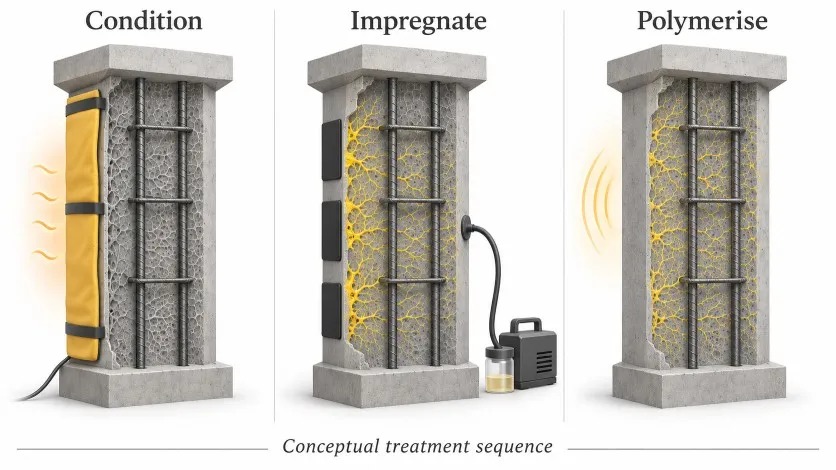
Amata has secured client approval to strengthen 122 concrete columns across two floors of a residential project in Delhi using its TECKCRYL PIC MA treatment. The intervention improved concrete strength without increasing the dimensions of the existing columns, addressing project constraints that made conventional strengthening methods impractical.The concrete columns at the project had recorded strength below the specified 35 MPa. Conventional methods such as reinforced cement concrete (RCC) jacketing, steel plate bonding and section enlargement were considered unsuitable due to architectural ..

Next Story
Infrastructure Transport

Shillong Airport Expansion on Track for December 2027 Finish

Work on the expansion of Shillong Airport and its runway is progressing according to schedule, with completion targeted for December 2027, Transport and Civil Aviation Department Secretary Sanjay Goyal said. The construction is being carried out under the approved master plan, and officials are monitoring progress to ensure the planned timeline is maintained. Goyal said the work was in full swing and there was currently no reason to anticipate a delay. The project is intended to improve the airport’s capacity and strengthen air connectivity to and from the region as demand for air travel inc..

Next Story
Infrastructure Transport

GMR Hyderabad Airport Enhances Cargo Capacity

GMR Hyderabad International Airport has enhanced its cargo-handling infrastructure by commissioning an upgraded Elevated Transfer Vehicle (ETV)-based storage system at its Cargo Terminal. The facility has been upgraded within the existing terminal footprint, allowing the airport to expand capacity without requiring additional space. The new system has increased Unit Load Device (ULD) storage capacity from 33 to 80 ULDs. This represents an increase of more than double and is intended to provide greater operational flexibility as cargo volumes and freighter activity expand. The additional storag..

Subscribe to Our Newsletter

Get daily newsletters around different themes from Construction world.

STAY CONNECTED

Advertisement

SPECIAL OFFER
QR Code