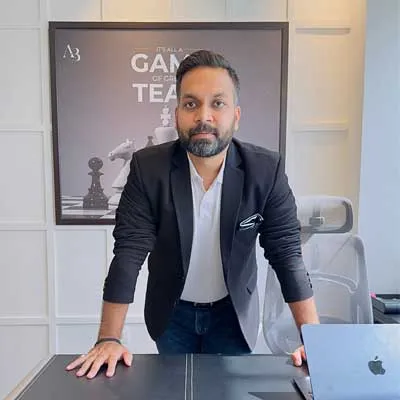
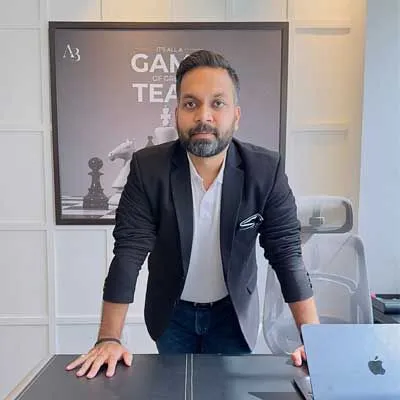
Founded in 2023, AirBrick Infra is positioning itself at the intersection of commercial interiors and technology. Sanjeev Bhandari, Founder & CEO, speaks to CW about AI-led design, integrated execution, sustainability and why the company remains firmly bootstrapped.What market gaps did you identify that prompted the launch of AirBrick Infra?My background spans over 15 years across PepsiCo and later Livspace, where I led India and Singapore operations. During that journey, I realised construction and commercial interiors continued to function through highly manual and repetitive processes despite technological advances elsewhere. That led us to ask a simple question: What parts of this industry can technology genuinely solve? We identified design as a major opportunity because several tasks are repetitive and process driven. That became the starting point for AirBrick Infra. We began building AI and LLM-backed layout and design capabilities and gradually expanded into a wider technology stack. Three years later, we are an 80-member organisation with technology embedded across functions. We even have a dedicated team focused on automating one operational function every month.AI adoption has accelerated but concerns around overreliance remain. How do you balance algorithm-led efficiency with human creativity and accountability?Creativity is the core of this industry and no machine can replace it. AI has been created by humans; the reverse will not happen. We are very clear about where AI adds value and where human expertise remains indispensable. If design becomes entirely template-driven, every office will begin to look similar, which defeats the purpose of design itself.At AirBrick, AI handles repetitive and monotonous tasks while architects and design leaders focus on creativity, judgement and problem solving. Technology improves efficiency and turnaround time but humans remain in control. Humans are using AI in our company – not the other way around.How much of your technology stack is proprietary?We have built a full-stack platform covering the complete office lifecycle: property discovery, design, project execution and post-completion management. For instance, our inhouse system can recommend office locations based on client requirements. Once a property is selected, our technology supports layouts and design development. On the execution side, clients can remotely monitor project progress through our project-management platform.A client based overseas can log in and view daily reports, manpower deployment, material deliveries, schedule status and overall project progress. Snag management is also integrated into the platform. Our technology stack has already received copyright protection and patents have been filed. We believe it is a differentiated offering within India’s commercial interiors ecosystem.At which stage of the design-build cycle does AI deliver maximum impact?Technology is relevant across the entire lifecycle rather than at a single stage. Projects move from property search to conception, execution and management. Each stage includes repetitive processes that can be optimised through technology. That said, certain functions will always require human involvement. Negotiation is one example. These are high-value projects, often ranging between Rs 50 million and Rs 100 million and human judgement remains critical.The key is clarity: technology should solve repetitive tasks while humans manage creative and strategic decisions.Can you share a project that demonstrates the impact of your technology?Most of our projects operate under strict NDAs, but I can share one example involving DCS.The assignment covered 300,000 sq ft – a scale where conceptual design and layout approval typically take three to four weeks. Using our AI-driven technology stack, we completed first-cut layouts within 24 hours, incorporated iterations in 48 hours and secured final approvals within 72 hours. The challenge from the client was straightforward: if we could design the project in three days, the project would be ours. Technology made that possible.As a startup in an execution-heavy industry, how do you view fundraising versus bootstrapped growth?We are currently bootstrapped and profitable. We have received funding offers, but fundraising should not happen merely for optics. Capital must have a clear purpose. If we raise funds in the future, deployment will be focused primarily on technological advancement and international expansion – nothing else.What is your long-term vision for AirBrick Infra?We are here to stay. This industry is evolving rapidly and many players enter without fully understanding project delivery. We understand the lifecycle deeply and believe technology-led process discipline will define the future of commercial design and build. Our objective is not merely to participate in that change but to help define it.AirBrick operates across design, contracting and products. Which vertical is scaling fastest?We do not operate these verticals in silos. Our belief is that value is created when we remain involved from inception to handover. We generally avoid fragmented assignments where design, execution and procurement are disconnected. Construction projects involve multiple stakeholders and fragmented responsibility often leads to coordination challenges, cost overruns and delivery risks. Design and execution have, therefore, grown together. Product supply, meanwhile, has also expanded independently through large institutional engagements such as Nestlé.Sustainability today extends beyond material selection. How does AirBrick approach it?Sustainability begins with design. Many people assume sustainable materials alone create sustainable projects. That is only one component. A truly sustainable workspace must support employee wellbeing, collaboration, circulation, natural light and future expansion.We focus heavily on sustainable layouts. Noise levels, movement patterns, collaboration spaces and ergonomics are built into our planning approach. Take something as basic as seating. If a person spends 10 hours a day in a chair that compromises posture and wellbeing, the workspace itself is unsustainable irrespective of material certifications. Materials matter, but sustainability must first be designed into the experience of the workplace.Which markets are next for AirBrick Infra?The momentum is clearly shifting toward emerging Tier-2 business hubs. In North India, Mohali and Chandigarh are gaining traction. In the South, Hyderabad and Chennai continue to grow beyond Bengaluru. In Western India, Pune, Nashik and Surat are seeing significant commercial demand. Our expansion strategy is aligned with these emerging centres.-KAVITA PARAB