+
MHADA: Upgrading Mumbai via Goregaon
Real Estate

MHADA: Upgrading Mumbai via Goregaon

With Motilal Nagar in focus, can redevelopment do more than replace ageing buildings — can it rebuild a neighbourhood, preserve its sense of community and give residents a better quality of life?

A house can be measured in square feet. A home cannot.

For people who have spent decades in the same neighbourhood, home is rarely confined to the four walls of a dwelling. It is the street where the children grew up, with the neighbour who has known the family for years, the shop at the corner, the playground, the familiar route to school and the community that gradually becomes part of one’s identity.

That is what makes redevelopment among the most difficult forms of urban transformation. The buildings may be old, but the memories embedded in them are not. When a neighbourhood is earmarked for redevelopment, residents are not simply being asked to exchange one structure for another. They are being asked to trust that the place they return to will still feel like home.

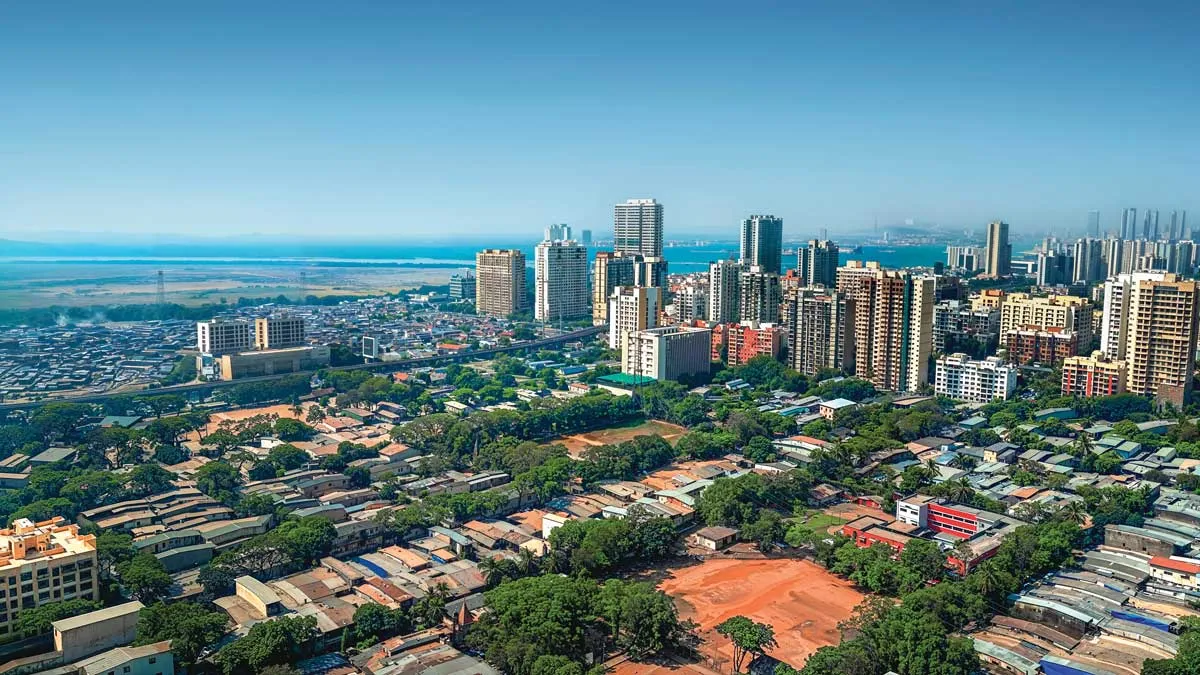
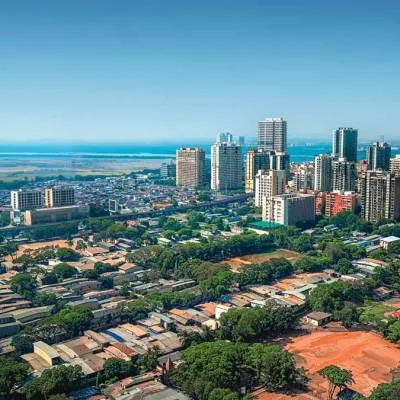
In Motilal Nagar, Goregaon, that challenge is unfolding at a scale that could change how Mumbai approaches the redevelopment of large housing layouts. Spread across approximately 143 acre, and involving an estimated investment of Rs 1 lakh crore, Motilal Nagar 1, 2 and 3 are being taken up as an integrated redevelopment rather than a collection of individual buildings. More than 5,600 residential and non-residential occupiers are expected to be rehabilitated, while the master plan seeks to transform not only the housing stock but the infrastructure and social environment around it.

For Sanjeev Jaiswal, Vice President and CEO, MHADA, that distinction is central to the thinking behind cluster redevelopment. “Giving a house is something else, but giving a house in a liveable community is something beyond the responsibility of the government,” he says. The ambition, therefore, is not simply to rebuild Motilal Nagar’s buildings – it is to rebuild the neighbourhood around them.

Beyond the individual building

For decades, redevelopment in Mumbai has largely been understood through the lens of individual buildings. An ageing structure is redeveloped, residents receive new homes and the process moves on to the next building.


The cluster approach changes the scale of intervention. “Typically, till now, if I were to speak about Mumbai and MHADA in terms of redevelopment, the focus was entirely on individual building redevelopment,” says Jaiswal. “For the first time, the government felt that while this peaceful approach of redevelopment ensures rehab, it does not lead to the feeling of a livelihood or an improvement in the lifestyle of the people who are going to finally settle there.”

That is the fundamental premise of the C&DA model being applied to Motilal Nagar, where MHADA has appointed Estatevue Developers Private Limited (EDPL), an Adani Group company, as its Construction & Development Agency. As Jaiswal notes, cluster redevelopments of this scale demand a partner with proven technical expertise, a strong balance sheet and the credibility to mobilise long-term capital. Backed by the Adani Group’s execution capabilities and market reach, EDPL is expected to play a critical role in delivering not only the rehabilitation component but also the quality of infrastructure, amenities and urban environment that will ultimately define the success of the project. Instead of looking at individual structures independently, the 

entire layout is planned as one urban system. Housing is combined with roads, drainage, water supply, open spaces, community facilities and other infrastructure. “When you go in for cluster redevelopment, it is not only the houses or buildings you make,” says Jaiswal. “You take care of the overall amenities, the road infrastructure, sewerage, stormwater drainage, rainwater harvesting, the lighting out there, promoting other measures in the sense of a green environment.” 

The distinction may appear technical on paper, but its impact is deeply human. A new apartment cannot compensate for an inadequate road. A larger home does not solve waterlogging. A rebuilt building does not automatically create a playground, school, healthcare facility or a place where a community can meet. 

Designing the neighbourhood

Motilal Nagar’s master plan envisages a substantial reworking of its physical infrastructure.

Roads, according to Jaiswal, will account for more than one-fifth of the layout, with internal roads planned at widths of approximately 12 m and 18 m. Around 17.5 acre is earmarked for recreational and open spaces.

The infrastructure beneath the surface is equally important. The existing neighbourhood is affected by monsoon-related waterlogging, making stormwater management a critical part of the redevelopment. Sewerage infrastructure will have to be redesigned to cater to the larger population, while water supply will also be augmented. A sewage treatment plant is planned within the layout. Rainwater harvesting, solar lighting and green spaces are also part of the proposed development. The intention is to ensure that the redevelopment does not simply create taller or newer buildings while leaving the infrastructure around them struggling to cope.

The social infrastructure is intended to be equally comprehensive. Schools, hospitals, daycare centres, anganwadis, marketplaces, community halls, senior citizens’ facilities, playgrounds and gardens are among the amenities envisaged. There is also an emphasis on walkability. The master plan incorporates the concept of a 15-minute city, with everyday facilities intended to be accessible within a short distance.

Jaiswal describes the larger vision succinctly: “It is going to be a city within a city.” For a 143-acre layout, the description is not merely rhetorical. At this scale, the redevelopment has to function as a complete urban ecosystem.

The infrastructure for everyday life

The significance of this approach lies in what residents will experience after construction.

A redevelopment project is often evaluated through measurable outputs: built-up area, number of homes, construction timelines and investment. But for a resident, the success of a neighbourhood is experienced through much smaller, everyday interactions.

Can a child walk safely to a playground? Can an elderly resident reach a community facility without negotiating heavy traffic? Does the neighbourhood remain accessible during the monsoon? Are schools, healthcare and daily necessities within reasonable reach? Can people meet, socialise and maintain the community networks that existed before redevelopment?

These are not secondary considerations in a large cluster. They are what determine whether a collection of new buildings actually becomes a neighbourhood. According to Jaiswal, the model is intended to focus on “quality of life and also maybe indirectly on the livelihood means of the people residing there”, creating a community where existing residents and those who move into the new sale component can coexist.

That is an important shift in the definition of rehabilitation. Rehabilitation is no longer simply about giving someone a replacement dwelling. It is about creating the conditions in which that dwelling becomes part of a functioning community.

MHADA’s Ownership

The presence of a private C&DA agency in a publicly owned layout can naturally raise questions about ownership, accountability and the protection of residents’ interests.

Jaiswal is clear about MHADA’s position. “The ownership and the responsibility of the redevelopment remains with MHADA,” he says. The agency receives development rights for the project but the land remains with MHADA. The institution continues to oversee planning and the implementation of the obligations attached to the development. Eligibility, rehabilitation entitlements and agreements between the relevant parties are subject to MHADA’s processes. The planning authority also retains oversight of the plans submitted for approval.

For residents, this institutional role matters because redevelopment is ultimately built on confidence. The private developer may construct the buildings but the government institution remains responsible for ensuring that the commitments made to existing residents are carried through. 

Jaiswal puts the larger principle bluntly, saying, “The fear of the developer should be secondary.” His argument is that the developer is an execution partner, while the institutional responsibility for rehabilitation rests with MHADA and the government. That distinction becomes especially important when redevelopment is expected to span many years and involve thousands of existing households.

A neighbourhood in transition

The challenge, however, is not limited to the final physical form of Motilal Nagar. The existing neighbourhood has its own social geography: families who know one another, businesses that depend on local customers, children who have grown up together and residents who have developed an understanding of the place over years.

Redevelopment inevitably disrupts that familiarity. That is why the human dimension cannot be separated from the planning dimension. A technically successful redevelopment can still feel like a failure to its residents if the new environment does not allow the community to re-establish itself. The ambition of the cluster model is to avoid that outcome by creating common infrastructure and social spaces at the scale of the neighbourhood. Jaiswal describes the intended outcome as “a happy community residing in a big layout with people whom they know, with new people who will be shifting in, and feeling like a community”. 

That may ultimately be the hardest part of the project. Concrete, steel and services can be designed and engineered – a community has to be rebuilt.

From Motilal Nagar to upgrading Mumbai

The significance of Motilal Nagar extends beyond its boundaries. According to Jaiswal, MHADA has identified around 15 cluster projects under the C&DA model, covering approximately 920 acre and involving the rehabilitation of around 65,000 families/tenements. These figures and the terminology used for beneficiaries are subject to confirmation by MHADA.

The wider context is substantial. MHADA’s layouts cover approximately 5,000 acre, with around 8,500 buildings and approximately 2.4 lakh families/tenements, according to the figures cited by Jaiswal. 

This puts Motilal Nagar within a much larger transformation underway across MHADA’s housing stock.

The policy direction is also changing. Jaiswal points to a recent government resolution enabling cluster redevelopment on larger land parcels, with land above 20 acre becoming eligible for the cluster approach under the new framework. 

The implication is significant. If individual redevelopment asks how one building can be rebuilt, cluster redevelopment asks how an entire urban environment can be reconstructed. That is a much 

more complex question, but potentially a much more consequential one for Mumbai.

The measure of success

The success of Motilal Nagar will eventually be recorded in official milestones: regulatory and legal approvals, commencement of construction, completion of rehabilitation, infrastructure delivery and insurance of occupancy certificates. But residents will measure it differently. They will ask whether the new home feels like an improvement. Whether the neighbourhood is safer, cleaner and easier to navigate. Whether the monsoon problems have been addressed. Whether children have places to play. Whether senior citizens have spaces of their own. Whether everyday needs are within reach. And perhaps most importantly, whether the community that existed before redevelopment can find its place in what comes after it. That is why the most important transformation at Motilal Nagar would not be just visible in the skyline but will also be visible in the everyday life of the people who live there.

The project will demonstrate that redevelopment does not have to mean choosing between new housing and an old sense of belonging. It will provide both. The buildings will change. 

The roads will improve. The infrastructure will upgrade. The skyline will be redefined.


With Motilal Nagar in focus, can redevelopment do more than replace ageing buildings — can it rebuild a neighbourhood, preserve its sense of community and give residents a better quality of life?A house can be measured in square feet. A home cannot.For people who have spent decades in the same neighbourhood, home is rarely confined to the four walls of a dwelling. It is the street where the children grew up, with the neighbour who has known the family for years, the shop at the corner, the playground, the familiar route to school and the community that gradually becomes part of one’s identity.That is what makes redevelopment among the most difficult forms of urban transformation. The buildings may be old, but the memories embedded in them are not. When a neighbourhood is earmarked for redevelopment, residents are not simply being asked to exchange one structure for another. They are being asked to trust that the place they return to will still feel like home.In Motilal Nagar, Goregaon, that challenge is unfolding at a scale that could change how Mumbai approaches the redevelopment of large housing layouts. Spread across approximately 143 acre, and involving an estimated investment of Rs 1 lakh crore, Motilal Nagar 1, 2 and 3 are being taken up as an integrated redevelopment rather than a collection of individual buildings. More than 5,600 residential and non-residential occupiers are expected to be rehabilitated, while the master plan seeks to transform not only the housing stock but the infrastructure and social environment around it.For Sanjeev Jaiswal, Vice President and CEO, MHADA, that distinction is central to the thinking behind cluster redevelopment. “Giving a house is something else, but giving a house in a liveable community is something beyond the responsibility of the government,” he says. The ambition, therefore, is not simply to rebuild Motilal Nagar’s buildings – it is to rebuild the neighbourhood around them.Beyond the individual buildingFor decades, redevelopment in Mumbai has largely been understood through the lens of individual buildings. An ageing structure is redeveloped, residents receive new homes and the process moves on to the next building.The cluster approach changes the scale of intervention. “Typically, till now, if I were to speak about Mumbai and MHADA in terms of redevelopment, the focus was entirely on individual building redevelopment,” says Jaiswal. “For the first time, the government felt that while this peaceful approach of redevelopment ensures rehab, it does not lead to the feeling of a livelihood or an improvement in the lifestyle of the people who are going to finally settle there.”That is the fundamental premise of the C&DA model being applied to Motilal Nagar, where MHADA has appointed Estatevue Developers Private Limited (EDPL), an Adani Group company, as its Construction & Development Agency. As Jaiswal notes, cluster redevelopments of this scale demand a partner with proven technical expertise, a strong balance sheet and the credibility to mobilise long-term capital. Backed by the Adani Group’s execution capabilities and market reach, EDPL is expected to play a critical role in delivering not only the rehabilitation component but also the quality of infrastructure, amenities and urban environment that will ultimately define the success of the project. Instead of looking at individual structures independently, the entire layout is planned as one urban system. Housing is combined with roads, drainage, water supply, open spaces, community facilities and other infrastructure. “When you go in for cluster redevelopment, it is not only the houses or buildings you make,” says Jaiswal. “You take care of the overall amenities, the road infrastructure, sewerage, stormwater drainage, rainwater harvesting, the lighting out there, promoting other measures in the sense of a green environment.” The distinction may appear technical on paper, but its impact is deeply human. A new apartment cannot compensate for an inadequate road. A larger home does not solve waterlogging. A rebuilt building does not automatically create a playground, school, healthcare facility or a place where a community can meet. Designing the neighbourhoodMotilal Nagar’s master plan envisages a substantial reworking of its physical infrastructure.Roads, according to Jaiswal, will account for more than one-fifth of the layout, with internal roads planned at widths of approximately 12 m and 18 m. Around 17.5 acre is earmarked for recreational and open spaces.The infrastructure beneath the surface is equally important. The existing neighbourhood is affected by monsoon-related waterlogging, making stormwater management a critical part of the redevelopment. Sewerage infrastructure will have to be redesigned to cater to the larger population, while water supply will also be augmented. A sewage treatment plant is planned within the layout. Rainwater harvesting, solar lighting and green spaces are also part of the proposed development. The intention is to ensure that the redevelopment does not simply create taller or newer buildings while leaving the infrastructure around them struggling to cope.The social infrastructure is intended to be equally comprehensive. Schools, hospitals, daycare centres, anganwadis, marketplaces, community halls, senior citizens’ facilities, playgrounds and gardens are among the amenities envisaged. There is also an emphasis on walkability. The master plan incorporates the concept of a 15-minute city, with everyday facilities intended to be accessible within a short distance.Jaiswal describes the larger vision succinctly: “It is going to be a city within a city.” For a 143-acre layout, the description is not merely rhetorical. At this scale, the redevelopment has to function as a complete urban ecosystem.The infrastructure for everyday lifeThe significance of this approach lies in what residents will experience after construction.A redevelopment project is often evaluated through measurable outputs: built-up area, number of homes, construction timelines and investment. But for a resident, the success of a neighbourhood is experienced through much smaller, everyday interactions.Can a child walk safely to a playground? Can an elderly resident reach a community facility without negotiating heavy traffic? Does the neighbourhood remain accessible during the monsoon? Are schools, healthcare and daily necessities within reasonable reach? Can people meet, socialise and maintain the community networks that existed before redevelopment?These are not secondary considerations in a large cluster. They are what determine whether a collection of new buildings actually becomes a neighbourhood. According to Jaiswal, the model is intended to focus on “quality of life and also maybe indirectly on the livelihood means of the people residing there”, creating a community where existing residents and those who move into the new sale component can coexist.That is an important shift in the definition of rehabilitation. Rehabilitation is no longer simply about giving someone a replacement dwelling. It is about creating the conditions in which that dwelling becomes part of a functioning community.MHADA’s OwnershipThe presence of a private C&DA agency in a publicly owned layout can naturally raise questions about ownership, accountability and the protection of residents’ interests.Jaiswal is clear about MHADA’s position. “The ownership and the responsibility of the redevelopment remains with MHADA,” he says. The agency receives development rights for the project but the land remains with MHADA. The institution continues to oversee planning and the implementation of the obligations attached to the development. Eligibility, rehabilitation entitlements and agreements between the relevant parties are subject to MHADA’s processes. The planning authority also retains oversight of the plans submitted for approval.For residents, this institutional role matters because redevelopment is ultimately built on confidence. The private developer may construct the buildings but the government institution remains responsible for ensuring that the commitments made to existing residents are carried through. Jaiswal puts the larger principle bluntly, saying, “The fear of the developer should be secondary.” His argument is that the developer is an execution partner, while the institutional responsibility for rehabilitation rests with MHADA and the government. That distinction becomes especially important when redevelopment is expected to span many years and involve thousands of existing households.A neighbourhood in transitionThe challenge, however, is not limited to the final physical form of Motilal Nagar. The existing neighbourhood has its own social geography: families who know one another, businesses that depend on local customers, children who have grown up together and residents who have developed an understanding of the place over years.Redevelopment inevitably disrupts that familiarity. That is why the human dimension cannot be separated from the planning dimension. A technically successful redevelopment can still feel like a failure to its residents if the new environment does not allow the community to re-establish itself. The ambition of the cluster model is to avoid that outcome by creating common infrastructure and social spaces at the scale of the neighbourhood. Jaiswal describes the intended outcome as “a happy community residing in a big layout with people whom they know, with new people who will be shifting in, and feeling like a community”. That may ultimately be the hardest part of the project. Concrete, steel and services can be designed and engineered – a community has to be rebuilt.From Motilal Nagar to upgrading MumbaiThe significance of Motilal Nagar extends beyond its boundaries. According to Jaiswal, MHADA has identified around 15 cluster projects under the C&DA model, covering approximately 920 acre and involving the rehabilitation of around 65,000 families/tenements. These figures and the terminology used for beneficiaries are subject to confirmation by MHADA.The wider context is substantial. MHADA’s layouts cover approximately 5,000 acre, with around 8,500 buildings and approximately 2.4 lakh families/tenements, according to the figures cited by Jaiswal. This puts Motilal Nagar within a much larger transformation underway across MHADA’s housing stock.The policy direction is also changing. Jaiswal points to a recent government resolution enabling cluster redevelopment on larger land parcels, with land above 20 acre becoming eligible for the cluster approach under the new framework. The implication is significant. If individual redevelopment asks how one building can be rebuilt, cluster redevelopment asks how an entire urban environment can be reconstructed. That is a much more complex question, but potentially a much more consequential one for Mumbai.The measure of successThe success of Motilal Nagar will eventually be recorded in official milestones: regulatory and legal approvals, commencement of construction, completion of rehabilitation, infrastructure delivery and insurance of occupancy certificates. But residents will measure it differently. They will ask whether the new home feels like an improvement. Whether the neighbourhood is safer, cleaner and easier to navigate. Whether the monsoon problems have been addressed. Whether children have places to play. Whether senior citizens have spaces of their own. Whether everyday needs are within reach. And perhaps most importantly, whether the community that existed before redevelopment can find its place in what comes after it. That is why the most important transformation at Motilal Nagar would not be just visible in the skyline but will also be visible in the everyday life of the people who live there.The project will demonstrate that redevelopment does not have to mean choosing between new housing and an old sense of belonging. It will provide both. The buildings will change. The roads will improve. The infrastructure will upgrade. The skyline will be redefined.

Related Stories

Gold Stories

Next Story
Real Estate

Green Orchid Plans 500-Acre Township Near Guwahati Airport

Green Orchid Group is developing a 500-acre integrated township near Guwahati Airport, marking a major expansion of its real estate portfolio in Assam.Located at Barkuchi along NH-37, Green Orchid Township is planned as a multi-phase development combining residential, commercial, hospitality, healthcare, education, recreation and lifestyle infrastructure.The project has an estimated development potential of around 22 mn sq ft of built-up area and an indicative Gross Development Value of approximately Rs 180 bn at current rates, subject to market conditions and the eventual project mix.The town..

Next Story
Infrastructure Urban

Hindustan Zinc Restores 1,105 Hectares of Land

Hindustan Zinc has restored 1,105 hectares of land as part of its efforts to integrate ecological restoration with responsible mining. The rehabilitated area, equivalent to more than 1,500 football fields, covers mining and operational landscapes restored through reclamation, plantation, biodiversity enhancement and sustainable land-use practices.The initiatives form part of Hindustan Zinc’s Sustainability Goals 2030 and its broader efforts to create long-term ecological value alongside business growth.“The future of mining will increasingly be defined not only by the resources we produce,..

Next Story
Infrastructure Urban

MOVIN Boosts Express Capacity Ahead of Festive Demand

MOVIN, the logistics brand launched as a joint venture between UPS and InterGlobe Enterprises, has strengthened its Express network with additional capacity to support businesses during the festive-season surge in shipment volumes.The company has secured commercial air capacity across high-demand domestic airport nodes and reinforced key surface corridors with additional fleet and line-haul resources. The measures are aimed at absorbing sudden increases in shipment volumes without capacity becoming a bottleneck.Technology is also being used to optimise network capacity. Load optimisation impro..

Advertisement

Subscribe to Our Newsletter

Get daily newsletters around different themes from Construction world.

STAY CONNECTED

Advertisement

SPECIAL OFFER
QR Code