MMRDA Opens Rs 16.3 Billion Land Bid To Develop Wadala CBD
Real Estate

MMRDA Opens Rs 16.3 Billion Land Bid To Develop Wadala CBD

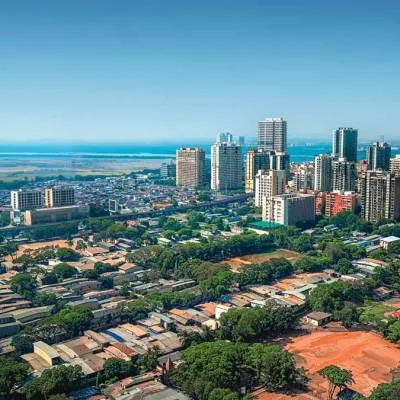
With Bandra-Kurla Complex (BKC) nearing saturation, the Mumbai Metropolitan Region Development Authority (MMRDA) has shifted focus to Wadala, opening bids for a premium commercial plot valued at Rs 16.3 billion. Spanning 10,860 sq. m (approximately 2 acres), this is MMRDA’s most significant step yet in transforming Wadala into Mumbai’s next central business district (CBD).

The plot offers a permissible built-up area of 108,600 sq. m and an impressive Floor Space Index (FSI) of 10. It will be leased to private developers for 80 years, with a reserve price set at around Rs 150,000 per sq. m. The bidding process closes on 7 January 2026, giving developers and investors ample time to compete for what is expected to be one of Mumbai’s most coveted commercial parcels.

MMRDA’s move aims to monetise prime land holdings beyond BKC, where most available plots have already been allotted. By unlocking Wadala’s potential, the authority plans to establish the city’s third major business hub, following Nariman Point and BKC, while also generating non-fare revenue to fund ongoing and upcoming infrastructure projects across the Mumbai Metropolitan Region.

Wadala’s evolution has been in progress for decades. In 1984, the Maharashtra government leased 126.6 hectares to MMRDA for developing a truck terminal to ease congestion in South Mumbai. Following a four-phase layout plan, the first phase received sanction from the Brihanmumbai Municipal Corporation (BMC) in 1986.

When MMRDA became the Special Planning Authority for Wadala in 2005, it introduced new development proposals and formulated Development Control Regulations (DCRs), which were formally approved in 2010, allowing a global FSI of 4. That same year, an empowered committee decided to relocate the truck terminal to Mankhurd or other areas beyond city limits, paving the way for Wadala’s redevelopment as a modern commercial hub.

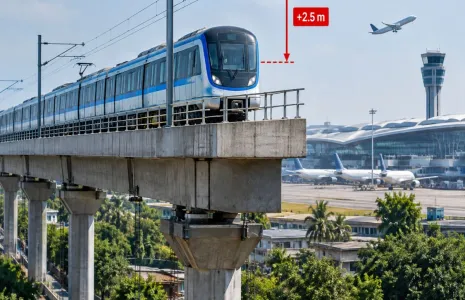
The area’s transformation gained momentum with the expansion of transport infrastructure, including the Monorail, Metro Line 4, the proposed Inter-State Bus Terminal, the Anik Bus Depot, and the Eastern Freeway. The revised master plan, approved in 2019, laid the foundation for Wadala’s emergence as a world-class mixed-use district, modelled on the success of BKC.

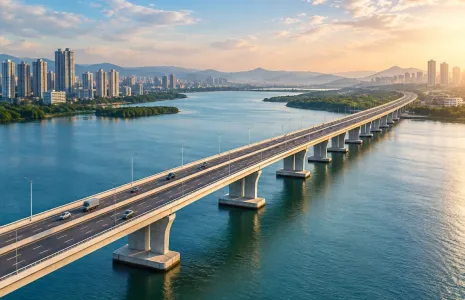
Strategically located between the Eastern Freeway and Atal Setu, Wadala offers multi-modal connectivity—via road, rail, and metro—enhancing its attractiveness to developers and corporates. Real estate experts expect strong participation in the tender, especially after Sumitomo Corporation’s Rs 22.4 billion land deal in BKC earlier this year, which reaffirmed robust demand for premium commercial real estate in Mumbai.

As per the DCR 2019, the Wadala plot is earmarked for mixed-use development, enabling a combination of commercial and retail facilities including office spaces, hotels, restaurants, shopping complexes, healthcare centres, educational institutions, cultural venues, theatres, and indoor recreation zones. The project aims to foster a self-sustaining urban ecosystem blending business, leisure, and lifestyle.

Confirming the development, Sanjay Mukherjee, Metropolitan Commissioner, MMRDA, said, “We are planning to release the bid invitation next month.”

With Bandra-Kurla Complex (BKC) nearing saturation, the Mumbai Metropolitan Region Development Authority (MMRDA) has shifted focus to Wadala, opening bids for a premium commercial plot valued at Rs 16.3 billion. Spanning 10,860 sq. m (approximately 2 acres), this is MMRDA’s most significant step yet in transforming Wadala into Mumbai’s next central business district (CBD). The plot offers a permissible built-up area of 108,600 sq. m and an impressive Floor Space Index (FSI) of 10. It will be leased to private developers for 80 years, with a reserve price set at around Rs 150,000 per sq. m. The bidding process closes on 7 January 2026, giving developers and investors ample time to compete for what is expected to be one of Mumbai’s most coveted commercial parcels. MMRDA’s move aims to monetise prime land holdings beyond BKC, where most available plots have already been allotted. By unlocking Wadala’s potential, the authority plans to establish the city’s third major business hub, following Nariman Point and BKC, while also generating non-fare revenue to fund ongoing and upcoming infrastructure projects across the Mumbai Metropolitan Region. Wadala’s evolution has been in progress for decades. In 1984, the Maharashtra government leased 126.6 hectares to MMRDA for developing a truck terminal to ease congestion in South Mumbai. Following a four-phase layout plan, the first phase received sanction from the Brihanmumbai Municipal Corporation (BMC) in 1986. When MMRDA became the Special Planning Authority for Wadala in 2005, it introduced new development proposals and formulated Development Control Regulations (DCRs), which were formally approved in 2010, allowing a global FSI of 4. That same year, an empowered committee decided to relocate the truck terminal to Mankhurd or other areas beyond city limits, paving the way for Wadala’s redevelopment as a modern commercial hub. The area’s transformation gained momentum with the expansion of transport infrastructure, including the Monorail, Metro Line 4, the proposed Inter-State Bus Terminal, the Anik Bus Depot, and the Eastern Freeway. The revised master plan, approved in 2019, laid the foundation for Wadala’s emergence as a world-class mixed-use district, modelled on the success of BKC. Strategically located between the Eastern Freeway and Atal Setu, Wadala offers multi-modal connectivity—via road, rail, and metro—enhancing its attractiveness to developers and corporates. Real estate experts expect strong participation in the tender, especially after Sumitomo Corporation’s Rs 22.4 billion land deal in BKC earlier this year, which reaffirmed robust demand for premium commercial real estate in Mumbai. As per the DCR 2019, the Wadala plot is earmarked for mixed-use development, enabling a combination of commercial and retail facilities including office spaces, hotels, restaurants, shopping complexes, healthcare centres, educational institutions, cultural venues, theatres, and indoor recreation zones. The project aims to foster a self-sustaining urban ecosystem blending business, leisure, and lifestyle. Confirming the development, Sanjay Mukherjee, Metropolitan Commissioner, MMRDA, said, “We are planning to release the bid invitation next month.”

Next Story
Real Estate

RBI Rate Cut Boosts Confidence Across Housing Market

Industry Context and Market DynamicsThe real estate industry has welcomed the RBI’s rate cut as a timely boost to affordability and demand. With home prices having risen steadily across major markets, even a marginal reduction in interest rates meaningfully strengthens purchasing power, especially for first-time and mid-income buyers.Ashish Jerath, President – Sales & Marketing, Smartworld Developers, observes:“The RBI’s 25-basis-point cut, bringing the repo rate down to 5.25%, is a timely boost for the real estate sector. Lower interest rates reduce borrowing costs, enabling homeb..

Next Story
Infrastructure Transport

BMC Resumes Rs 170 Billion Road Works, Targets 80 per cent By Jan 2026

Following the withdrawal of the southwest monsoon in October, the Brihanmumbai Municipal Corporation (BMC) has restarted work on 645 roads—covering 297.49 kilometres—under its large-scale concretisation programme. Data shows that more than 60 per cent of the resumed works are located in the western suburbs. Officials said the civic body aims to complete concretisation on 80 per cent of the roads where fresh work has begun by January 2026. Launched in 2022, the Rs 170 billion project seeks to concretise 700 kilometres of roads across Mumbai. All civil works were halted during the monsoon ..

Next Story
Infrastructure Urban

India Pushes Digital Shift In Urban Land Mapping

The Department of Land Resources (DoLR) under the Ministry of Rural Development has convened a National Symposium on NAKSHA – the National Geospatial Knowledge-based Land Survey of Urban Habitations – to advance India’s transition to modern, technology-driven land mapping. Speaking at the inaugural session, Secretary Manoj Joshi underscored the urgent need to move revenue departments away from outdated, tape-based methods and rough hand-drawn sketches. He stressed that adopting latitude–longitude-based digital mapping and GIS-linked registration systems is essential for economic stabi..

Advertisement

Subscribe to Our Newsletter

Get daily newsletters around different themes from Construction world.

STAY CONNECTED

Advertisement

Advertisement

Advertisement

Advertisement

Open In App