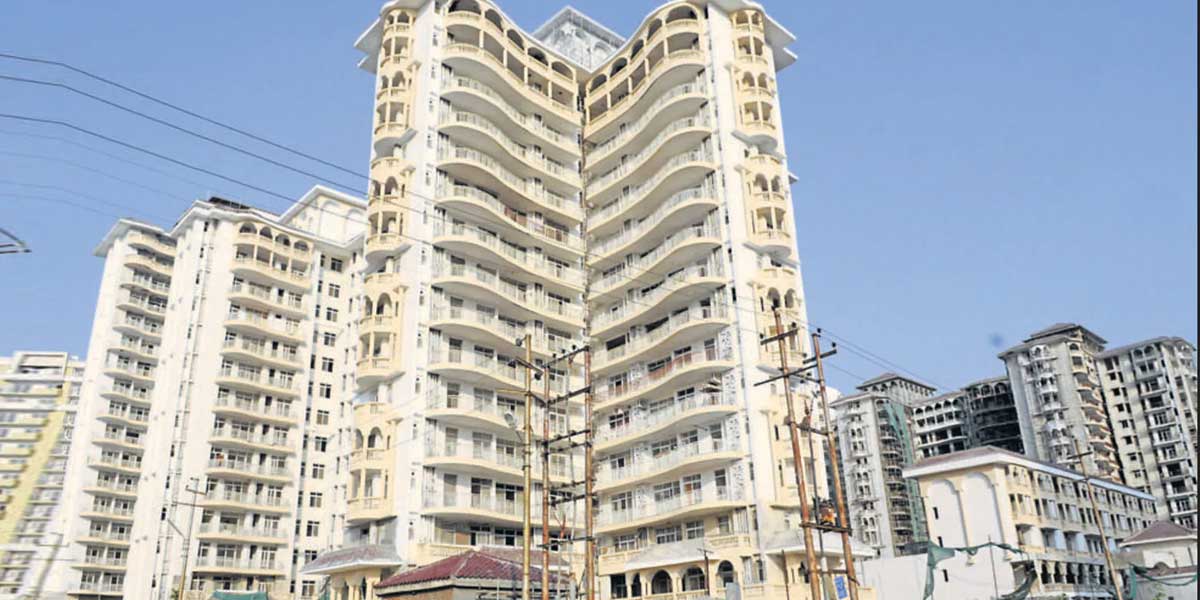
Noida high-rises to see structural audit under new policy
Real Estate

Noida high-rises to see structural audit under new policy

The Noida Authority board has approved a policy proposal for structural audit of high-rise buildings in the city, according to an official statement. The policy defines roles and responsibilities of the builder as well as the residents' association vis-a-vis repair of structures, if found defective during audit.

The decision was taken during the 207th board meeting of the Noida Authority held at its office in Sector 6 last week. The meeting was chaired by Uttar Pradesh Infrastructure and Industrial Development Commissioner and Noida Authority chairman Arvind Kumar, with Noida Authority chief executive officer Ritu Maheshwari present.

While the policy has been approved by the board, it would take around a week for it to be implemented due to paperwork at the local level, a senior official said.

There are around 100 high-rise projects in Noida, many of them with multiple towers.

According to the new policy, “The structural audit report from empanelled IIT or NIT or expert institutions will be submitted by the developer before the partial or full occupancy certificate is issued.”

Even after the issuance of partial or full occupancy certificate, in any project, if 25 per cent or more allottees of AOA or tower complain about structural defects, the committee constituted at the authority level will examine the complaint.

"For structural defects of major category, structural audit will be conducted from expert institutions. Under the Apartment Ownership Act, it is the responsibility of the builder to remove the structural defects within two years," it stated.

See also:
Hyderabad sees registration of homes worth Rs 22.37 bn in Oct
Godrej Properties acquires land in Pune for group housing project


The Noida Authority board has approved a policy proposal for structural audit of high-rise buildings in the city, according to an official statement. The policy defines roles and responsibilities of the builder as well as the residents' association vis-a-vis repair of structures, if found defective during audit. The decision was taken during the 207th board meeting of the Noida Authority held at its office in Sector 6 last week. The meeting was chaired by Uttar Pradesh Infrastructure and Industrial Development Commissioner and Noida Authority chairman Arvind Kumar, with Noida Authority chief executive officer Ritu Maheshwari present. While the policy has been approved by the board, it would take around a week for it to be implemented due to paperwork at the local level, a senior official said. There are around 100 high-rise projects in Noida, many of them with multiple towers. According to the new policy, “The structural audit report from empanelled IIT or NIT or expert institutions will be submitted by the developer before the partial or full occupancy certificate is issued.” Even after the issuance of partial or full occupancy certificate, in any project, if 25 per cent or more allottees of AOA or tower complain about structural defects, the committee constituted at the authority level will examine the complaint. For structural defects of major category, structural audit will be conducted from expert institutions. Under the Apartment Ownership Act, it is the responsibility of the builder to remove the structural defects within two years, it stated.See also: Hyderabad sees registration of homes worth Rs 22.37 bn in OctGodrej Properties acquires land in Pune for group housing project

Next Story
Infrastructure Urban

India Expands Semiconductor Training To 500 Institutions

Under the Chips to Startups programme of the India Semiconductor Mission, the Union minister responsible for Railways, Information and Broadcasting, and Electronics and IT reported notable progress in talent development. He indicated that over the past four years substantial steps have been taken towards a 10-year target of training 85,000 engineers in semiconductor design. World-class EDA tools have been deployed in 315 academic institutions across the country to provide students with practical exposure to chip design. These EDA tools are supported by leading global firms and are accessible t..

Next Story
Infrastructure Urban

Delhi Institutions Support India Semiconductor Mission

The Government of India has prioritised talent development through training, upskilling and workforce development under the Chips to Startups initiative of the India Semiconductor Mission, with officials noting progress in four years towards a 10-year target of training 85,000 engineers in semiconductor design. Electronic design automation tools provided by Synopsys, Cadence, Siemens, Renesas, Ansys and AMD have been deployed in 315 academic institutions, enabling students to gain practical chip design experience. Chips have been fabricated and tested at the Semiconductor Laboratory, Mohali, a..

Next Story
Infrastructure Urban

NHA Announces Winners Of NHCX Hackathon At IIT Hyderabad

The National Health Authority (NHA) has concluded the NHCX Hackathon under the Ayushman Bharat Digital Mission (ABDM) to stimulate innovation around the National Health Claims Exchange (NHCX). The winning teams presented their solutions at the NHCX Innovation Meet held at IIT Hyderabad during a two-day event in March 2026 that also served as the hackathon grand finale. The hackathon itself ran from 22 to 28 February 2026 and aimed to accelerate paperless, transparent claims processing across India. The event was organised with a range of ecosystem partners, including the Insurance Regulatory a..

Advertisement

Subscribe to Our Newsletter

Get daily newsletters around different themes from Construction world.

STAY CONNECTED

Advertisement

Advertisement

Advertisement