+
PSU banks consortium to pump Rs 1,000 cr for Amrapali projects
Real Estate

PSU banks consortium to pump Rs 1,000 cr for Amrapali projects

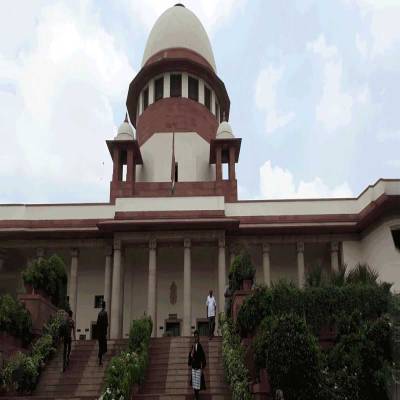
The Supreme Court has been notified that a consortium of six public sector banks in relief to thousands of Amrapali homebuyers have agreed to infuse around Rs 1,000 crore in the delayed projects to guarantee their speedy completion.

On the occasion of Diwali, 150 flats developed by the National Buildings Construction Corporation (NBCC) in a delayed project of Amrapali were provided to the homebuyers in a small function arranged with the help of the court receiver.

A bench of Justices Ajay Rastogi and UU Lalit was informed court-appointed receiver senior advocate R Venkataramani that the consortium of six PSU banks, which cover UCO Bank, Bank of India and Bank of Baroda, among others have agreed in principle to infuse funds to the tune of about Rs 1,000 crore and paperwork is likely to be done by end of the month.

The bench asked Venkataramani to guarantee that the process is facilitated and money begins coming in the first week of December so that delayed work can be started expeditiously.

The court receiver further said that the valuation work of five personal villas of former Amrapali directors, which have been attached on court orders, is made, and five parties have displayed interest in acquiring them at a cost that is over the valuation price.

The bench ordered that all these villas shall be auctioned by the public sector undertaking MSTC Ltd, which has been included in auctioning of Amrapali properties earlier as well. Advocate ML Lahoty, appearing for the homebuyers, said that the court must deal with their application seeking recovery of money from the defaulters according to the 2019 judgement of the court.

The bench said that it would try to listen to the Amrapali matter every Saturday and dispose of these applications. Meanwhile, the court additionally reserved its order on the application listed by Noida seeking recall of the June 10, 2020 order by which the court has reduced the interest charged by the authority from the year 2010 onwards from the builders, who have been allocated land by the authority.

Image Source

The Supreme Court has been notified that a consortium of six public sector banks in relief to thousands of Amrapali homebuyers have agreed to infuse around Rs 1,000 crore in the delayed projects to guarantee their speedy completion. On the occasion of Diwali, 150 flats developed by the National Buildings Construction Corporation (NBCC) in a delayed project of Amrapali were provided to the homebuyers in a small function arranged with the help of the court receiver. A bench of Justices Ajay Rastogi and UU Lalit was informed court-appointed receiver senior advocate R Venkataramani that the consortium of six PSU banks, which cover UCO Bank, Bank of India and Bank of Baroda, among others have agreed in principle to infuse funds to the tune of about Rs 1,000 crore and paperwork is likely to be done by end of the month. The bench asked Venkataramani to guarantee that the process is facilitated and money begins coming in the first week of December so that delayed work can be started expeditiously. The court receiver further said that the valuation work of five personal villas of former Amrapali directors, which have been attached on court orders, is made, and five parties have displayed interest in acquiring them at a cost that is over the valuation price. The bench ordered that all these villas shall be auctioned by the public sector undertaking MSTC Ltd, which has been included in auctioning of Amrapali properties earlier as well. Advocate ML Lahoty, appearing for the homebuyers, said that the court must deal with their application seeking recovery of money from the defaulters according to the 2019 judgement of the court. The bench said that it would try to listen to the Amrapali matter every Saturday and dispose of these applications. Meanwhile, the court additionally reserved its order on the application listed by Noida seeking recall of the June 10, 2020 order by which the court has reduced the interest charged by the authority from the year 2010 onwards from the builders, who have been allocated land by the authority. Image Source

Next Story
Infrastructure Urban

Implementation Status of Jal Jeevan Mission

Since August 2019 the Government has implemented Jal Jeevan Mission to provide assured potable water through household tap connections in rural India. At the start of the mission only 32.3 million (mn) rural households, representing 16.7 per cent, were reported to have tap water connections. States and union territories have reported that 125.8 mn additional rural households have since been provided with tap connections. As a result, of about 193.6 mn rural households roughly 158.2 mn, or 81.71 per cent, are reported to have tap water supply at home.\n\nThe State, district and village level st..

Next Story
Infrastructure Urban

Jal Jeevan Mission Reaches Eighty One Per Cent Rural Coverage

The Government reported substantial progress under the Jal Jeevan Mission, launched in August 2019 to provide tap water to every rural household. At launch only 32.3 million (mn) rural households had tap connections and states and Union territories reported provision of 125.8 mn additional households by March 2026. Consequently, out of about 193.6 mn rural households around 158.2 mn, or 81.71 per cent, are reported to have tap water at home. The Finance Minister announced extension of the mission until 2028 in the 2025-26 budget speech. The Swachh Bharat Mission Grameen, launched in October 20..

Next Story
Infrastructure Urban

Empowering Local Governance for Sustainable Rural Water Supply

The Ministry of Jal Shakti has aligned the Jal Jeevan Mission (JJM) with the 73rd Amendment to strengthen village level planning and community ownership of water supply. Gram Panchayats, village water and sanitation committees and Pani Samitis are to plan, implement, manage and maintain piped water systems, with gram sabha processes formalising handover and oversight. Implementation support agencies including non government organisations, community based organisations and self help groups have been empanelled to train local committees and promote women participation. Under JJM, the department ..

Advertisement

Subscribe to Our Newsletter

Get daily newsletters around different themes from Construction world.

STAY CONNECTED

Advertisement

Advertisement

Advertisement