Retail Leasing Rises 5.6% to 9.36 mn sq ft in Jan-Sept 2026
Real Estate

Retail Leasing Rises 5.6% to 9.36 mn sq ft in Jan-Sept 2026

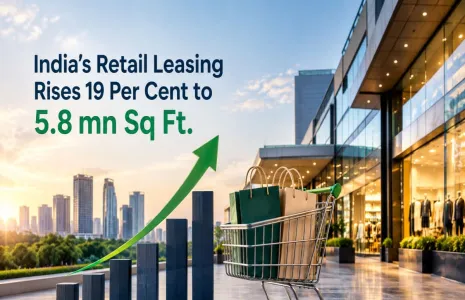
Retail leasing across seven major Indian cities rose 5.6% year on year to 9.36 mn sq ft in January-September 2026, from 8.86 mn sq ft in the corresponding period last year, according to a report by JLL India. The performance was the strongest recorded for the first nine months of a year in the past four years.

Delhi-NCR accounted for the largest share of gross leasing at 26%, followed by Mumbai at 25% and Bengaluru at 21%. Together, the three markets contributed approximately 72% of the total leasing activity. Hyderabad accounted for 10%, while Kolkata, Chennai and Pune contributed 8%, 6% and 4%, respectively.

Pune recorded the fastest year-on-year growth at 80.6%, followed by Kolkata at 55.9%. The two cities recorded gross leasing volumes of 2.5 mn sq ft and 2.3 mn sq ft, respectively, with new mall completions supporting retailer expansion. Leasing volumes moderated in Hyderabad and Bengaluru compared with the same period last year.

Fashion and apparel remained the largest demand driver, accounting for 31% of gross leasing, followed by food and beverage at 18% and entertainment at 15%. Entertainment’s share increased from 11% in the first nine months of 2025, supported by a 39.1% rise in space take-up, mainly because of the expansion of family entertainment centres.

High streets accounted for 46.3% of gross leasing, down from 50.4% a year earlier, while malls increased their share to 45.9% from 44%. Other retail developments accounted for 7.8%, compared with 5.6% previously. Domestic retailers contributed 79.2% of leasing, although international retailers increased their share to 20.8% after 24 new international brands entered India in 2026. JLL expects full-year leasing to exceed the 12.5 mn sq ft recorded in 2025, while 43.7 mn sq ft of additional retail space is projected across the seven cities by 2030.

Retail leasing across seven major Indian cities rose 5.6% year on year to 9.36 mn sq ft in January-September 2026, from 8.86 mn sq ft in the corresponding period last year, according to a report by JLL India. The performance was the strongest recorded for the first nine months of a year in the past four years. Delhi-NCR accounted for the largest share of gross leasing at 26%, followed by Mumbai at 25% and Bengaluru at 21%. Together, the three markets contributed approximately 72% of the total leasing activity. Hyderabad accounted for 10%, while Kolkata, Chennai and Pune contributed 8%, 6% and 4%, respectively. Pune recorded the fastest year-on-year growth at 80.6%, followed by Kolkata at 55.9%. The two cities recorded gross leasing volumes of 2.5 mn sq ft and 2.3 mn sq ft, respectively, with new mall completions supporting retailer expansion. Leasing volumes moderated in Hyderabad and Bengaluru compared with the same period last year. Fashion and apparel remained the largest demand driver, accounting for 31% of gross leasing, followed by food and beverage at 18% and entertainment at 15%. Entertainment’s share increased from 11% in the first nine months of 2025, supported by a 39.1% rise in space take-up, mainly because of the expansion of family entertainment centres. High streets accounted for 46.3% of gross leasing, down from 50.4% a year earlier, while malls increased their share to 45.9% from 44%. Other retail developments accounted for 7.8%, compared with 5.6% previously. Domestic retailers contributed 79.2% of leasing, although international retailers increased their share to 20.8% after 24 new international brands entered India in 2026. JLL expects full-year leasing to exceed the 12.5 mn sq ft recorded in 2025, while 43.7 mn sq ft of additional retail space is projected across the seven cities by 2030.

Related Stories

Gold Stories

Next Story
Infrastructure Urban

TACC Signs MoU with Global Automotive OEM for Fast-Charging Anode Supply

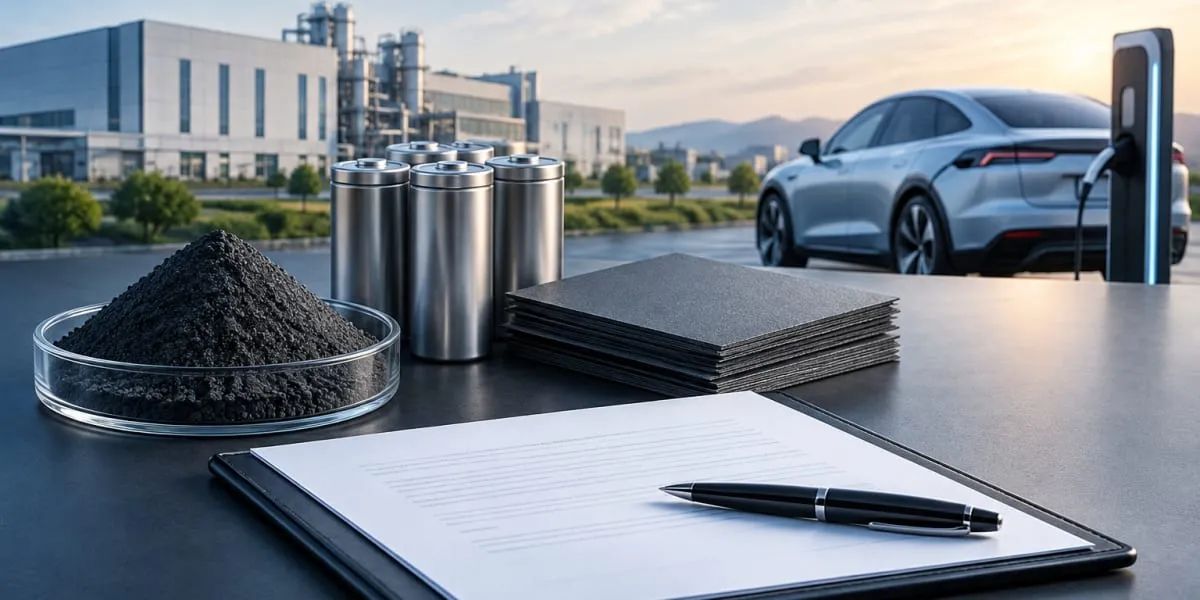
TACC, a subsidiary of HEG Advanced Materials, has signed a non-binding Memorandum of Understanding (MoU) with a global automotive original equipment manufacturer (OEM) to explore supplying fast-charging anode materials for electric vehicles (EVs). The proposed engagement covers materials intended for potential use in electric mobility applications and remains subject to further commercial discussions. TACC’s Phase 1 anode manufacturing facility in Dewas, Madhya Pradesh, is planned to produce 20,000 t of anode active material (AAM) annually. If a commercial supply agreement is finalised, the ..

Next Story
Infrastructure Urban

RAMP Trains 21,000 MSMEs Across Nagaland

The Department of Industries and Commerce, Government of Nagaland, has completed two capacity-building and entrepreneurship development initiatives under the Raising and Accelerating MSME Performance (RAMP) programme. The initiatives were designed to strengthen the state’s micro, small and medium enterprise ecosystem and promote entrepreneurship among educated unemployed youth. Across all 17 districts, 192 workshops were conducted under the capacity-building programme for 18,000 MSMEs. The sessions covered more than 21,000 MSMEs and included 57 Entrepreneurship Awareness Programme workshops ..

Next Story
Infrastructure Energy

Global Diesel Supply Squeeze May Lift Indian Refiners' Margins

Indian oil refining companies could benefit from tightening global diesel supplies and sustained refining margins even if crude oil prices moderate, according to Equirus Research. The brokerage said falling exports from China and declining diesel inventories in major markets could support refining profitability, particularly for standalone refiners such as Reliance Industries. In its latest Oil & Gas Weekly Tracker, Equirus said China’s diesel exports were expected to fall below 0.8 mn tonnes in November 2026, compared with 1.33 mn tonnes in August and 1.8 mn tonnes in September. Commercial ..

Advertisement

Subscribe to Our Newsletter

Get daily newsletters around different themes from Construction world.

STAY CONNECTED

Advertisement

SPECIAL OFFER
QR Code