

Rosatom starts installation of 4th-gen reactor
Real Estate

Rosatom starts installation of 4th-gen reactor

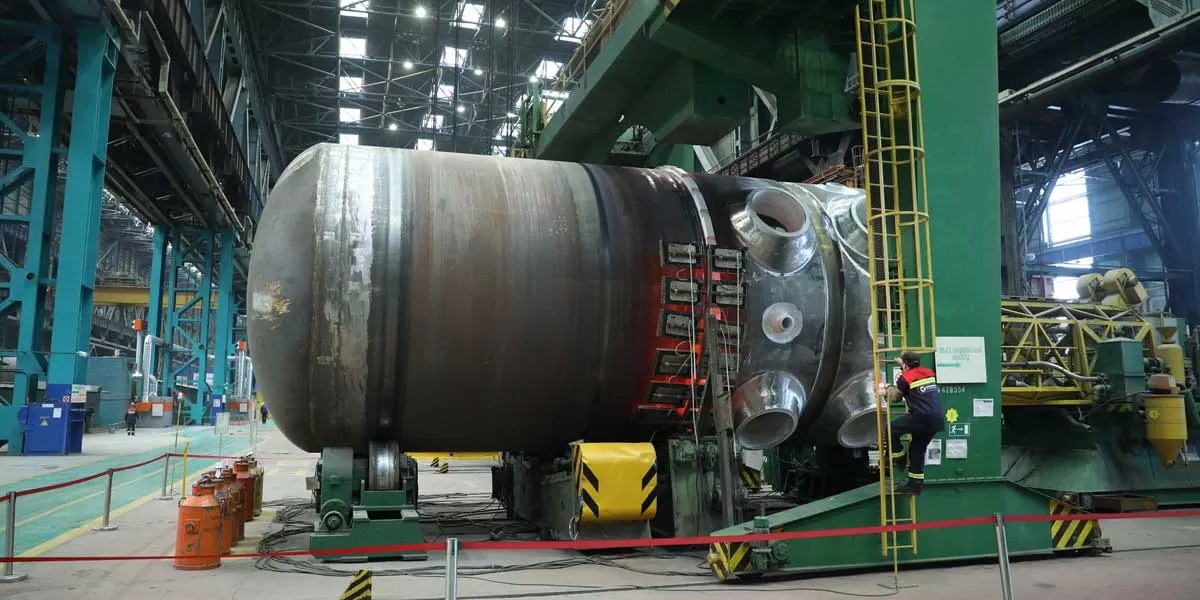
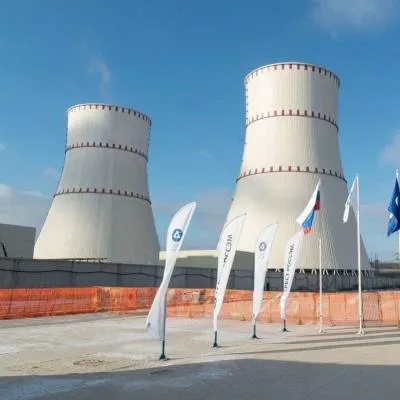
Rosatom has achieved a landmark milestone in construction of a power unit with the innovative fast neutron BREST-OD-300 reactor on the site of the Pilot demonstration energy complex (PDEC) in Seversk, Tomsk Region (West Siberia).

The steel reactor baseplate with the total weight of 165 tons has been installed. The workers have also loaded into the reactor shaft the first part of the reactor vessel ? the lower tier of the containment.

The containment structure is the outer part of the reactor vessel. It provides retention of heat-insulating concrete, forming an additional localizing barrier of protection, which surrounds the boundary of the coolant circuit. On its surface, the temperature should not exceed 60 degrees Celsius, and the radiation background is actually equal to the natural background.

A 300 MW NPP powered by the lead-cooled BREST-OD-300 fast reactor, based on the principles of ?natural safety?, is the key element of the Pilot demonstration energy complex, which is under construction on the site of the Siberian Chemical Combine in Seversk, an enterprise of TVEL Fuel Company of Rosatom. The PDEC facilities are developed under Rosatom?s strategic ?Proryv? project (?the Breakthrough?). In addition to the power unit, it also includes facilities of the on-site closed nuclear fuel cycle ? a unit for the fabrication of uranium-plutonium nitride fuel, as well as a unit for reprocessing of irradiated fuel.

?We have started installation of the world?s first lead-cooled fast reactor, the fourth generation reactor BREST-OD-300. Unlike traditional light-water VVER thermal reactors, BREST has an integral layout. Its vessel is not an all-metal structure like the VVER, but a metal-concrete structure with metal cavities to accommodate the primary circuit equipment. The space between the cavities should be gradually filled with concrete filler during construction. In addition, the BREST vessel is larger in size, it can be delivered only in parts, and the final assembly is possible only at the PDEC construction site,? commented Vadim Lemekhov, Chief Designer of the BREST-OD-300 reactor unit and General Designer of the ?Breakthrough? project team.

Rosatom has achieved a landmark milestone in construction of a power unit with the innovative fast neutron BREST-OD-300 reactor on the site of the Pilot demonstration energy complex (PDEC) in Seversk, Tomsk Region (West Siberia). The steel reactor baseplate with the total weight of 165 tons has been installed. The workers have also loaded into the reactor shaft the first part of the reactor vessel ? the lower tier of the containment. The containment structure is the outer part of the reactor vessel. It provides retention of heat-insulating concrete, forming an additional localizing barrier of protection, which surrounds the boundary of the coolant circuit. On its surface, the temperature should not exceed 60 degrees Celsius, and the radiation background is actually equal to the natural background. A 300 MW NPP powered by the lead-cooled BREST-OD-300 fast reactor, based on the principles of ?natural safety?, is the key element of the Pilot demonstration energy complex, which is under construction on the site of the Siberian Chemical Combine in Seversk, an enterprise of TVEL Fuel Company of Rosatom. The PDEC facilities are developed under Rosatom?s strategic ?Proryv? project (?the Breakthrough?). In addition to the power unit, it also includes facilities of the on-site closed nuclear fuel cycle ? a unit for the fabrication of uranium-plutonium nitride fuel, as well as a unit for reprocessing of irradiated fuel. ?We have started installation of the world?s first lead-cooled fast reactor, the fourth generation reactor BREST-OD-300. Unlike traditional light-water VVER thermal reactors, BREST has an integral layout. Its vessel is not an all-metal structure like the VVER, but a metal-concrete structure with metal cavities to accommodate the primary circuit equipment. The space between the cavities should be gradually filled with concrete filler during construction. In addition, the BREST vessel is larger in size, it can be delivered only in parts, and the final assembly is possible only at the PDEC construction site,? commented Vadim Lemekhov, Chief Designer of the BREST-OD-300 reactor unit and General Designer of the ?Breakthrough? project team.

Next Story
Infrastructure Transport

Large Format Store Planned At M G Road Metro Station

M G Road station in Bengaluru is set to host the city’s first large-format commercial and experience space, with planning led by Bangalore Metro Rail Corporation Limited. BMRCL has invited proposals to develop and operate a central business district destination at the Purple?Pink Line interchange. The plan positions the station as a commercial hub designed to serve a broad commuter base across the city. The proposal is part of a broader effort to activate transit nodes commercially. Tender documents set a minimum monthly rental of Rs 0.944 million (mn), inclusive of GST, for the large-format..

Next Story
Infrastructure Energy

Government Cancels Auction Of Eleven Critical Mineral Blocks

The government has cancelled the auction of 11 critical and strategic mineral blocks after receiving a poor investor response and failing to attract a sufficient number of qualified bidders. The decision represents a setback to plans to ramp up domestic exploration and production of critical minerals amid global supply chain disruptions and rising demand for materials used in clean energy and advanced technologies. The mines ministry issued an annulment notice setting out the reasons for the cancellations. The annulment notice indicated that the auction process for five mineral blocks was canc..

Next Story
Infrastructure Energy

Gujarat Pushes Biogas Growth With 193 Operational Units

Gujarat has operationalised 193 biogas plants across the state and is planning to add 60 more units as part of a broader push to scale up clean and sustainable energy solutions. The existing plants, established under various government-supported schemes, process organic waste including cattle dung and agricultural residue to produce biogas and a nutrient-rich slurry. The output is mainly used for cooking and other energy needs in rural and semi-urban communities, while also improving local waste management practices. The Gujarat Energy Development Agency (GEDA) is leading the initiative and is..

Advertisement

Subscribe to Our Newsletter

Get daily newsletters around different themes from Construction world.

STAY CONNECTED

Advertisement

Advertisement

Advertisement