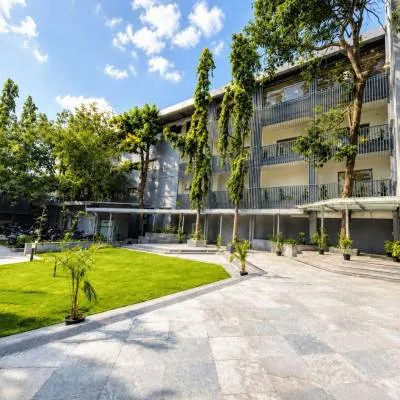
Startups to lease 30% more office space in 2022-24 across 6 cit
Real Estate

Startups to lease 30% more office space in 2022-24 across 6 cit

The leasing of office space by startups is likely to increase 30% during 2022-24 across six major cities as against the previous three years, as per a report.

In its joint report, real estate consultant Colliers India and data analytic firm CRE Matrix told the media that startups are likely to lease approximately 29 million sq ft during 2022-24 against 22.4 million square feet in 2019-2021.

The six cities tracked in the report are Mumbai Metropolitan Region (MMR), Delhi-NCR, Pune, Bengaluru, Chennai and Hyderabad. The demand will be led by fintech and logistics startups as they have gained momentum post-pandemic due to improved digital adoption and e-commerce boom, Colliers India told the media in a statement.

Improved digital adoption, availability of a deep talent pool, favourable government policies and funding options from venture capitalists are steering the development of startups. Improved entrepreneurship and rapid growth of startups have been one of the most notable trends in Indian office space, Colliers India CEO Ramesh Nair told the media. Startups presently occupy 10% of the office space, he added. As startups pick up pace, landlords ought to consider the business life cycle and work preferences of the startups to capture the real estate demand from startups to drive more value.

Abhishek Kiran Gupta, CEO & Co-founder, CRE Matrix, told the media that startups occupied 49.7 million square feet of office space at the end of the last year. Around 30 million sq ft of office space in India is occupied by co-working or flex players, and a large share of this is occupied by start-ups.

Image Source

Also read: BCG leases 100k sq ft of office space in Bandra-Kurla Complex

The leasing of office space by startups is likely to increase 30% during 2022-24 across six major cities as against the previous three years, as per a report. In its joint report, real estate consultant Colliers India and data analytic firm CRE Matrix told the media that startups are likely to lease approximately 29 million sq ft during 2022-24 against 22.4 million square feet in 2019-2021. The six cities tracked in the report are Mumbai Metropolitan Region (MMR), Delhi-NCR, Pune, Bengaluru, Chennai and Hyderabad. The demand will be led by fintech and logistics startups as they have gained momentum post-pandemic due to improved digital adoption and e-commerce boom, Colliers India told the media in a statement. Improved digital adoption, availability of a deep talent pool, favourable government policies and funding options from venture capitalists are steering the development of startups. Improved entrepreneurship and rapid growth of startups have been one of the most notable trends in Indian office space, Colliers India CEO Ramesh Nair told the media. Startups presently occupy 10% of the office space, he added. As startups pick up pace, landlords ought to consider the business life cycle and work preferences of the startups to capture the real estate demand from startups to drive more value. Abhishek Kiran Gupta, CEO & Co-founder, CRE Matrix, told the media that startups occupied 49.7 million square feet of office space at the end of the last year. Around 30 million sq ft of office space in India is occupied by co-working or flex players, and a large share of this is occupied by start-ups. Image Source Also read: BCG leases 100k sq ft of office space in Bandra-Kurla Complex

Next Story
Infrastructure Urban

Implementation Status of Jal Jeevan Mission

Since August 2019 the Government has implemented Jal Jeevan Mission to provide assured potable water through household tap connections in rural India. At the start of the mission only 32.3 million (mn) rural households, representing 16.7 per cent, were reported to have tap water connections. States and union territories have reported that 125.8 mn additional rural households have since been provided with tap connections. As a result, of about 193.6 mn rural households roughly 158.2 mn, or 81.71 per cent, are reported to have tap water supply at home.\n\nThe State, district and village level st..

Next Story
Infrastructure Urban

Jal Jeevan Mission Reaches Eighty One Per Cent Rural Coverage

The Government reported substantial progress under the Jal Jeevan Mission, launched in August 2019 to provide tap water to every rural household. At launch only 32.3 million (mn) rural households had tap connections and states and Union territories reported provision of 125.8 mn additional households by March 2026. Consequently, out of about 193.6 mn rural households around 158.2 mn, or 81.71 per cent, are reported to have tap water at home. The Finance Minister announced extension of the mission until 2028 in the 2025-26 budget speech. The Swachh Bharat Mission Grameen, launched in October 20..

Next Story
Infrastructure Urban

Empowering Local Governance for Sustainable Rural Water Supply

The Ministry of Jal Shakti has aligned the Jal Jeevan Mission (JJM) with the 73rd Amendment to strengthen village level planning and community ownership of water supply. Gram Panchayats, village water and sanitation committees and Pani Samitis are to plan, implement, manage and maintain piped water systems, with gram sabha processes formalising handover and oversight. Implementation support agencies including non government organisations, community based organisations and self help groups have been empanelled to train local committees and promote women participation. Under JJM, the department ..

Advertisement

Subscribe to Our Newsletter

Get daily newsletters around different themes from Construction world.

STAY CONNECTED

Advertisement

Advertisement

Advertisement