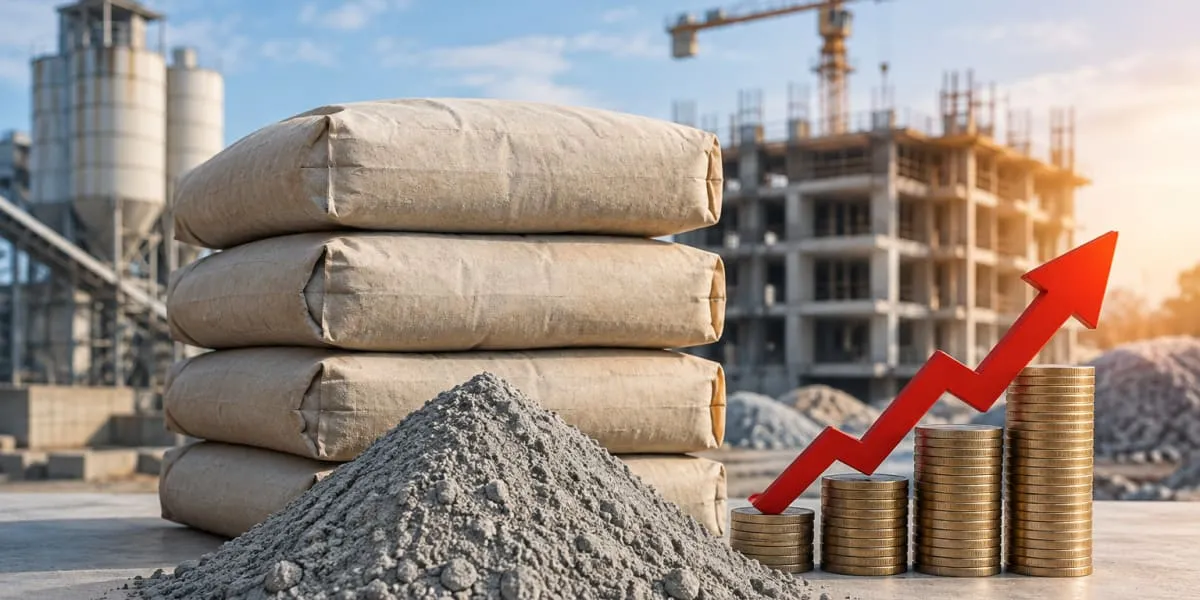





Taking ‘stock’ of the real estate market
Real Estate

Taking ‘stock’ of the real estate market

Steps in the right direction, but the market still remains cautious of the real estate index.

Business is booming, with many developers putting their balance sheets in order, and completions and deliveries being the order of the day. However, experts are still unwilling to declare this as an investable sector, as many policy loopholes exist. Land aggregation norms appear to be a significant hurdle, which some address through joint venture developments. The larger players are cornering a substantial share of the market. The question remains: Is Indian real estate a stable asset on Indian stock markets? E Jayashree Kurup and Pratap Padode find out.

Godrej Properties' sales bookings rose 56 per cent in the last fiscal year to an all-time high of Rs 122.32 billion, while Lodha's sales bookings increased by 34 per cent to a record Rs 120.64 billion. DLF Ltd achieved record sales bookings of Rs 150.58 billion for FY 2023. Gurgaon-based privately held realty firm M3M India reported that its sales bookings more than doubled to a record Rs 130 billion in FY23. Prestige Estates' sales bookings increased by 25 per cent year-on-year to a record Rs 129.31 billion in FY23. Despite these impressive figures, the actual results of real estate companies do not align, and here's why...

Many leading real estate players recorded pre-sales of about Rs 100 billion in 2021-2022, driven by substantial housing demand during the pandemic and beyond. Demand for luxury housing has persisted, and this demand has positively impacted balance sheets. Real estate is a business that sells today but delivers four to five years later. Construction cycles are lengthy, drivers are diverse and unpredictable, and receivables from current sales are deferred until completion when recoveries occur. Yet, realty is a well-tracked index, and investment in this index has yielded returns as well.

To read the full story, CLICK HERE.


Steps in the right direction, but the market still remains cautious of the real estate index. Business is booming, with many developers putting their balance sheets in order, and completions and deliveries being the order of the day. However, experts are still unwilling to declare this as an investable sector, as many policy loopholes exist. Land aggregation norms appear to be a significant hurdle, which some address through joint venture developments. The larger players are cornering a substantial share of the market. The question remains: Is Indian real estate a stable asset on Indian stock markets? E Jayashree Kurup and Pratap Padode find out. Godrej Properties' sales bookings rose 56 per cent in the last fiscal year to an all-time high of Rs 122.32 billion, while Lodha's sales bookings increased by 34 per cent to a record Rs 120.64 billion. DLF Ltd achieved record sales bookings of Rs 150.58 billion for FY 2023. Gurgaon-based privately held realty firm M3M India reported that its sales bookings more than doubled to a record Rs 130 billion in FY23. Prestige Estates' sales bookings increased by 25 per cent year-on-year to a record Rs 129.31 billion in FY23. Despite these impressive figures, the actual results of real estate companies do not align, and here's why... Many leading real estate players recorded pre-sales of about Rs 100 billion in 2021-2022, driven by substantial housing demand during the pandemic and beyond. Demand for luxury housing has persisted, and this demand has positively impacted balance sheets. Real estate is a business that sells today but delivers four to five years later. Construction cycles are lengthy, drivers are diverse and unpredictable, and receivables from current sales are deferred until completion when recoveries occur. Yet, realty is a well-tracked index, and investment in this index has yielded returns as well.To read the full story, CLICK HERE.

Next Story
Real Estate

AI: The New Recruit

From getting ideas to evaluating designs, presenting concepts to clients and tracking projects, artificial intelligence (AI) is helping architects work better and faster.“AI allows architects to spend more time doing what only they can do: think critically, synthesise complexity and design with intent,” says Dikshu C Kukreja, Managing Principal, CP Kukreja Architects. “Every minute reclaimed from repetitive processes can be invested in creativity, contextual understanding, interdisciplinary collaboration and innovation – the qualities that define meaningful architecture.”To read the ..

Next Story
Real Estate

Redevelopment 2.0

In 2017, Mumbai identified 160,000 ageing buildings due for structural audit. Close to half of these were in the Western Suburbs. Redeveloping the oldest and structurally weakest of these would help unlock new housing, much needed given the city’s growing population density and constant developed area of 437.7 sq km. At 30,600 people per sq km in 2024, Mumbai’s density was almost thrice that of Gurugram, and 60 per cent higher than Bengaluru’s.Essentially, Mumbai’s realty market has demand. It has capital. It has realty development potential.Fast forward to 2026. Mumbai has 1,094 regis..

Next Story
Technology

Cost intelligence will become a strategic contributor to project success

As India's construction industry accelerates its digital transformation, integrated platforms, AI and connected data are becoming essential to improving cost certainty, project efficiency and sustainability. Ravi Kumar, Sales Director – India, RIB Software India, shares how digital workflows are reshaping project planning, commercial management and decision-making across the construction value chain.India's construction sector is embracing digital technologies at an unprecedented pace. From your perspective, what are the biggest shifts driving this transformation and how is RIB Software enab..

Advertisement

Subscribe to Our Newsletter

Get daily newsletters around different themes from Construction world.

STAY CONNECTED

Advertisement

Advertisement

Advertisement