Siemens inaugurates showcase digitalised factory in India
Technology

Siemens inaugurates showcase digitalised factory in India

  • Transforms its Low-voltage Switchgear factory, Kalwa, into a globally-benchmarked digitalised factory – perfect example for small and medium enterprises.
  • Real and virtual worlds merge in ‘Digital Factory’.
  • One product leaves state-of-the-art Siemens plant every nine seconds.
Siemens India recently inaugurated its showcase digitalised low-voltage switchgear factory at Kalwa. The globally-benchmarked factory is capable of producing more than 180 variants at the rate of one product every nine seconds. The plant can manufacture over five million devices annually. Products at the plant communicate with machines and all processes are optimised for IT control, resulting in a minimal failure rate. The production methods deployed at the plant are expected to be a standard for small and medium-sized manufacturing units in India, achieving a visionary model for the future of manufacturing: end-to-end digitalisation where the real and virtual worlds merge in ‘Digital Factory’.
 
Karlheinz Kaul, CEO-Control Products, Digital Factory, Siemens AG, says, “With the launch of the showcase digitalised factory in India, we further deepen our ties with a country in which we have a very strong presence. The SIRIUS range of switchgear products that will be manufactured here requires a very high degree of precision and quality at global standards that can be achieved only through digitalisation. The technical and engineering effort required to transform this 40-year-old manufacturing facility is a true showcase for Indian enterprises who wish to follow the path towards digitalisation!”
 
Ashish Bhat, Executive Vice President and Head, Digital Factory, Siemens, adds, “The need for localising global products and adapting them to the local conditions has been the priority at Siemens in India. Digitalisation will help us engage with our customers and industry suppliers across the complete value chain. A key element in this evolution is an improved technological prowess and a world-class product manufacturing plant.”
 
The digitalised factory is proof of how adopting digitalisation will help Indian industry, specially small and medium enterprises (SMEs), achieve manufacturing excellence. SMEs can utilise digitalisation to address growing demands such as mastering increasing product and process complexity, reducing time to market, adapting to changing market requirements, deliver individualised products and secure continuous product improvement. The low-voltage switchgear factory at Kalwa Works has achieved end-to-end digitalisation across its value chain through Product Lifecycle Management software such as NX and Teamcenter, Totally Integrated Automation (TIA) Portal and manufacturing execution system. These solutions enable design of products, tools and equipment, master data management, automation, process simulation and product traceability.

Transforms its Low-voltage Switchgear factory, Kalwa, into a globally-benchmarked digitalised factory – perfect example for small and medium enterprises. Real and virtual worlds merge in ‘Digital Factory’. One product leaves state-of-the-art Siemens plant every nine seconds.Siemens India recently inaugurated its showcase digitalised low-voltage switchgear factory at Kalwa. The globally-benchmarked factory is capable of producing more than 180 variants at the rate of one product every nine seconds. The plant can manufacture over five million devices annually. Products at the plant communicate with machines and all processes are optimised for IT control, resulting in a minimal failure rate. The production methods deployed at the plant are expected to be a standard for small and medium-sized manufacturing units in India, achieving a visionary model for the future of manufacturing: end-to-end digitalisation where the real and virtual worlds merge in ‘Digital Factory’.   Karlheinz Kaul, CEO-Control Products, Digital Factory, Siemens AG, says, “With the launch of the showcase digitalised factory in India, we further deepen our ties with a country in which we have a very strong presence. The SIRIUS range of switchgear products that will be manufactured here requires a very high degree of precision and quality at global standards that can be achieved only through digitalisation. The technical and engineering effort required to transform this 40-year-old manufacturing facility is a true showcase for Indian enterprises who wish to follow the path towards digitalisation!”   Ashish Bhat, Executive Vice President and Head, Digital Factory, Siemens, adds, “The need for localising global products and adapting them to the local conditions has been the priority at Siemens in India. Digitalisation will help us engage with our customers and industry suppliers across the complete value chain. A key element in this evolution is an improved technological prowess and a world-class product manufacturing plant.”   The digitalised factory is proof of how adopting digitalisation will help Indian industry, specially small and medium enterprises (SMEs), achieve manufacturing excellence. SMEs can utilise digitalisation to address growing demands such as mastering increasing product and process complexity, reducing time to market, adapting to changing market requirements, deliver individualised products and secure continuous product improvement. The low-voltage switchgear factory at Kalwa Works has achieved end-to-end digitalisation across its value chain through Product Lifecycle Management software such as NX and Teamcenter, Totally Integrated Automation (TIA) Portal and manufacturing execution system. These solutions enable design of products, tools and equipment, master data management, automation, process simulation and product traceability.

Next Story
Infrastructure Transport

Tunnelling Begins for Thane, Borivali twin tunnel project

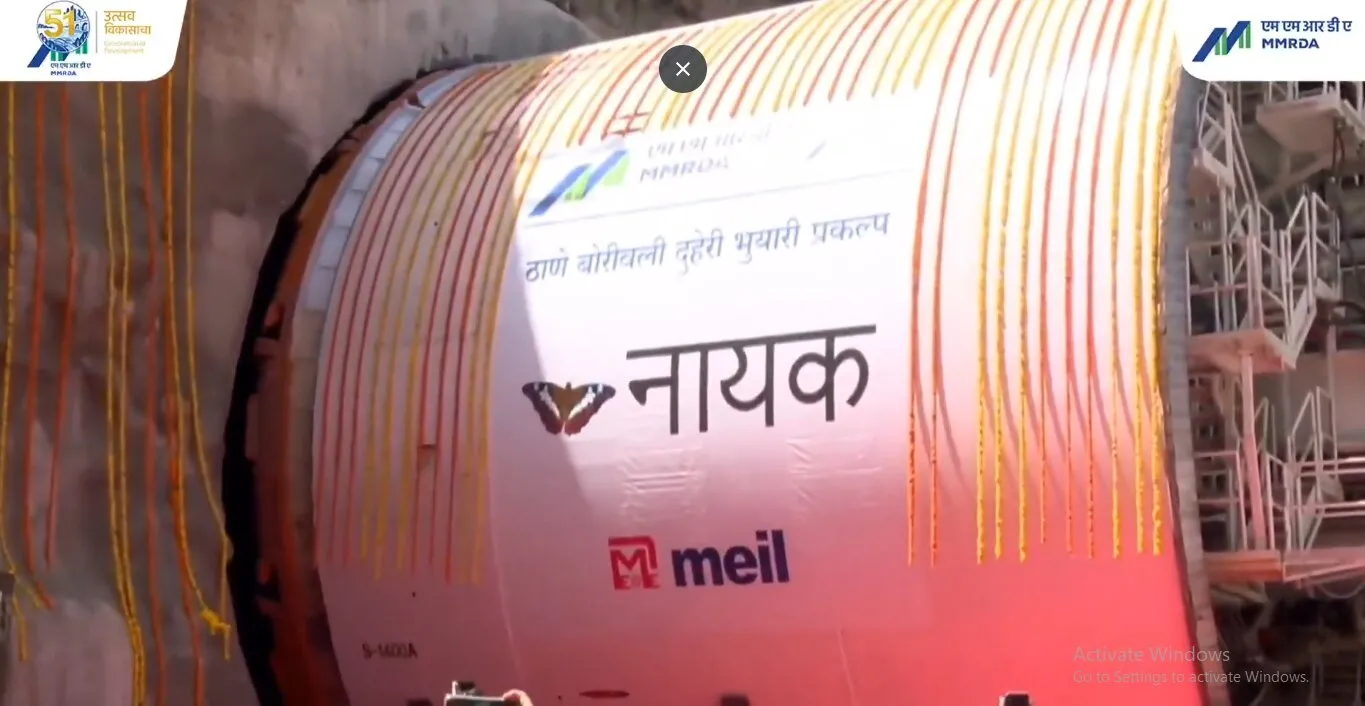
Tunnelling work has commenced for the 11.84-km Thane–Borivali Twin Tunnel, set to be India’s longest urban road tunnel, marking a key milestone in Mumbai’s infrastructure development.As per a post shared by Mumbai Metropolitan Region Development Authority on social media platform X, the tunnel boring machine (TBM) ‘Nayak’—the country’s largest single-shield hard rock TBM for an urban tunnel—was launched by Devendra Fadnavis on Tuesday. The event was attended by Eknath Shinde and Sunetra Pawar, among other dignitaries. A second TBM, ‘Arjuna’, is expected to be launched so..
Next Story
Infrastructure Transport

Large Format Store Planned At M G Road Metro Station

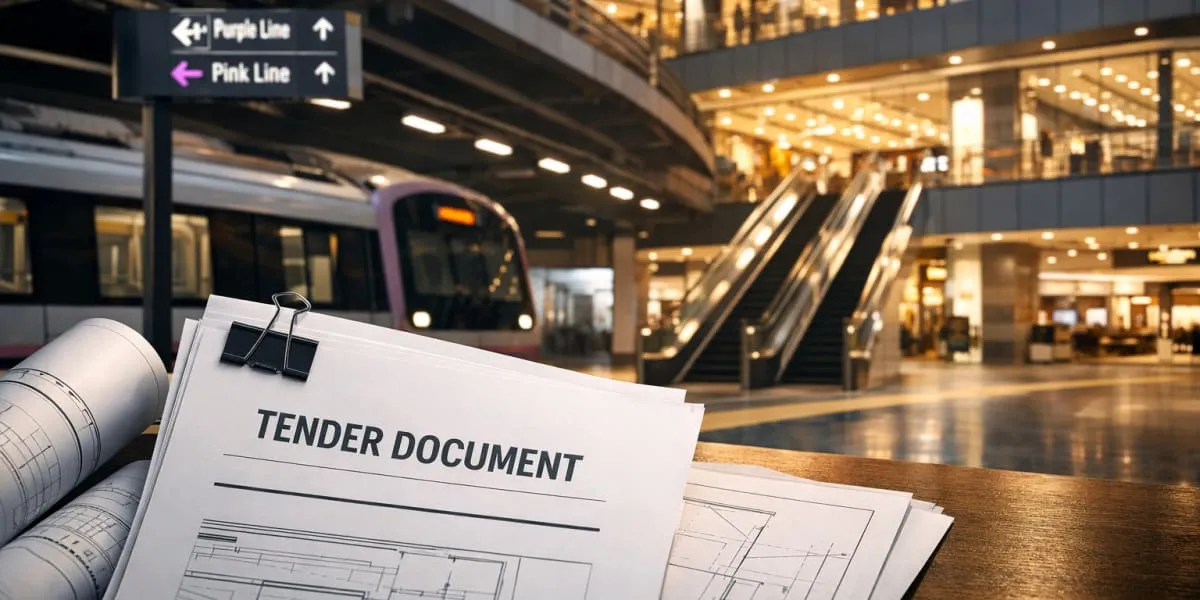
M G Road station in Bengaluru is set to host the city’s first large-format commercial and experience space, with planning led by Bangalore Metro Rail Corporation Limited. BMRCL has invited proposals to develop and operate a central business district destination at the Purple?Pink Line interchange. The plan positions the station as a commercial hub designed to serve a broad commuter base across the city. The proposal is part of a broader effort to activate transit nodes commercially. Tender documents set a minimum monthly rental of Rs 0.944 million (mn), inclusive of GST, for the large-format..

Next Story
Infrastructure Energy

Government Cancels Auction Of Eleven Critical Mineral Blocks

The government has cancelled the auction of 11 critical and strategic mineral blocks after receiving a poor investor response and failing to attract a sufficient number of qualified bidders. The decision represents a setback to plans to ramp up domestic exploration and production of critical minerals amid global supply chain disruptions and rising demand for materials used in clean energy and advanced technologies. The mines ministry issued an annulment notice setting out the reasons for the cancellations. The annulment notice indicated that the auction process for five mineral blocks was canc..

Advertisement

Subscribe to Our Newsletter

Get daily newsletters around different themes from Construction world.

STAY CONNECTED

Advertisement

Advertisement

Advertisement