RVNL and Siemens consortium awarded Mumbai Metro 2B project
RAILWAYS & METRO RAIL

RVNL and Siemens consortium awarded Mumbai Metro 2B project

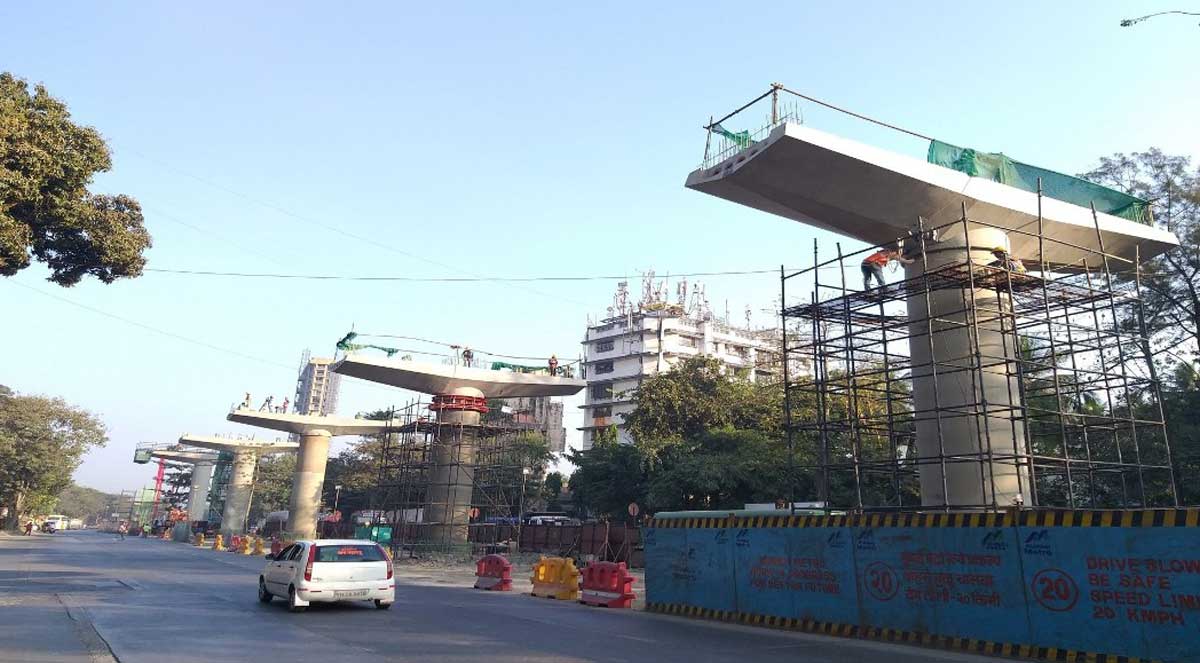
RVNL (Rail Vikas Nigam Limited) has been granted the Letter of Acceptance (LOA) by MMRDA (Mumbai Metropolitan Region Development Authority) for the Mumbai Metro Line 2B project, according to a recent announcement.

The project encompasses various tasks such as designing, manufacturing, installing, supplying, testing, and commissioning two 110KV Receiving Substations. Additionally, it involves the implementation of 110 KV, 25KV, and 33KV cabling work, a comprehensive 25KV Overhead Catenary System with a Switching Station, a 33KV auxiliary power distribution system with a 33/0.415 KV auxiliary substation, and a complete SCADA system for both the mainline and depot of Mumbai Metro Line 2B managed by MMRDA.

RVNL has formed a consortium with M/s SIEMENS India Limited, where RVNL holds a 40% stake while M/s SIEMENS serves as the lead partner with a 60% share. The estimated cost of the project amounts to approximately EUR 8,838,976 (excluding GST and customs fees) and Rs 300,11,81,354.

The Mumbai Metro Line 2B project plays a crucial role in enhancing Mumbai's transportation infrastructure. It is anticipated that the project's timely execution and the implementation of cutting-edge technological solutions by M/s SIEMENS, coupled with RVNL's expertise in railway construction and maintenance, will result in an improved commuting experience for the city's residents.

RVNL (Rail Vikas Nigam Limited) has been granted the Letter of Acceptance (LOA) by MMRDA (Mumbai Metropolitan Region Development Authority) for the Mumbai Metro Line 2B project, according to a recent announcement. The project encompasses various tasks such as designing, manufacturing, installing, supplying, testing, and commissioning two 110KV Receiving Substations. Additionally, it involves the implementation of 110 KV, 25KV, and 33KV cabling work, a comprehensive 25KV Overhead Catenary System with a Switching Station, a 33KV auxiliary power distribution system with a 33/0.415 KV auxiliary substation, and a complete SCADA system for both the mainline and depot of Mumbai Metro Line 2B managed by MMRDA. RVNL has formed a consortium with M/s SIEMENS India Limited, where RVNL holds a 40% stake while M/s SIEMENS serves as the lead partner with a 60% share. The estimated cost of the project amounts to approximately EUR 8,838,976 (excluding GST and customs fees) and Rs 300,11,81,354. The Mumbai Metro Line 2B project plays a crucial role in enhancing Mumbai's transportation infrastructure. It is anticipated that the project's timely execution and the implementation of cutting-edge technological solutions by M/s SIEMENS, coupled with RVNL's expertise in railway construction and maintenance, will result in an improved commuting experience for the city's residents.

Next Story
Infrastructure Urban

Centre Clears Power Distribution Upgrade for Uttar Pradesh

The Central Government has approved power distribution projects worth Rs 407.39 billion for Uttar Pradesh under the Revamped Distribution Sector Scheme (RDSS). The investment will be used to modernise the state's electricity distribution infrastructure and strengthen network capacity across urban and rural areas. The package targets one of the country's largest distribution networks as the state experiences rapid urbanisation and rising electricity consumption. Planned interventions include the strengthening of distribution lines, modernisation of substations, replacement of ageing electrical ..

Next Story
Infrastructure Energy

India Data Centres To Consume 191 TWh By 2040 Driving Renewables

A Wood Mackenzie report says India's operational data centre capacity is projected to increase more than fivefold to 12 gigawatt (GW) by 2030 from 2.2 GW in 2025 as artificial intelligence (AI) and cloud computing drive demand. It projects electricity consumption to rise from 10 terawatt-hour (TWh) in 2025 to 191 TWh by 2040. The study forecasts a compound annual growth rate of around 40 per cent and notes AI-dedicated capacity will surge nearly 24-fold from 275 megawatt (MW) in 2025 to 6,546 MW by 2030. The report places India's digital economy at Rs 32 trillion (tn) in 2025 and says it contr..

Next Story
Infrastructure Transport

Hydrogen Train Completes 1,200 Kilometres Of Trials

India's first hydrogen train was flagged off between Jind and Sonipat on July 17 and has travelled over 1,200 kilometres in trials, saving diesel consumption of more than 3,200 litres, a Railway Ministry press release said. The deployment marks the introduction of a zero-emission fuel cell train into route testing and represents a milestone in domestic rail innovation. The train generates electricity onboard through a chemical reaction between hydrogen and oxygen, producing electricity to propel the vehicle while emitting only water vapour as a by-product. There is no smoke and no tailpipe car..

Advertisement

Subscribe to Our Newsletter

Get daily newsletters around different themes from Construction world.

STAY CONNECTED

Advertisement

Advertisement

Advertisement