ABB Launches Infinitus DC Portfolio for AI Data Centres
Technology

ABB Launches Infinitus DC Portfolio for AI Data Centres

ABB has launched Infinitus, a portfolio of direct current (DC) solutions designed to address the rising power requirements of AI data centres. The portfolio is intended to support the adoption of DC architectures by improving energy efficiency, reducing the footprint of power infrastructure and increasing the computing capacity available within data centre facilities.

According to the International Energy Agency (IEA), global data centre electricity demand is expected to more than double by 2030. ABB estimates that approximately 25-40 per cent of new capacity installed in 2030 could use DC distribution.

Next-generation AI chips are expected to require 1 MW per rack and beyond, compared with nearly 200 kW currently. ABB said this increase in power density is creating a need for DC architectures capable of supporting higher computing requirements while improving energy efficiency.

The company said 800 VDC distribution can create a more compact power infrastructure by reducing redundant conversion stages and heat losses associated with conventional alternating current (AC) systems. A BCG/ABB report cited by the company estimated that DC distribution could deliver energy-efficiency gains of more than 5 per cent while increasing available space for computing racks.

For a 500 MW data centre, ABB said a 5 per cent efficiency gain could make an additional 25 MW available for IT loads and potentially generate more than $300 million in additional annual revenue. The company added that comparable efficiency gains at a 500 MW data centre campus could result in annual energy savings equivalent to powering a regional Indian city for almost a week.

India is among the world's fastest-growing data centre markets, with installed capacity of around 2 GW and projected capacity of 6-8 GW by 2029-30. Growth is being driven by hyperscalers, AI workloads and enterprise digitalisation, increasing the focus on power utilisation, operational efficiency, AI readiness and sustainability.

ABB said the Infinitus portfolio is designed to address these requirements by reducing energy conversion losses, improving power utilisation and enabling more efficient use of electrical infrastructure.

Giampiero Frisio, President of ABB’s Electrification business area, said: "ABB has pioneered DC technology for more than 25 years across several segments. We are working closely with chipmakers, hyperscale customers, supply partners and industry bodies to set the standards and the pace for the roll-out of high-efficiency DC architectures. Infinitus is the first portfolio providing the building blocks for any data center architecture - either DC native or hybrid AC/ DC - to power next-generation AI chips efficiently. This technology will bring similar energy efficiency gains to other energy-intensive industries such as large scale manufacturing, renewables and marine operations."

At the centre of the Infinitus portfolio is ABB’s solid-state transformer technology, designed to support a smaller infrastructure footprint and higher energy efficiency. The portfolio combines technologies across medium-voltage powertrains, DC sources and power quality, DC power distribution, DC power protection and cooling optimisation.

Medium-voltage powertrains are designed to provide stable power from the grid or on-site generation, while DC sources and power-quality technologies convert AC to DC and reduce conversion requirements within data centre white space. DC power distribution supports higher power densities within a smaller footprint, while protection systems are intended to safeguard operators, AI servers and hardware against DC overcurrents.

The portfolio also incorporates DC-connected variable-speed drives and motors for cooling systems to help reduce energy consumption across grey and white spaces.

ABB said the portfolio can complement traditional AC systems while supporting DC-native and hybrid AC/DC architectures. The company works with customers to configure systems according to power demand, facility layout and energy mix.

Several main components of the portfolio are expected to enter production over the next 12 months. ABB expects the first DC-native facilities using the complete Infinitus portfolio to become operational within two to three years.

The launch also extends ABB’s collaboration with NVIDIA, announced in October 2025, to develop 800 VDC power architectures for gigawatt-scale AI facilities. ABB said it has more than 25 years of experience in DC technologies and over 700 related patents across renewables, power generation, energy storage, motors and drives.

Beyond data centres, ABB expects DC architectures to support energy-efficiency improvements across industrial buildings, manufacturing, renewable energy and marine operations.


ABB has launched Infinitus, a portfolio of direct current (DC) solutions designed to address the rising power requirements of AI data centres. The portfolio is intended to support the adoption of DC architectures by improving energy efficiency, reducing the footprint of power infrastructure and increasing the computing capacity available within data centre facilities.According to the International Energy Agency (IEA), global data centre electricity demand is expected to more than double by 2030. ABB estimates that approximately 25-40 per cent of new capacity installed in 2030 could use DC distribution.Next-generation AI chips are expected to require 1 MW per rack and beyond, compared with nearly 200 kW currently. ABB said this increase in power density is creating a need for DC architectures capable of supporting higher computing requirements while improving energy efficiency.The company said 800 VDC distribution can create a more compact power infrastructure by reducing redundant conversion stages and heat losses associated with conventional alternating current (AC) systems. A BCG/ABB report cited by the company estimated that DC distribution could deliver energy-efficiency gains of more than 5 per cent while increasing available space for computing racks.For a 500 MW data centre, ABB said a 5 per cent efficiency gain could make an additional 25 MW available for IT loads and potentially generate more than $300 million in additional annual revenue. The company added that comparable efficiency gains at a 500 MW data centre campus could result in annual energy savings equivalent to powering a regional Indian city for almost a week.India is among the world's fastest-growing data centre markets, with installed capacity of around 2 GW and projected capacity of 6-8 GW by 2029-30. Growth is being driven by hyperscalers, AI workloads and enterprise digitalisation, increasing the focus on power utilisation, operational efficiency, AI readiness and sustainability.ABB said the Infinitus portfolio is designed to address these requirements by reducing energy conversion losses, improving power utilisation and enabling more efficient use of electrical infrastructure.Giampiero Frisio, President of ABB’s Electrification business area, said: ABB has pioneered DC technology for more than 25 years across several segments. We are working closely with chipmakers, hyperscale customers, supply partners and industry bodies to set the standards and the pace for the roll-out of high-efficiency DC architectures. Infinitus is the first portfolio providing the building blocks for any data center architecture - either DC native or hybrid AC/ DC - to power next-generation AI chips efficiently. This technology will bring similar energy efficiency gains to other energy-intensive industries such as large scale manufacturing, renewables and marine operations.At the centre of the Infinitus portfolio is ABB’s solid-state transformer technology, designed to support a smaller infrastructure footprint and higher energy efficiency. The portfolio combines technologies across medium-voltage powertrains, DC sources and power quality, DC power distribution, DC power protection and cooling optimisation.Medium-voltage powertrains are designed to provide stable power from the grid or on-site generation, while DC sources and power-quality technologies convert AC to DC and reduce conversion requirements within data centre white space. DC power distribution supports higher power densities within a smaller footprint, while protection systems are intended to safeguard operators, AI servers and hardware against DC overcurrents.The portfolio also incorporates DC-connected variable-speed drives and motors for cooling systems to help reduce energy consumption across grey and white spaces.ABB said the portfolio can complement traditional AC systems while supporting DC-native and hybrid AC/DC architectures. The company works with customers to configure systems according to power demand, facility layout and energy mix.Several main components of the portfolio are expected to enter production over the next 12 months. ABB expects the first DC-native facilities using the complete Infinitus portfolio to become operational within two to three years.The launch also extends ABB’s collaboration with NVIDIA, announced in October 2025, to develop 800 VDC power architectures for gigawatt-scale AI facilities. ABB said it has more than 25 years of experience in DC technologies and over 700 related patents across renewables, power generation, energy storage, motors and drives.Beyond data centres, ABB expects DC architectures to support energy-efficiency improvements across industrial buildings, manufacturing, renewable energy and marine operations.
Related Stories

Gold Stories

Next Story
Resources

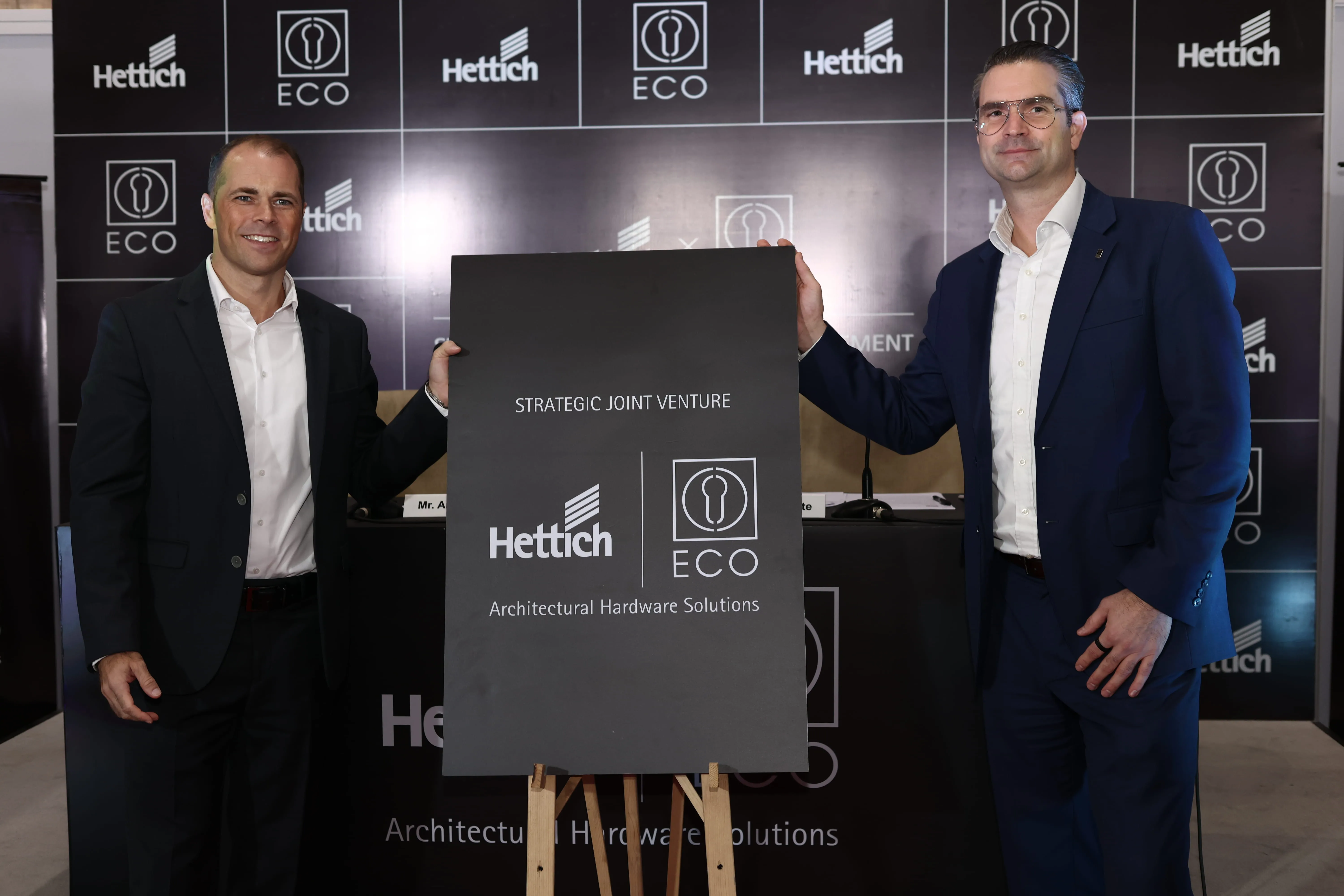
Hettich India And ECO Schulte Form Joint Venture In India

Hettich India and German company ECO Schulte have announced a strategic joint venture to strengthen their presence in India's architectural hardware market. The partnership was announced at ACETECH Mumbai on November 20, 2026, bringing together the two family-owned businesses with a combined engineering heritage of 238 years.The venture combines Hettich's expertise in furniture fittings and interior solutions with ECO Schulte's experience in architectural door hardware and engineered door systems. Its focus will span residential, commercial, institutional and infrastructure projects.Hettich, w..

Next Story
Real Estate

Address Maker sells over 200 Apollo Address plots in six weeks

The Address Maker Group has sold more than two-thirds of the inventory at its Apollo Address villa-plot development in Nelamangala, North-West Bengaluru, within six weeks of its launch. With over 200 plots purchased and approximately 100 remaining, the project has recorded the fastest sales pace in the developer's history.Spread across 23 acres within a larger 90-acre township, Apollo Address offers villa plots ranging from 1,200 to 2,400 sq ft. Inspired by classical Greek architecture, the development features planned infrastructure, landscaped open spaces and residential amenities.Nearly 30 ..

Next Story
Equipment

Zoomlion strengthens equipment partnerships in Australia

Zoomlion Heavy Industry Science & Technology has reaffirmed its commitment to expanding operations in Australia, with Chairman and CEO Zhan Chunxin meeting customers and business partners in Sydney to strengthen long-term partnerships and discuss opportunities for closer collaboration.The meeting, held on 4 November 2026, focused on equipment quality, technical support, spare parts availability, local training and customer service improvements. Representatives from the tower crane, concrete machinery, earthmoving, aerial work platform, agricultural machinery and financial sectors participa..

Advertisement

Subscribe to Our Newsletter

Get daily newsletters around different themes from Construction world.

STAY CONNECTED

Advertisement

SPECIAL OFFER
QR Code