Quad nations to invest $50 bn to boost infra in Indo-Pacific
Technology

Quad nations to invest $50 bn to boost infra in Indo-Pacific

India, the US, Japan and Australia have planned to invest $50 billion to boost infrastructure in the Indo-Pacific region over the next five years under the Quad initiative to bring tangible benefits to the region.

The Quad has launched a Common Statement of Principles on Critical Technology Supply Chains to reduce risks and advance cooperation in semiconductors and other crucial technology.

The countries also agreed to expand support in 5G technology by signing a new Memorandum of Understanding (MoU) on supplier diversification and defining standards for interoperability.

It aims to ensure open and secure telecommunications technologies in the Indo-Pacific region.

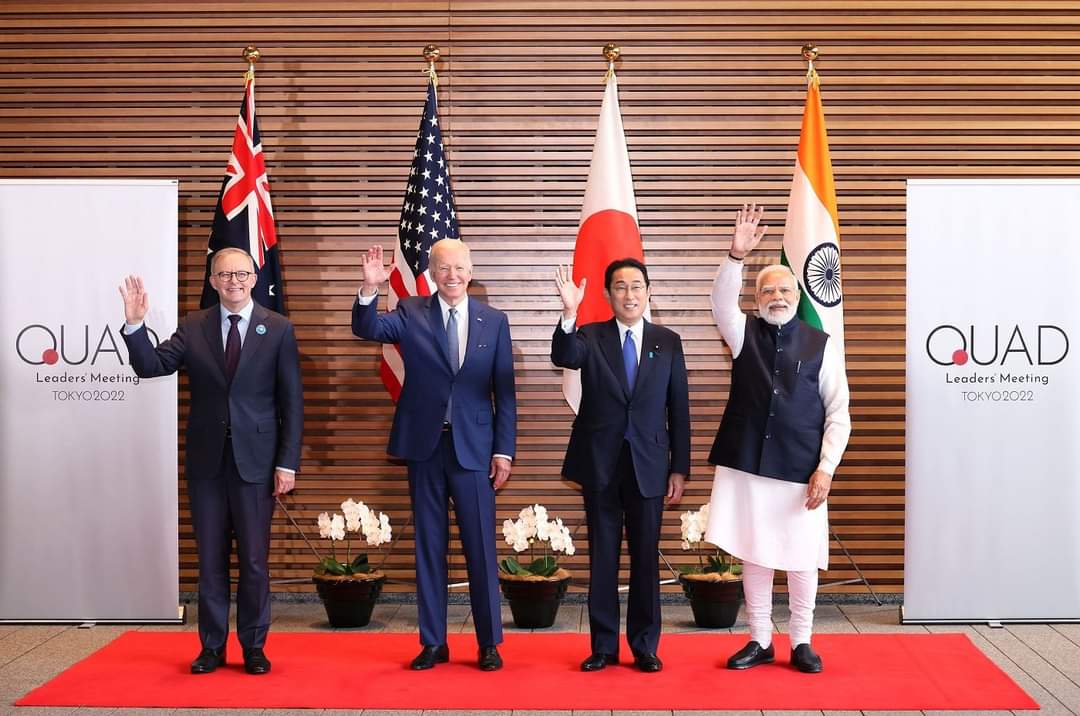
At the Quad leaders' summit in Tokyo, PM Narendra Modi said that the Quad is carrying a constructive agenda for the Indo-Pacific region, which will further strengthen its position.

On the infrastructure, Quad nations mentioned that deepening cooperation is critical to driving productivity and prosperity in the entire region.

According to a statement, Quad will seek to extend over $50 billion of infrastructure assistance and investment in the Indo-Pacific region over the next five years.

On secure telecommunication technologies, the Quad nations noted that progress had been made with cooperation at global organisations and would be strengthened through the new International Standards Cooperation Network (ISCN).

The cooperation will help ensure technology development in the region through shared democratic values.

Additionally, Quad will soon summon a business and investment forum named networking with industry partners to expand capital for critical and new emerging technologies.

Till now, the Quad partners have collectively committed around $5.2 billion to the Covid-19 Vaccines Advance Market Commitment (COVAX AMC), with around 40% of the total contributions from government donors.

The summit saw the launch of the Quad Fellowship to bring 100 students to the US each year to pursue graduate degrees in science, technology, engineering and mathematics (STEM).

Image Source

Also read: 5G to launch in 2022 in India: Department of Telecommunications

India, the US, Japan and Australia have planned to invest $50 billion to boost infrastructure in the Indo-Pacific region over the next five years under the Quad initiative to bring tangible benefits to the region. The Quad has launched a Common Statement of Principles on Critical Technology Supply Chains to reduce risks and advance cooperation in semiconductors and other crucial technology. The countries also agreed to expand support in 5G technology by signing a new Memorandum of Understanding (MoU) on supplier diversification and defining standards for interoperability. It aims to ensure open and secure telecommunications technologies in the Indo-Pacific region. At the Quad leaders' summit in Tokyo, PM Narendra Modi said that the Quad is carrying a constructive agenda for the Indo-Pacific region, which will further strengthen its position. On the infrastructure, Quad nations mentioned that deepening cooperation is critical to driving productivity and prosperity in the entire region. According to a statement, Quad will seek to extend over $50 billion of infrastructure assistance and investment in the Indo-Pacific region over the next five years. On secure telecommunication technologies, the Quad nations noted that progress had been made with cooperation at global organisations and would be strengthened through the new International Standards Cooperation Network (ISCN). The cooperation will help ensure technology development in the region through shared democratic values. Additionally, Quad will soon summon a business and investment forum named networking with industry partners to expand capital for critical and new emerging technologies. Till now, the Quad partners have collectively committed around $5.2 billion to the Covid-19 Vaccines Advance Market Commitment (COVAX AMC), with around 40% of the total contributions from government donors. The summit saw the launch of the Quad Fellowship to bring 100 students to the US each year to pursue graduate degrees in science, technology, engineering and mathematics (STEM). Image Source Also read: 5G to launch in 2022 in India: Department of Telecommunications

Next Story
Infrastructure Transport

Large Format Store Planned At M G Road Metro Station

M G Road station in Bengaluru is set to host the city’s first large-format commercial and experience space, with planning led by Bangalore Metro Rail Corporation Limited. BMRCL has invited proposals to develop and operate a central business district destination at the Purple?Pink Line interchange. The plan positions the station as a commercial hub designed to serve a broad commuter base across the city. The proposal is part of a broader effort to activate transit nodes commercially. Tender documents set a minimum monthly rental of Rs 0.944 million (mn), inclusive of GST, for the large-format..

Next Story
Infrastructure Energy

Government Cancels Auction Of Eleven Critical Mineral Blocks

The government has cancelled the auction of 11 critical and strategic mineral blocks after receiving a poor investor response and failing to attract a sufficient number of qualified bidders. The decision represents a setback to plans to ramp up domestic exploration and production of critical minerals amid global supply chain disruptions and rising demand for materials used in clean energy and advanced technologies. The mines ministry issued an annulment notice setting out the reasons for the cancellations. The annulment notice indicated that the auction process for five mineral blocks was canc..

Next Story
Infrastructure Energy

Gujarat Pushes Biogas Growth With 193 Operational Units

Gujarat has operationalised 193 biogas plants across the state and is planning to add 60 more units as part of a broader push to scale up clean and sustainable energy solutions. The existing plants, established under various government-supported schemes, process organic waste including cattle dung and agricultural residue to produce biogas and a nutrient-rich slurry. The output is mainly used for cooking and other energy needs in rural and semi-urban communities, while also improving local waste management practices. The Gujarat Energy Development Agency (GEDA) is leading the initiative and is..

Advertisement

Subscribe to Our Newsletter

Get daily newsletters around different themes from Construction world.

STAY CONNECTED

Advertisement

Advertisement

Advertisement