

SEMICON India 2025 Cements India's Chip Leadership Goals
Technology

SEMICON India 2025 Cements India's Chip Leadership Goals

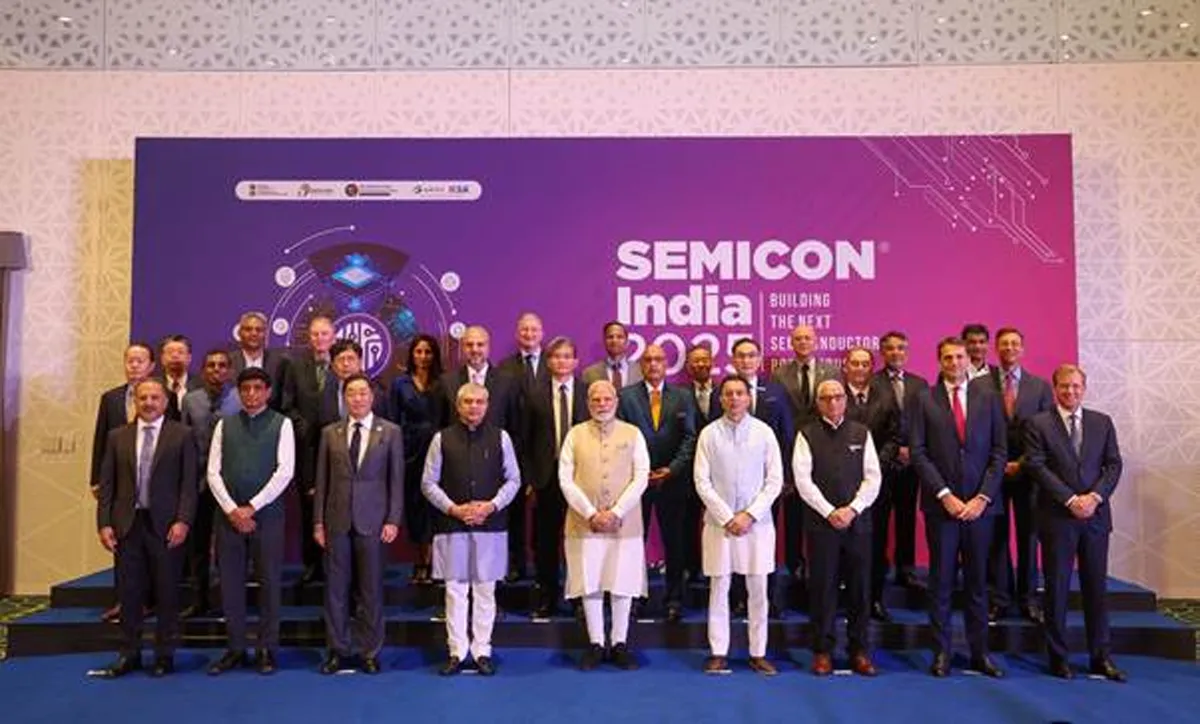
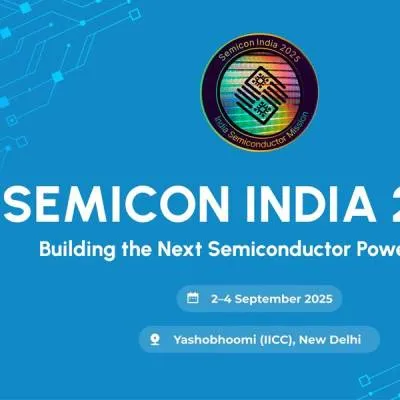
SEMICON India 2025, the nation’s largest semiconductor conference, concluded successfully at Yashobhoomi, Dwarka, New Delhi, from 2–4 September 2025. The three-day event marked a defining moment in India's ambition to become a global semiconductor hub, bringing together more than 350 exhibiting companies and participants from 48 countries and regions.
Organised jointly by the India Semiconductor Mission (ISM) under the Ministry of Electronics and Information Technology (MeitY) and global industry association SEMI, the event saw 35,000 registrations, 30,000 footfalls and 25,000 online viewers. The event featured four country pavilions, six country roundtables, a dedicated workforce development pavilion, and an extensive conference programme covering chip design, fabrication, packaging, research, display manufacturing, ecosystem growth and state policies.
Following earlier editions in Bengaluru (2022), Gandhinagar (2023), and Greater Noida (2024), the Delhi chapter of SEMICON India raised the bar, positioning India more firmly on the global semiconductor map.
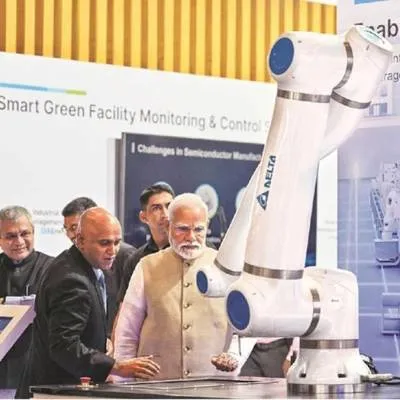
Prime Minister Narendra Modi inaugurated the conference and underscored the government’s long-term commitment to building a globally competitive semiconductor ecosystem. “The day is not far when India’s smallest chip will drive the world’s biggest change,” he said, citing the nation’s journey of ‘Reform, Perform, Transform’ and signalling the beginning of a new phase of next-generation reforms under the India Semiconductor Mission.
The Prime Minister also engaged with global CEOs and CXOs on Day 2, holding high-level discussions on India’s emerging role in the global chip value chain. The conference served as a platform to facilitate cross-border collaboration, skill development, research commercialisation, and strategic investment.
From Day 1, when 13 Memoranda of Understanding (MoUs) were signed to promote domestic capabilities in chip design, camera modules, microphone buds, miniature packaging, and workforce development, to Day 3, which featured high-powered panels and keynotes on India’s evolving design ecosystem, the event attracted policymakers, global business leaders, researchers, and professionals across the semiconductor supply chain.
The closing ceremony was addressed by Amitesh Kumar Sinha, CEO of ISM, and Ajit Manocha, President of SEMI, who announced seven additional developments to further accelerate India's progress in this sector.

SEMICON India 2025, the nation’s largest semiconductor conference, concluded successfully at Yashobhoomi, Dwarka, New Delhi, from 2–4 September 2025. The three-day event marked a defining moment in India's ambition to become a global semiconductor hub, bringing together more than 350 exhibiting companies and participants from 48 countries and regions.Organised jointly by the India Semiconductor Mission (ISM) under the Ministry of Electronics and Information Technology (MeitY) and global industry association SEMI, the event saw 35,000 registrations, 30,000 footfalls and 25,000 online viewers. The event featured four country pavilions, six country roundtables, a dedicated workforce development pavilion, and an extensive conference programme covering chip design, fabrication, packaging, research, display manufacturing, ecosystem growth and state policies.Following earlier editions in Bengaluru (2022), Gandhinagar (2023), and Greater Noida (2024), the Delhi chapter of SEMICON India raised the bar, positioning India more firmly on the global semiconductor map.Prime Minister Narendra Modi inaugurated the conference and underscored the government’s long-term commitment to building a globally competitive semiconductor ecosystem. “The day is not far when India’s smallest chip will drive the world’s biggest change,” he said, citing the nation’s journey of ‘Reform, Perform, Transform’ and signalling the beginning of a new phase of next-generation reforms under the India Semiconductor Mission.The Prime Minister also engaged with global CEOs and CXOs on Day 2, holding high-level discussions on India’s emerging role in the global chip value chain. The conference served as a platform to facilitate cross-border collaboration, skill development, research commercialisation, and strategic investment.From Day 1, when 13 Memoranda of Understanding (MoUs) were signed to promote domestic capabilities in chip design, camera modules, microphone buds, miniature packaging, and workforce development, to Day 3, which featured high-powered panels and keynotes on India’s evolving design ecosystem, the event attracted policymakers, global business leaders, researchers, and professionals across the semiconductor supply chain.The closing ceremony was addressed by Amitesh Kumar Sinha, CEO of ISM, and Ajit Manocha, President of SEMI, who announced seven additional developments to further accelerate India's progress in this sector.

Next Story
Infrastructure Urban

ISRO’s IMAT Success Boosts Readiness for Maiden Gaganyaan Mission

Union Minister of State for Science and Technology Dr Jitendra Singh informed Parliament that ISRO has achieved a key milestone in its preparations for India’s first human space mission with the successful completion of the Integrated Main Parachute Airdrop Test (IMAT). He said in the Lok Sabha that the test forms a central part of the qualification campaign for the Crew Module’s parachute-based deceleration system, one of the most vital elements in human-rating the mission.According to Dr. Jitendra Singh, the IMAT recreated one of the most demanding descent conditions by intentionally del..

Next Story
Infrastructure Urban

Gyanesh Kumar Takes Charge as Chair of International IDEA Council

Chief Election Commissioner of India Gyanesh Kumar has assumed the Chairship of the Council of Member States of the International Institute for Democracy and Electoral Assistance for 2026. The ceremony in Stockholm was also attended by India’s Ambassador to Sweden, Anurag Bhushan. India, a founding member of International IDEA, has long contributed to the organisation’s governance and global democratic dialogue, and the new Chairship signals broad recognition of the Election Commission of India as a trusted and innovative election management institution.During his visit, Kumar held discuss..

Next Story
Infrastructure Energy

Coal Mines Boost Local Growth and Support India’s Energy Self-reliance

The Magadh and Amrapali coal mines in Jharkhand are playing a pivotal role in strengthening India’s energy security, contributing nearly half of Central Coalfields Limited’s total coal production in 2024–25. Both mines support the broader goal of ensuring steady coal availability for the power sector under the vision of Aatmanirbhar Bharat. Magadh has estimated mineable reserves of 854.91 million tonnes, while Amrapali holds 456.34 million tonne. For FY 2025–26, the two are expected to generate net sales revenues of Rs 28.12 billion and Rs 23.67 billion respectively. Local development ..

Advertisement

Subscribe to Our Newsletter

Get daily newsletters around different themes from Construction world.

STAY CONNECTED

Advertisement

Advertisement

Advertisement

Advertisement

Open In App