+
Sona Comstar Highlights Advanced Manufacturing Push at IIT Delhi
Technology

Sona Comstar Highlights Advanced Manufacturing Push at IIT Delhi

Sona Comstar highlighted the role of advanced manufacturing, artificial intelligence, robotics and physical AI in shaping the future of Indian manufacturing and mobility at IIT Delhi’s FITT FORWARD 2026 event.

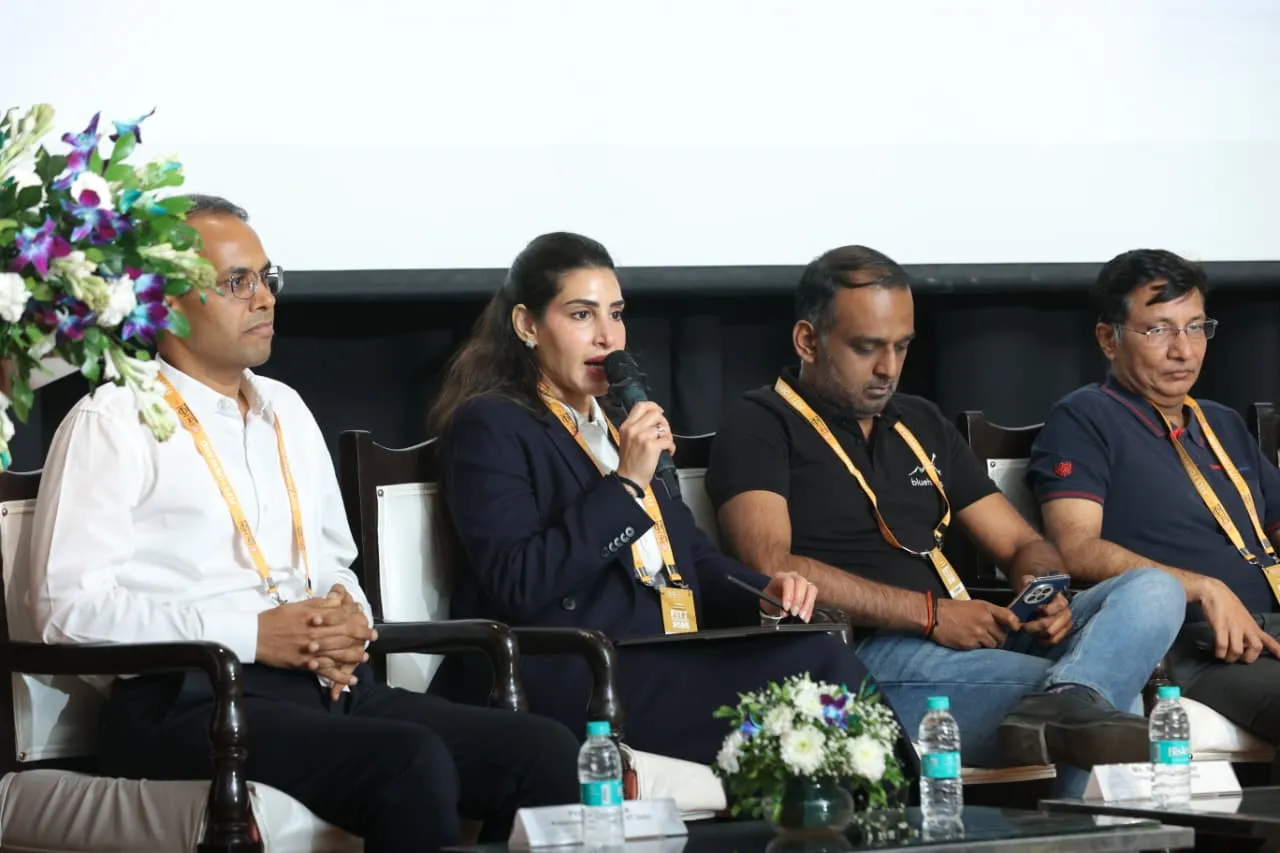
Priya Kapur, Director and CSR Chairperson, Sona Comstar, participated in the panel discussion titled “Manufacturing Tech & Semiconductors: Can India Build What the World Needs Next?” The session focused on India’s potential to develop globally competitive technologies, strengthen domestic capabilities and advance innovation in manufacturing.

During the discussion, Kapur emphasised the need for stronger collaboration between industry and academia to convert research capabilities into future-ready skills and deployable technologies. She highlighted that industry can contribute real-world engineering challenges and manufacturing use cases, while academic institutions can provide deep-technology research, specialised laboratories and multidisciplinary expertise.

“Sona Comstar’s technology focus spans advanced manufacturing, artificial intelligence, robotics, physical AI and the broader future of mobility. Strong industry-academia partnerships can connect India’s talent and research capabilities with real-world engineering challenges, enabling us to develop solutions that are relevant, scalable and globally competitive,” said Kapur.

She added that India’s next phase of manufacturing growth will require greater technological capabilities, indigenous intellectual property development and stronger pathways to move innovations from laboratories to factory floors.

Sona Comstar’s Samridh Bharat CSR Programme supports technology-led entrepreneurship and research through collaborations with the Foundation for Innovation and Technology Transfer (FITT) at IIT Delhi and IIMA Ventures, IIM Ahmedabad’s Innovation and Entrepreneurship Centre.

The programme supports start-ups and projects focused on mobility solutions, clean technologies and environmental challenges. Through its Innovation in Mobility Programme with FITT at IIT Delhi, initiated in 2020, Sona Comstar supports deep-tech start-ups working in areas including electric mobility, batteries, motors, hydrogen, energy storage, advanced materials and clean manufacturing.

The initiative has evolved into an ecosystem-building platform combining grants, technical incubation, market linkages and access to research infrastructure. Supported start-ups have progressed towards market readiness with innovations including AI-enabled battery systems, sodium-ion batteries, rare-earth-free motors, hydrogen technologies and mobile electric vehicle charging solutions.

Sona Comstar currently has more than 490 R&D professionals, including 110 software engineers, and invests around 3% of its revenue in research and development.

During the panel discussion, Kapur also highlighted the importance of shared testing infrastructure, specialised laboratories and industry-led research programmes to accelerate technology validation and adoption across manufacturing and mobility sectors.

Sona Comstar highlighted the role of advanced manufacturing, artificial intelligence, robotics and physical AI in shaping the future of Indian manufacturing and mobility at IIT Delhi’s FITT FORWARD 2026 event.Priya Kapur, Director and CSR Chairperson, Sona Comstar, participated in the panel discussion titled “Manufacturing Tech & Semiconductors: Can India Build What the World Needs Next?” The session focused on India’s potential to develop globally competitive technologies, strengthen domestic capabilities and advance innovation in manufacturing.During the discussion, Kapur emphasised the need for stronger collaboration between industry and academia to convert research capabilities into future-ready skills and deployable technologies. She highlighted that industry can contribute real-world engineering challenges and manufacturing use cases, while academic institutions can provide deep-technology research, specialised laboratories and multidisciplinary expertise.“Sona Comstar’s technology focus spans advanced manufacturing, artificial intelligence, robotics, physical AI and the broader future of mobility. Strong industry-academia partnerships can connect India’s talent and research capabilities with real-world engineering challenges, enabling us to develop solutions that are relevant, scalable and globally competitive,” said Kapur.She added that India’s next phase of manufacturing growth will require greater technological capabilities, indigenous intellectual property development and stronger pathways to move innovations from laboratories to factory floors.Sona Comstar’s Samridh Bharat CSR Programme supports technology-led entrepreneurship and research through collaborations with the Foundation for Innovation and Technology Transfer (FITT) at IIT Delhi and IIMA Ventures, IIM Ahmedabad’s Innovation and Entrepreneurship Centre.The programme supports start-ups and projects focused on mobility solutions, clean technologies and environmental challenges. Through its Innovation in Mobility Programme with FITT at IIT Delhi, initiated in 2020, Sona Comstar supports deep-tech start-ups working in areas including electric mobility, batteries, motors, hydrogen, energy storage, advanced materials and clean manufacturing.The initiative has evolved into an ecosystem-building platform combining grants, technical incubation, market linkages and access to research infrastructure. Supported start-ups have progressed towards market readiness with innovations including AI-enabled battery systems, sodium-ion batteries, rare-earth-free motors, hydrogen technologies and mobile electric vehicle charging solutions.Sona Comstar currently has more than 490 R&D professionals, including 110 software engineers, and invests around 3% of its revenue in research and development.During the panel discussion, Kapur also highlighted the importance of shared testing infrastructure, specialised laboratories and industry-led research programmes to accelerate technology validation and adoption across manufacturing and mobility sectors.

Related Stories

Gold Stories

Next Story
Technology

India’s Data Centre Capacity Reaches 1,789 MW in H1 2026

India’s data centre sector continues to witness strong growth, driven by hyperscale cloud adoption, artificial intelligence (AI) deployments and enterprise digital transformation. According to Cushman & Wakefield’s India Data Centre H1 2026 Update, the country’s top seven data centre markets added 178 MW of new capacity during H1 2026, taking total operational capacity to 1,789 MW. The sector is expected to receive an additional 3,860 MW of capacity by 2030, including 509 MW under construction and 3,351 MW in the planning stage, reflecting strong confidence in India’s digital infr..

Next Story
Infrastructure Transport

DheyaTech raises Rs 430 million to scale gas turbine technology

Bengaluru-based deep-tech company DheyaTech has raised Rs 430 million in funding led by Avaana Capital, with participation from Unimech Aerospace and Manufacturing Limited, to scale production readiness and testing capabilities for its indigenous small gas turbine technology.Founded by aerospace engineers with over 15 years of experience at GE Aviation and Rolls-Royce, DheyaTech is developing advanced small gas turbine engines for applications across advanced aerial mobility, energy systems and next-generation power infrastructure.Small gas turbine engine design and manufacturing remain highly..

Next Story
Real Estate

48% Homebuyers Prefer 3BHKs, Rs 9 -10.5 Mn Budget Leads Demand

Indian homebuyers continue to show a strong preference for larger homes, with 48% respondents opting for 3BHK configurations, according to the Anarock Consumer Sentiment Survey – H1 2026. The survey, which covered 8,320 respondents across 14 cities, found that homes priced between Rs 90 lakh and Rs 1.5 crore emerged as the most preferred budget segment.The findings indicate a continued shift towards premiumisation in the residential market, with buyers prioritising larger living spaces and higher-value properties. While 3BHK homes remain the most preferred configuration, 2BHK units account f..

Advertisement

Subscribe to Our Newsletter

Get daily newsletters around different themes from Construction world.

STAY CONNECTED

Advertisement

SPECIAL OFFER
QR Code