+
Vedanta Aluminium Unveils New Process to Recover Graphite from Waste
Technology

Vedanta Aluminium Unveils New Process to Recover Graphite from Waste

On National Technology Day 2025, Vedanta Aluminium, India’s largest aluminium producer, announced that a patent has been granted for its breakthrough technology that enables the recovery of high-purity graphite (>99 per cent) from aluminium industry waste. This achievement exemplifies the spirit of this year’s theme: ‘YANTRA - Yugantar for Advancing New Technology, Research & Acceleration’ - by transforming industrial waste into a strategic national resource. 

As the nation celebrates National Technology Day, Vedanta Aluminium’s patent is a testament to Indian industry’s capacity for deep-tech innovation, aligned with national missions like Atmanirbhar Bharat, National Critical Minerals Mission, and Net Zero goals. 

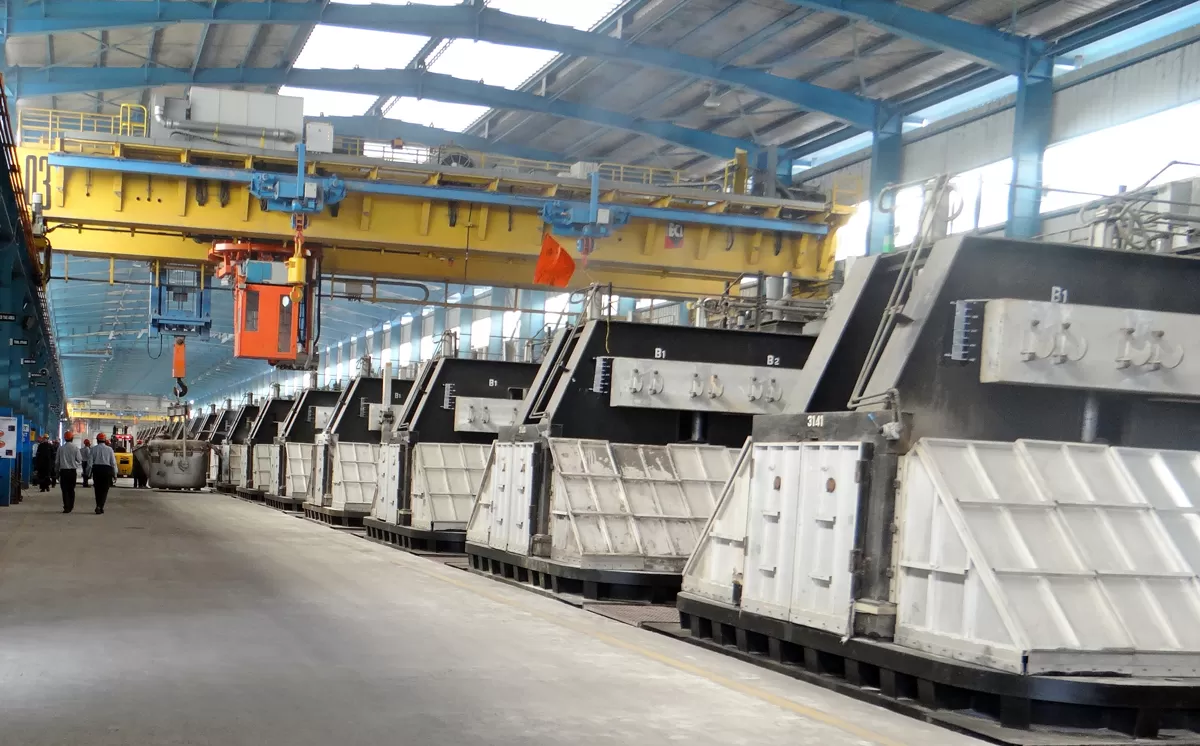
The patented process is developed by Vedanta Aluminium’s in-house Research & Development (R&D) team in collaboration with the CSIR - Institute of Minerals and Materials Technology (IMMT), Bhubaneswar. It recovers battery-grade graphite from Spent Pot Lining (SPL) and Shot Blast Dust, the two waste streams generated during aluminium production. This innovation not only aligns with India’s circular economy and sustainability priorities but also holds the potential to significantly reduce India’s dependence on imported graphite, which currently exceeds 70%. 

The recovered graphite has demonstrated exceptional electrical conductivity and structural properties suitable for lithium-ion battery applications. Its atomic structure makes it highly effective for lithiation and de-lithiation, processes critical to battery performance. 

Rajiv Kumar, CEO, Vedanta Aluminium, said, ""With India's demand for electric vehicles, energy storage, and high-tech electronics set to skyrocket, our patented solution is both timely and transformative. It strengthens our contribution to India’s critical minerals roadmap while advancing our vision of zero-waste, future-ready manufacturing.” 

In 2024, India imported approximately $41 million worth of natural graphite, positioning it among the top three importers in the Asia-Pacific region, alongside South Korea and Japan. This substantial import value underscores India's continued reliance on foreign sources for critical minerals essential to high-tech industries, including electric vehicles and renewable energy storage. Vedanta Aluminium's patented technology for recovering high-purity graphite from aluminium industry waste offers a promising solution to reduce this dependency, aligning with national objectives for self-reliance in critical mineral resources.

On National Technology Day 2025, Vedanta Aluminium, India’s largest aluminium producer, announced that a patent has been granted for its breakthrough technology that enables the recovery of high-purity graphite (>99 per cent) from aluminium industry waste. This achievement exemplifies the spirit of this year’s theme: ‘YANTRA - Yugantar for Advancing New Technology, Research & Acceleration’ - by transforming industrial waste into a strategic national resource. As the nation celebrates National Technology Day, Vedanta Aluminium’s patent is a testament to Indian industry’s capacity for deep-tech innovation, aligned with national missions like Atmanirbhar Bharat, National Critical Minerals Mission, and Net Zero goals. The patented process is developed by Vedanta Aluminium’s in-house Research & Development (R&D) team in collaboration with the CSIR - Institute of Minerals and Materials Technology (IMMT), Bhubaneswar. It recovers battery-grade graphite from Spent Pot Lining (SPL) and Shot Blast Dust, the two waste streams generated during aluminium production. This innovation not only aligns with India’s circular economy and sustainability priorities but also holds the potential to significantly reduce India’s dependence on imported graphite, which currently exceeds 70%. The recovered graphite has demonstrated exceptional electrical conductivity and structural properties suitable for lithium-ion battery applications. Its atomic structure makes it highly effective for lithiation and de-lithiation, processes critical to battery performance. Rajiv Kumar, CEO, Vedanta Aluminium, said, With India's demand for electric vehicles, energy storage, and high-tech electronics set to skyrocket, our patented solution is both timely and transformative. It strengthens our contribution to India’s critical minerals roadmap while advancing our vision of zero-waste, future-ready manufacturing.” In 2024, India imported approximately $41 million worth of natural graphite, positioning it among the top three importers in the Asia-Pacific region, alongside South Korea and Japan. This substantial import value underscores India's continued reliance on foreign sources for critical minerals essential to high-tech industries, including electric vehicles and renewable energy storage. Vedanta Aluminium's patented technology for recovering high-purity graphite from aluminium industry waste offers a promising solution to reduce this dependency, aligning with national objectives for self-reliance in critical mineral resources.

Related Stories

Gold Stories

Next Story
Infrastructure Transport

97 Per Cent Of Rongjeng-Mangsang-Adokgre Road Nears Completion

Deputy Chief Minister in-charge of public works Prestone Tynsong said in Shillong on 26 August that 97 per cent physical progress had been achieved on the ongoing Rongjeng-Mangsang-Adokgre road being constructed under the Non-Lapsable Central Pool of Resources (NLCPR). He noted the project was sanctioned in 2017 and that the stipulated time for completion had been 24 months from issue of the final work order. The deputy chief minister informed the assembly that the government had decided to include the remaining work under a World Bank project. In reply to a query from Rongjeng MLA Jim M Sangm..

Next Story
Infrastructure Transport

First TBM Starts Digging Five Point Three Kilometre Tunnel Under SGNP

The Goregaon-Mulund Link Road (GMLR) Phase three (B) project has reached a key milestone as the first tunnel boring machine (TBM) began excavation of the first of two tunnels beneath the Sanjay Gandhi National Park (SGNP). The machine, named Tulsi, started cutting a five point three kilometre bore that will link Dadasaheb Phalke Chitranagari in Goregaon East with Amar Nagar in Mulund West. Officials issued a statement noting the commencement of tunnelling work under the protected green belt. The twin tunnels are being constructed using mechanised tunnelling methods that aim to limit surface di..

Next Story
Infrastructure Transport

UP Approves Two Expressways And Rs 240 bn Infrastructure Push

The Uttar Pradesh Cabinet approved a series of infrastructure and industrial investment proposals totalling Rs 240 billion (Rs 240 bn), including two major expressway projects, a manufacturing and logistics cluster in Sultanpur and incentives for 11 industrial projects across the state. The decisions, taken at a meeting chaired by Chief Minister Yogi Adityanath, underline the state government’s focus on expanding road connectivity around emerging industrial hubs while attracting manufacturing investment to districts beyond major urban centres. The approvals cover both greenfield expressway c..

Advertisement

Subscribe to Our Newsletter

Get daily newsletters around different themes from Construction world.

STAY CONNECTED

Advertisement

SPECIAL OFFER
QR Code