




+
Adani Power Eyes Madhya Pradesh Nuclear Sites
ECONOMY & POLICY

Adani Power Eyes Madhya Pradesh Nuclear Sites

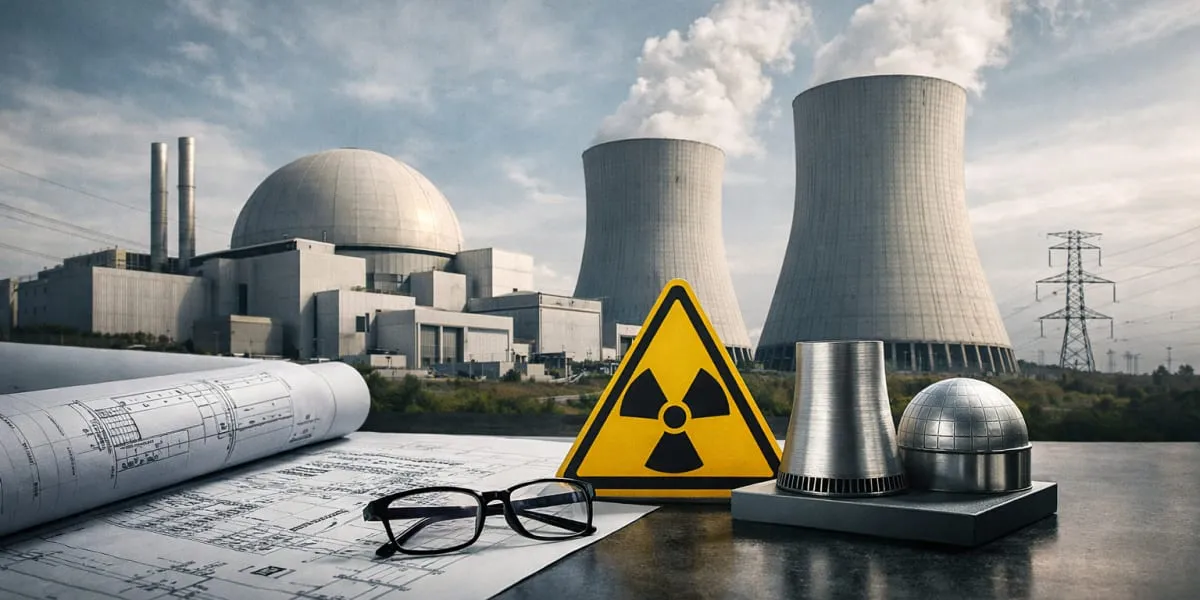
Adani Power is evaluating Bina and Nigrie in Madhya Pradesh as possible sites for its first nuclear project, with feasibility studies underway as it plans to build 10 GW of atomic capacity by 2035. The company is keeping potential sites ready to move quickly once the Centre notifies the regulatory framework for private participation. It is assessing domestic and overseas reactor technologies, saying affordability will determine the final choice and electricity must be viable for consumers and distribution companies.

The proposed entry would mark a major diversification for India’s largest private thermal power producer and could position Adani as the country’s third-largest nuclear operator behind the state-owned Nuclear Power Corporation of India and NTPC if the targeted capacity is commissioned. The nuclear push follows a strong first quarter performance in fiscal 2027, with consolidated net profit rising 42 per cent year-on-year to Rs 48.06 bn supported by higher generation and improved capacity utilisation. The group announced a new unit, Adani Atomic Energy, in June and said land had been identified for the 10 GW programme to meet rising demand for clean baseload power.

The Adani group is also implementing a power capital expenditure programme exceeding Rs 2,000 bn aimed at expanding overall generation capacity to 45 GW over the next five years. For Adani Power the Madhya Pradesh sites remain at the evaluation stage, with technology selection, project economics and investment timelines to follow regulatory clarity from the central government. The company indicated that cost-effectiveness and tariff viability would drive technology choice.

India plans to expand nuclear generation capacity to 100 GW by 2047 from about 8.8 GW at present as it seeks dependable low-carbon electricity alongside renewable expansion. The Nuclear Power Corporation of India is targeting 50 GW while NTPC plans 30 GW, and other private players such as Tata Power and Reliance Industries are evaluating opportunities. Detailed rules governing ownership, technology, liability and project implementation remain awaited from the government.

Adani Power is evaluating Bina and Nigrie in Madhya Pradesh as possible sites for its first nuclear project, with feasibility studies underway as it plans to build 10 GW of atomic capacity by 2035. The company is keeping potential sites ready to move quickly once the Centre notifies the regulatory framework for private participation. It is assessing domestic and overseas reactor technologies, saying affordability will determine the final choice and electricity must be viable for consumers and distribution companies. The proposed entry would mark a major diversification for India’s largest private thermal power producer and could position Adani as the country’s third-largest nuclear operator behind the state-owned Nuclear Power Corporation of India and NTPC if the targeted capacity is commissioned. The nuclear push follows a strong first quarter performance in fiscal 2027, with consolidated net profit rising 42 per cent year-on-year to Rs 48.06 bn supported by higher generation and improved capacity utilisation. The group announced a new unit, Adani Atomic Energy, in June and said land had been identified for the 10 GW programme to meet rising demand for clean baseload power. The Adani group is also implementing a power capital expenditure programme exceeding Rs 2,000 bn aimed at expanding overall generation capacity to 45 GW over the next five years. For Adani Power the Madhya Pradesh sites remain at the evaluation stage, with technology selection, project economics and investment timelines to follow regulatory clarity from the central government. The company indicated that cost-effectiveness and tariff viability would drive technology choice. India plans to expand nuclear generation capacity to 100 GW by 2047 from about 8.8 GW at present as it seeks dependable low-carbon electricity alongside renewable expansion. The Nuclear Power Corporation of India is targeting 50 GW while NTPC plans 30 GW, and other private players such as Tata Power and Reliance Industries are evaluating opportunities. Detailed rules governing ownership, technology, liability and project implementation remain awaited from the government.

Related Stories

Gold Stories

Next Story
Building Material

Ramco Cements Mine Restoration Gets Global Biodiversity Certification

The ecological restoration of Ramco Cements’ limestone mine at Pandalgudi in Virudhunagar district, Tamil Nadu, has received international recognition with the site being awarded Advanced Certification by The Global Biodiversity Standard (TGBS). The recognition makes Pandalgudi the first site in Peninsular India to receive the certification and places it among globally recognised biodiversity restoration projects.TGBS, recognised by the International Union for Conservation of Nature (IUCN) and the Convention on Biological Diversity (CBD), assesses biodiversity restoration projects based on s..

Next Story
Equipment

Chicago Pneumatic Launches CPS 950-300 Air Compressor

Chicago Pneumatic India has launched the CPS 950-300 portable air compressor for waterwell, mining and solar foundation drilling applications.The new compressor delivers 950 cfm at 300 psig and is designed to support demanding borewell and foundation drilling requirements. The company said the machine offers up to 10 per cent higher fuel efficiency, helping contractors reduce fuel consumption while maintaining consistent drilling performance.The CPS 950-300 is designed for drilling depths of up to 800 feet, enabling contractors to undertake deeper drilling while improving productivity and cont..

Next Story
Infrastructure Urban

Perceptive Ideas Engineers Structural Systems for RAYA School

Perceptive Ideas Consulting Engineers has provided structural engineering services for RAYA School in Bangalore, helping translate the campus' unconventional architectural design into a buildable structural system.The school has been designed around interconnected circular towers, large open classrooms, cantilevered sections and a 27-metre clear-span auditorium. The towers are connected through internal ramps while retaining their circular geometry.Columns have been positioned around the outer perimeter of the circular towers at intervals of approximately 10 to 13 metres. This configuration al..

Advertisement

Subscribe to Our Newsletter

Get daily newsletters around different themes from Construction world.

STAY CONNECTED

Advertisement

SPECIAL OFFER
QR Code














