Ahmedabad To Dholera In 48 Minutes High Speed Double Line
ECONOMY & POLICY

Ahmedabad To Dholera In 48 Minutes High Speed Double Line

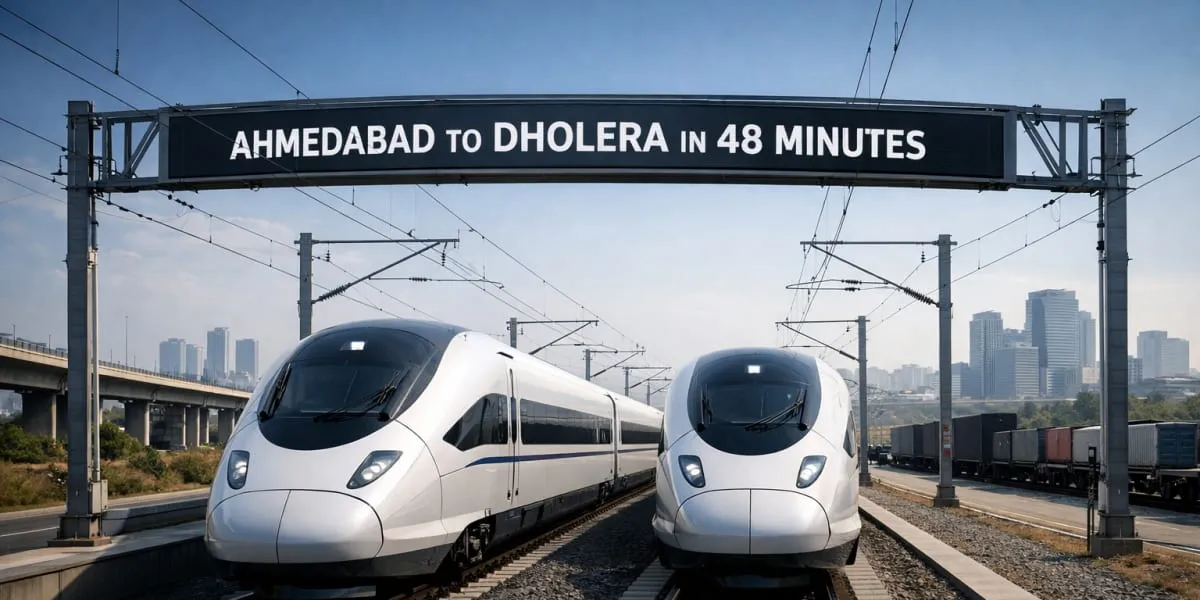
A high speed double line project will reduce travel time between Ahmedabad and Dholera to 48 minutes, officials have announced. The initiative is aimed at strengthening regional connectivity and supporting planned urban and industrial expansion along the corridor. Planners described the link as a catalyst for faster passenger movement and freight transmission, improving access to transport hubs. The route is intended to integrate with broader infrastructure development in the region.

Authorities said it will shorten commuting time for workers and facilitate greater economic interaction between the two cities. The project will provide higher frequency services and capacity to meet growing demand from commuters and businesses. Transportation planners noted potential reductions in road congestion and emissions as passengers shift from private vehicles to rail. Design documents indicate incorporation of modern electrification and signalling standards to improve reliability.

Officials indicated that the link will support logistics operations by offering faster connections to ports and industrial nodes in the hinterland. Investment in rail infrastructure is being framed as a long term enabler of employment generation and regional competitiveness. Stakeholders expect improved last mile connectivity and coordinated land use to amplify benefits for housing and services. Authorities outlined plans for phased implementation and coordination with state agencies to streamline clearances.

Construction and commissioning timelines were described as subject to statutory clearances and detailed engineering schedules, with agencies committed to meeting milestones. The project is presented as part of sustained efforts to modernise transport networks and to attract investment into the region. Officials said monitoring mechanisms and periodic reviews will be used to track progress and to address implementation challenges. Observers noted that improved rail connectivity can reshape travel patterns and support balanced urban growth.

"Join industry leaders at RAHSTA Expo, India's premier platform for roads, highways and traffic infrastructure. Register now to explore innovations, network with experts and shape the future of mobility."

A high speed double line project will reduce travel time between Ahmedabad and Dholera to 48 minutes, officials have announced. The initiative is aimed at strengthening regional connectivity and supporting planned urban and industrial expansion along the corridor. Planners described the link as a catalyst for faster passenger movement and freight transmission, improving access to transport hubs. The route is intended to integrate with broader infrastructure development in the region. Authorities said it will shorten commuting time for workers and facilitate greater economic interaction between the two cities. The project will provide higher frequency services and capacity to meet growing demand from commuters and businesses. Transportation planners noted potential reductions in road congestion and emissions as passengers shift from private vehicles to rail. Design documents indicate incorporation of modern electrification and signalling standards to improve reliability. Officials indicated that the link will support logistics operations by offering faster connections to ports and industrial nodes in the hinterland. Investment in rail infrastructure is being framed as a long term enabler of employment generation and regional competitiveness. Stakeholders expect improved last mile connectivity and coordinated land use to amplify benefits for housing and services. Authorities outlined plans for phased implementation and coordination with state agencies to streamline clearances. Construction and commissioning timelines were described as subject to statutory clearances and detailed engineering schedules, with agencies committed to meeting milestones. The project is presented as part of sustained efforts to modernise transport networks and to attract investment into the region. Officials said monitoring mechanisms and periodic reviews will be used to track progress and to address implementation challenges. Observers noted that improved rail connectivity can reshape travel patterns and support balanced urban growth.

Next Story
Real Estate

Pecan Realty Completes Rs 1.5 Billion Transactions

Pecan Realty has recently completed four institutional transactions worth over Rs 1.5 billion over the past two years, strengthening its position as an execution-led real estate platform. The deals include resolution-led acquisitions, structured finance transactions and capital partnerships across its development portfolio.The transactions covered acquisitions through the National Company Law Tribunal process and helped provide repayment or exits to both private and public sector lenders. The company said the deals demonstrate its ability to resolve complex project situations, work with instit..

Next Story
Real Estate

SNN Estates Expands North Bengaluru Housing Project

SNN Estates has announced an expansion of its SNN Estates Felicity residential project in North Bengaluru following strong buyer demand, with 75 per cent of the first-phase inventory sold within three days of launch.The developer will add 76 apartments in the new phase, taking the project's estimated revenue potential to around Rs 1,000 crore upon completion of Phase 2.Spread across 6.5 acres in Rachenahalli, near Manyata Tech Park, the project comprises 604 apartments in 1.5, 2, 2.5, 3 and 4 BHK configurations. The development includes a 50,000-sq-ft clubhouse with amenities such as sports co..

Next Story
Infrastructure Urban

SCG Drives ASEAN Industrial Transformation Strategy

SCG is strengthening its focus on ASEAN as a key growth region by advancing industrial transformation, enhancing competitiveness and building resilient regional value chains. Thammasak Sethaudom, President and Chief Executive Officer, SCG, highlighted the need for industries to continuously develop capabilities, strengthen resilience and deepen regional cooperation to achieve sustainable long-term growth.SCG views ASEAN as an important growth engine alongside China, supported by favourable demographics, trade connectivity and investment flows. With ASEAN’s GDP projected to grow by around 4.7..

Advertisement

Subscribe to Our Newsletter

Get daily newsletters around different themes from Construction world.

STAY CONNECTED

Advertisement

Advertisement

Advertisement