+
Arisinfra Posts Rs 10.675 bn Revenue And 10-Fold Profit Rise
ECONOMY & POLICY

Arisinfra Posts Rs 10.675 bn Revenue And 10-Fold Profit Rise

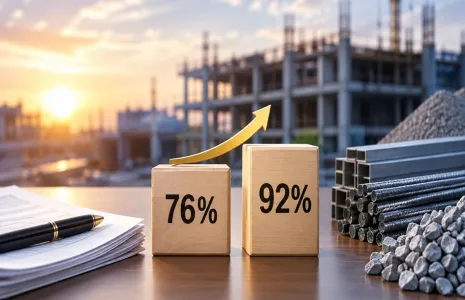
Arisinfra Solutions reported consolidated revenue of Rs 10.675 billion and profit after tax of Rs 603 million for FY26, representing a 39 per cent increase in revenue and a 10-fold rise in profitability year on year. The company ended the year net cash positive after carrying net debt twelve months earlier, signalling a marked balance sheet turnaround.

EBITDA margin expanded to 9.43 per cent from 6.53 per cent in the prior year while net debt to equity swung from 1.25x to (0.09x). Cash flow from operations exceeded Rs 1,000 mn and net working capital days improved from 110 to 66, a 44-day compression that management said underpins the firm’s ability to fund future growth internally.

The fourth quarter was the strongest quarter in the company's history with Q4 revenue of Rs 3.434 bn, up 55 per cent year on year, and EBITDA of Rs 305 million as margins rose to 8.88 per cent. Q4 delivered a profit of Rs 217 million compared with a loss of Rs 5 million in the like quarter a year earlier, illustrating the operating leverage now visible in the platform.

ARIS’s three-stream network of B2B Supply, Contract Manufacturing and Developer-as-a-Service continued to scale. Contract Manufacturing secured nine mn t per annum of reserved capacity across more than 10 partner plants under long-term agreements while Developer-as-a-Service projects carry an estimated gross development value of Rs 12.674 billion under execution. Higher-margin segments grew faster, with Contract Manufacturing up 95 per cent to Rs 4.989 billion and Developer-as-a-Service up 109 per cent to Rs 980 million, together contributing 56 per cent of revenue.

The company highlighted two proprietary AI tools as drivers of operating efficiency, noting dramatic reductions in invoice turnaround and dispute rates and real-time operational insights. Management outlined plans to expand contract manufacturing capacity by 20–25 per cent, deepen the Developer-as-a-Service footprint and enter additional material categories, while asserting the technology stack can support significantly higher transaction volumes without proportional cost increases.

Arisinfra Solutions reported consolidated revenue of Rs 10.675 billion and profit after tax of Rs 603 million for FY26, representing a 39 per cent increase in revenue and a 10-fold rise in profitability year on year. The company ended the year net cash positive after carrying net debt twelve months earlier, signalling a marked balance sheet turnaround. EBITDA margin expanded to 9.43 per cent from 6.53 per cent in the prior year while net debt to equity swung from 1.25x to (0.09x). Cash flow from operations exceeded Rs 1,000 mn and net working capital days improved from 110 to 66, a 44-day compression that management said underpins the firm’s ability to fund future growth internally. The fourth quarter was the strongest quarter in the company's history with Q4 revenue of Rs 3.434 bn, up 55 per cent year on year, and EBITDA of Rs 305 million as margins rose to 8.88 per cent. Q4 delivered a profit of Rs 217 million compared with a loss of Rs 5 million in the like quarter a year earlier, illustrating the operating leverage now visible in the platform. ARIS’s three-stream network of B2B Supply, Contract Manufacturing and Developer-as-a-Service continued to scale. Contract Manufacturing secured nine mn t per annum of reserved capacity across more than 10 partner plants under long-term agreements while Developer-as-a-Service projects carry an estimated gross development value of Rs 12.674 billion under execution. Higher-margin segments grew faster, with Contract Manufacturing up 95 per cent to Rs 4.989 billion and Developer-as-a-Service up 109 per cent to Rs 980 million, together contributing 56 per cent of revenue. The company highlighted two proprietary AI tools as drivers of operating efficiency, noting dramatic reductions in invoice turnaround and dispute rates and real-time operational insights. Management outlined plans to expand contract manufacturing capacity by 20–25 per cent, deepen the Developer-as-a-Service footprint and enter additional material categories, while asserting the technology stack can support significantly higher transaction volumes without proportional cost increases.

Related Stories

Gold Stories

Next Story
Products

Interio by Godrej launches modular workplace solutions

Interio by Godrej has launched Workscapes, a modular workplace solutions category designed to help organisations configure and adapt workspaces to changing requirements. The portfolio combines mobile and compatible furniture and support elements that can be rearranged across different work modes without changes to fixed layouts.Workscapes includes Collaboration Tables, Privacy Solutions, Mobile Markerboards and Space Dividers, Power Solutions, Storage and Support Elements, Meeting and Presentation Tools, and Seating Elements. The range is designed for focused work, collaboration, informal disc..

Next Story
Infrastructure Urban

CAFE-III Gives Auto Industry Investment Clarity

The government’s new Corporate Average Fuel Economy (CAFE-III) norms have provided the automobile industry with a clearer framework for technology investments, according to industry representatives. The framework seeks to balance environmental objectives with flexibility for manufacturers while encouraging the adoption of flex-fuel vehicles and biofuels. Society of Indian Automobile Manufacturers (SIAM) President Shenu Agarwal said the five-year framework would give automakers greater predictability to plan investments and accelerate innovation. He said the regulation established annual targ..

Next Story
Infrastructure Energy

Mines Ministry to Auction Two Offshore Mineral Blocks in Andaman Sea

The Ministry of Mines will launch an auction of two offshore mineral blocks in the Andaman Sea on Thursday, seeking to unlock India’s offshore mineral potential and strengthen long-term mineral resource security. The blocks will be offered under a composite licence, which permits exploration and development activities in accordance with the applicable regulatory framework. The ministry said the auction was intended to encourage systematic exploration, attract investment and promote the use of advanced technologies for offshore mineral exploration and development. The initiative is also aimed..

Advertisement

Subscribe to Our Newsletter

Get daily newsletters around different themes from Construction world.

STAY CONNECTED

Advertisement

SPECIAL OFFER
QR Code