+
Arkel India Opens Rs One Bn Lift Control Plant in Vadodara
ECONOMY & POLICY

Arkel India Opens Rs One Bn Lift Control Plant in Vadodara

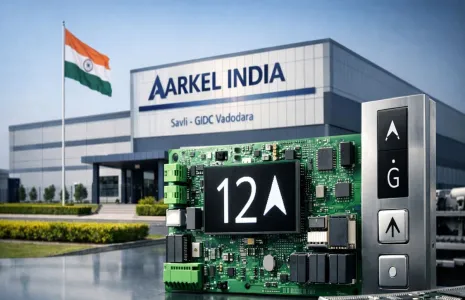
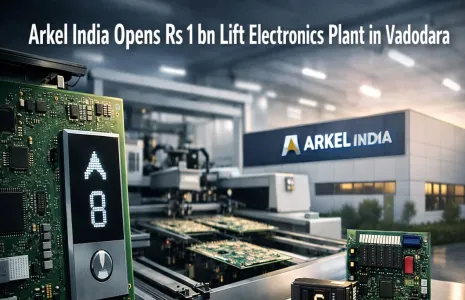
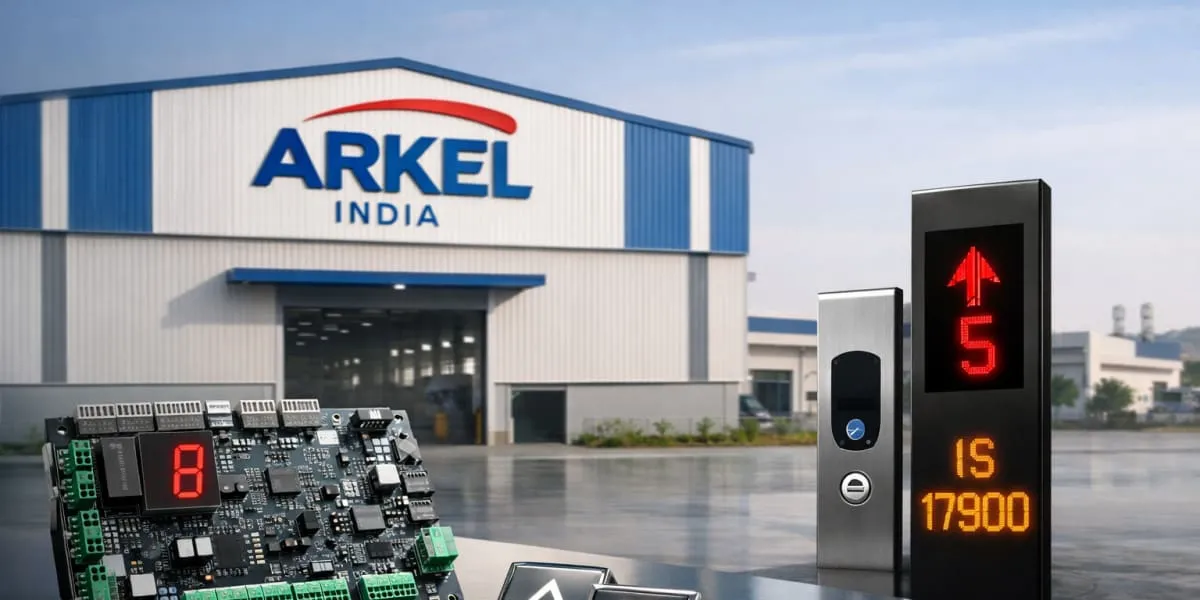
Arkel India has opened a new lift control manufacturing plant at the GIDC Estate in Savli-Manjusar, Vadodara, marking a Phase one investment of Rupees (Rs) one bn. The technology-driven unit will locally manufacture high-quality lift electronic systems to reduce import dependency and to supply products that comply with the new IS 17900 standard. The company described the facility as its entry into advanced lift electronics manufacturing after previously mainly marketing such systems.

The plant will house automated PCB assembly lines and semi-automatic MR control panel lines to produce integrated lift control systems including MR, MRL and slim panels. These systems will incorporate IoT-enabled smart technologies offering energy efficiency, durability and precision control, and are targeted at high-rise residential, commercial, healthcare and retail developments as well as transit hubs and infrastructure projects. The company added that products will support airports, railway stations, urban redevelopment and smart city initiatives.

Spread across 135,000 sq ft, the facility has the capacity to manufacture approximately 36,000 units annually in a single shift, with fully controlled temperature, humidity, cleanliness and electrostatic discharge management systems in the electronic manufacturing setup. The plant is expected to generate direct and indirect employment and the company plans to collaborate with industrial training institutes, polytechnics and engineering institutes to provide apprenticeship and upskilling opportunities in electronics and automation. The move reflects a global-local synergy aimed at strengthening India as a manufacturing and export hub for the Asia-Pacific region.

The company noted that India is among the fastest-growing elevator markets, with annual demand exceeding 100,000 units driven by rapid urbanisation, Smart Cities initiatives, AMRUT projects and housing developments under PMAY as well as major infrastructure expansion across metros, airports and railway redevelopment programmes. It added that Innovalift AB acquired Arkel in January 2025 and the establishment of the unit marks a strategic milestone in strengthening presence in the Asia-Pacific market.

Arkel India has opened a new lift control manufacturing plant at the GIDC Estate in Savli-Manjusar, Vadodara, marking a Phase one investment of Rupees (Rs) one bn. The technology-driven unit will locally manufacture high-quality lift electronic systems to reduce import dependency and to supply products that comply with the new IS 17900 standard. The company described the facility as its entry into advanced lift electronics manufacturing after previously mainly marketing such systems. The plant will house automated PCB assembly lines and semi-automatic MR control panel lines to produce integrated lift control systems including MR, MRL and slim panels. These systems will incorporate IoT-enabled smart technologies offering energy efficiency, durability and precision control, and are targeted at high-rise residential, commercial, healthcare and retail developments as well as transit hubs and infrastructure projects. The company added that products will support airports, railway stations, urban redevelopment and smart city initiatives. Spread across 135,000 sq ft, the facility has the capacity to manufacture approximately 36,000 units annually in a single shift, with fully controlled temperature, humidity, cleanliness and electrostatic discharge management systems in the electronic manufacturing setup. The plant is expected to generate direct and indirect employment and the company plans to collaborate with industrial training institutes, polytechnics and engineering institutes to provide apprenticeship and upskilling opportunities in electronics and automation. The move reflects a global-local synergy aimed at strengthening India as a manufacturing and export hub for the Asia-Pacific region. The company noted that India is among the fastest-growing elevator markets, with annual demand exceeding 100,000 units driven by rapid urbanisation, Smart Cities initiatives, AMRUT projects and housing developments under PMAY as well as major infrastructure expansion across metros, airports and railway redevelopment programmes. It added that Innovalift AB acquired Arkel in January 2025 and the establishment of the unit marks a strategic milestone in strengthening presence in the Asia-Pacific market.

Next Story
Infrastructure Urban

Implementation Status of Jal Jeevan Mission

Since August 2019 the Government has implemented Jal Jeevan Mission to provide assured potable water through household tap connections in rural India. At the start of the mission only 32.3 million (mn) rural households, representing 16.7 per cent, were reported to have tap water connections. States and union territories have reported that 125.8 mn additional rural households have since been provided with tap connections. As a result, of about 193.6 mn rural households roughly 158.2 mn, or 81.71 per cent, are reported to have tap water supply at home.\n\nThe State, district and village level st..

Next Story
Infrastructure Urban

Jal Jeevan Mission Reaches Eighty One Per Cent Rural Coverage

The Government reported substantial progress under the Jal Jeevan Mission, launched in August 2019 to provide tap water to every rural household. At launch only 32.3 million (mn) rural households had tap connections and states and Union territories reported provision of 125.8 mn additional households by March 2026. Consequently, out of about 193.6 mn rural households around 158.2 mn, or 81.71 per cent, are reported to have tap water at home. The Finance Minister announced extension of the mission until 2028 in the 2025-26 budget speech. The Swachh Bharat Mission Grameen, launched in October 20..

Next Story
Infrastructure Urban

Empowering Local Governance for Sustainable Rural Water Supply

The Ministry of Jal Shakti has aligned the Jal Jeevan Mission (JJM) with the 73rd Amendment to strengthen village level planning and community ownership of water supply. Gram Panchayats, village water and sanitation committees and Pani Samitis are to plan, implement, manage and maintain piped water systems, with gram sabha processes formalising handover and oversight. Implementation support agencies including non government organisations, community based organisations and self help groups have been empanelled to train local committees and promote women participation. Under JJM, the department ..

Advertisement

Subscribe to Our Newsletter

Get daily newsletters around different themes from Construction world.

STAY CONNECTED

Advertisement

Advertisement

Advertisement