Arkel India Opens Rs One bn Lift Control Plant in Vadodara
ECONOMY & POLICY

Arkel India Opens Rs One bn Lift Control Plant in Vadodara

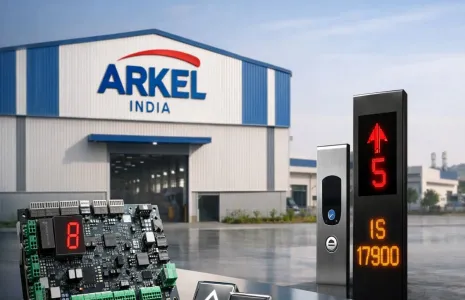
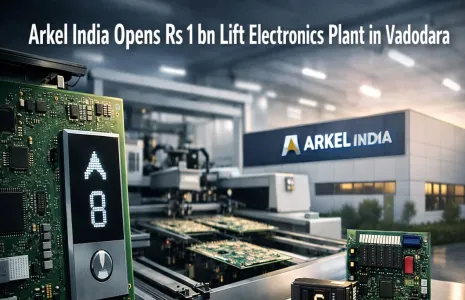
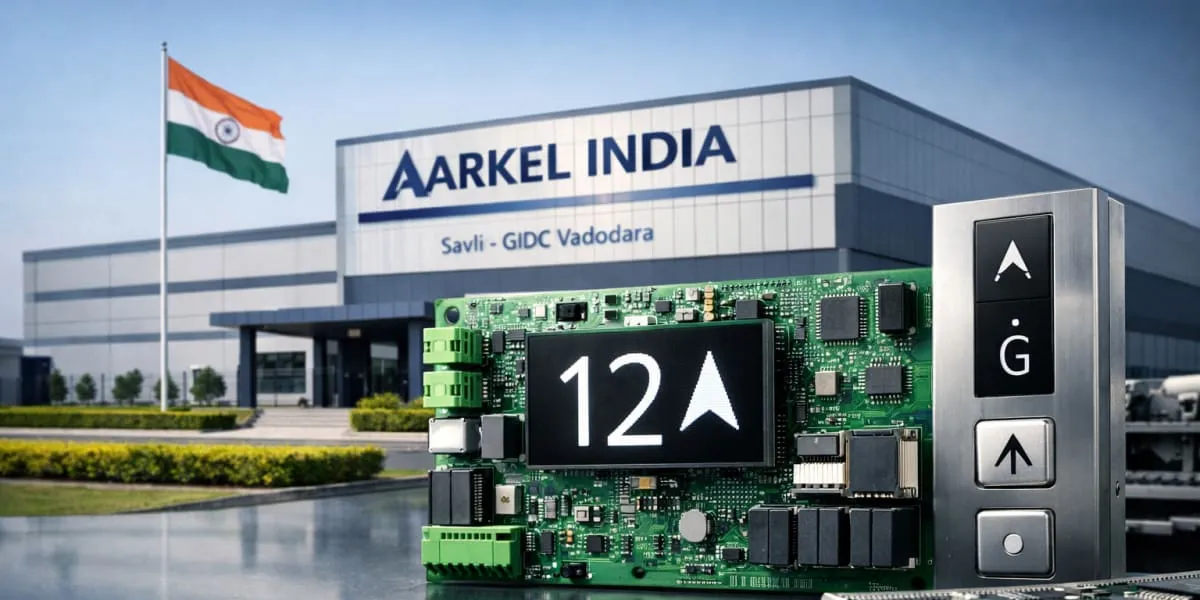
Arkel India has opened a manufacturing facility with a Phase one investment of Rs one bn at the GIDC Estate in Savli-Manjusar, Vadodara, to reduce import dependency through local production of lift electronic systems. The technology-driven unit will produce high-quality lift control electronics compliant with the new IS 17900 standard. The company said the plant marks its first transition from marketing to manufacturing of advanced lift electronic systems.

The plant will host automated printed circuit board assembly lines and semi-automatic MR control panel lines to manufacture integrated lift control systems including MR, MRL and slim panels. Products will incorporate IoT-enabled technologies to deliver energy efficiency, durability and precision control. The solutions are intended for high-rise residential and commercial buildings, healthcare facilities, retail complexes and transit hubs.

The company expects the facility to support infrastructure and real estate growth in India, supplying projects such as airports, railway stations, urban redevelopment schemes and smart city initiatives. It also anticipates generating direct and indirect employment and will collaborate with industrial training institutes, polytechnics and engineering colleges to provide apprenticeships and upskilling in electronics and automation. Management highlighted that India is among the fastest-growing elevator markets with annual demand exceeding 100,000 units, driven by rapid urbanisation and programmes such as Smart Cities, AMRUT and PMAY.

The expansion follows acquisition of Arkel by Innovalift AB, Sweden, and is projected to strengthen Arkel's position as a manufacturing and export hub for Asia-Pacific markets while reinforcing long-term commitment to India. The site spans 135,000 sq ft and has capacity to produce about 36,000 units annually in a single shift, with controlled management of temperature, humidity, cleanliness and electrostatic discharge. The electronic manufacturing setup is intended to meet global quality standards while addressing local requirements for reliable vertical mobility.

Arkel India has opened a manufacturing facility with a Phase one investment of Rs one bn at the GIDC Estate in Savli-Manjusar, Vadodara, to reduce import dependency through local production of lift electronic systems. The technology-driven unit will produce high-quality lift control electronics compliant with the new IS 17900 standard. The company said the plant marks its first transition from marketing to manufacturing of advanced lift electronic systems. The plant will host automated printed circuit board assembly lines and semi-automatic MR control panel lines to manufacture integrated lift control systems including MR, MRL and slim panels. Products will incorporate IoT-enabled technologies to deliver energy efficiency, durability and precision control. The solutions are intended for high-rise residential and commercial buildings, healthcare facilities, retail complexes and transit hubs. The company expects the facility to support infrastructure and real estate growth in India, supplying projects such as airports, railway stations, urban redevelopment schemes and smart city initiatives. It also anticipates generating direct and indirect employment and will collaborate with industrial training institutes, polytechnics and engineering colleges to provide apprenticeships and upskilling in electronics and automation. Management highlighted that India is among the fastest-growing elevator markets with annual demand exceeding 100,000 units, driven by rapid urbanisation and programmes such as Smart Cities, AMRUT and PMAY. The expansion follows acquisition of Arkel by Innovalift AB, Sweden, and is projected to strengthen Arkel's position as a manufacturing and export hub for Asia-Pacific markets while reinforcing long-term commitment to India. The site spans 135,000 sq ft and has capacity to produce about 36,000 units annually in a single shift, with controlled management of temperature, humidity, cleanliness and electrostatic discharge. The electronic manufacturing setup is intended to meet global quality standards while addressing local requirements for reliable vertical mobility.

Next Story
Equipment

Sanjay Saxena Passes Away, Leaving Behind a Powerful Industry Legacy

The construction equipment industry mourns the untimely demise of Sanjay Saxena, Chief Operating Officer (Sales, Marketing & Customer Support) at Sany India and South Asia, a respected leader whose vision and dedication left a lasting imprint on the sector. He was a seasoned professional with decades of experience across construction, material handling, port, and mining equipment industries. At Sany India, he played a pivotal role in steering the company’s growth, overseeing business operations across all six key verticals—Hoisting, Foundation, Port, Excavators, Road, and Mining. His strat..

Next Story
Infrastructure Urban

The Gateway of Guwahati

The Brahmaputra does not behave like an ordinary river. It shifts, swells and retreats with extraordinary force, carrying immense sediment loads from the Himalayas while constantly reshaping its own channel. In Guwahati, seasonal water levels can swing by nearly 10-11 m, transforming calm winter waters into a roaring monsoon current.Building permanent infrastructure in such conditions is notoriously difficult. Conventional river terminals – fixed jetties anchored to the riverbed – struggle to survive in an environment where currents intensify, sediment accumulates rapidly and the river’s..

Next Story
Building Material

Cement Excellence Redefined!

Operational excellence in cement is no longer about producing more – it is about producing smarter, cleaner and more reliably, where cost per tonne meets carbon per tonne.Operational excellence in cement has moved far beyond the old pursuit of ‘more tonne’. The new benchmark is smarter, cleaner, more reliable production, delivered with discipline across process, people and data. In an industry where energy can account for nearly 30 per cent of manufacturing cost, even marginal gains translate into meaningful value. As Dr SB Hegde, Professor, Jain College of Engineering & Technol..

Advertisement

Subscribe to Our Newsletter

Get daily newsletters around different themes from Construction world.

STAY CONNECTED

Advertisement

Advertisement

Advertisement