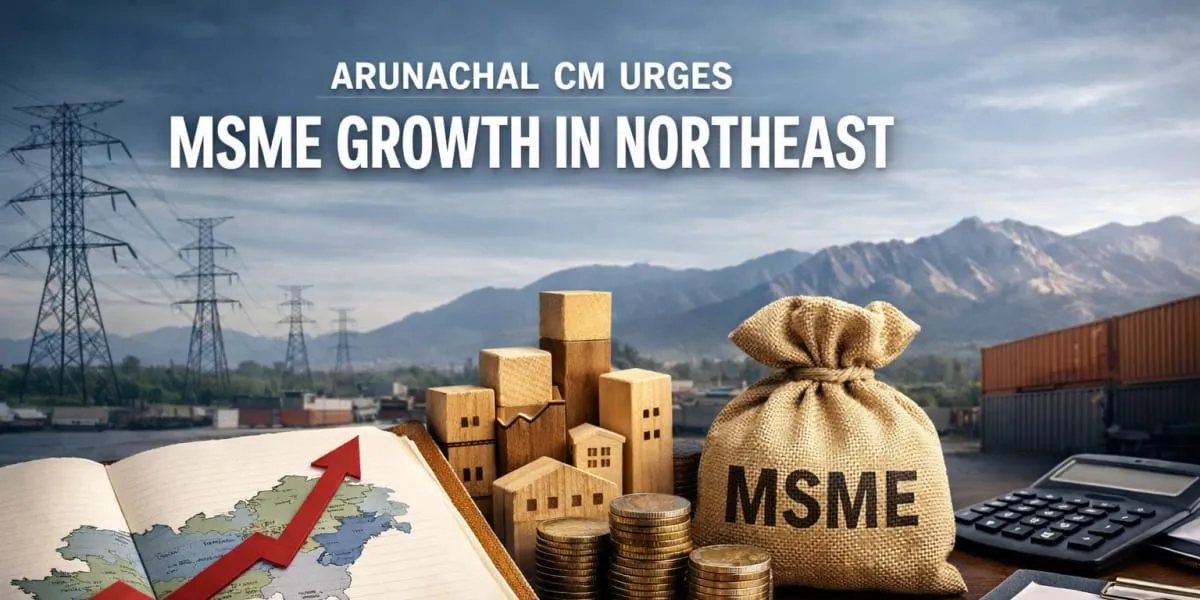
Arunachal Chief Minister Urges MSME Growth In Northeast
ECONOMY & POLICY

Arunachal Chief Minister Urges MSME Growth In Northeast

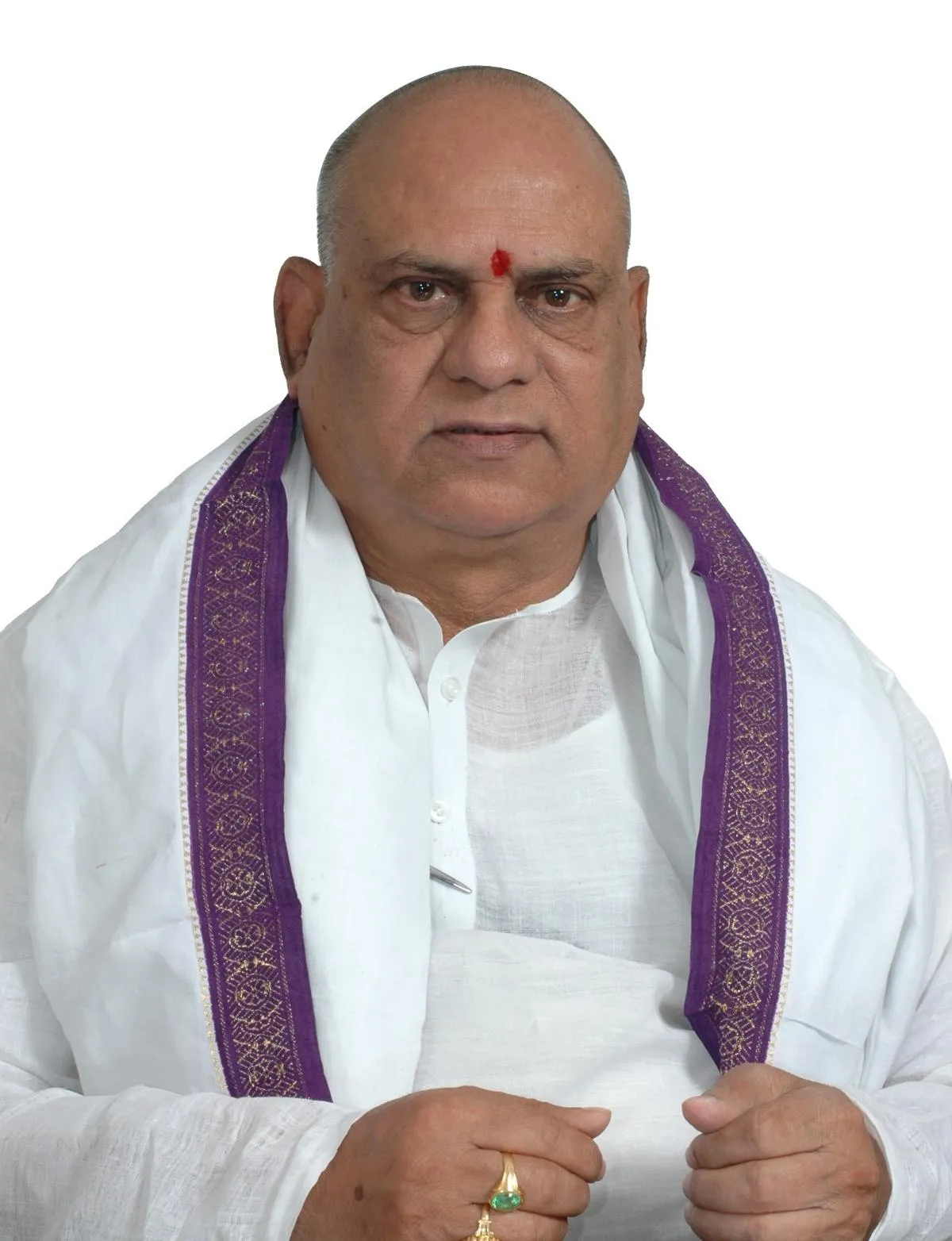
The chief minister of Arunachal Pradesh urged accelerated development of micro, small and medium enterprises to strengthen the regional economy and promote employment across the north eastern states. He sought faster expansion of central and state schemes and closer coordination with financial institutions to improve access to credit and markets. The appeal highlighted the need to harness local resources and traditional skills for sustainable enterprise growth.

He outlined priorities for streamlining approvals, enhancing infrastructure and expanding industrial clusters while calling for tailored training programmes to raise technical and managerial capacity. The administration proposed greater engagement with industry bodies and central agencies to simplify implementation and monitor outcomes. Emphasis was placed on creating linkages between rural producers and urban markets to boost entrepreneurship and reduce migration.

Officials discussed measures to strengthen supply chains, invest in connectivity and develop common facility centres to lower production costs and improve competitiveness. The chief minister encouraged partnerships between public and private sectors and stressed the importance of timely release of funds and efficient delivery of support services. Attention was directed to promoting value addition in agricultural and handloom sectors as a strategy to increase incomes.

The state government indicated plans to review existing incentives to ensure they address local constraints and to set up monitoring mechanisms to track progress. Stakeholders were asked to provide feedback on policy design to ensure interventions are inclusive and regionally appropriate. The meeting was presented as a step towards a coordinated push for MSME-led growth across the north eastern region.

The chief minister of Arunachal Pradesh urged accelerated development of micro, small and medium enterprises to strengthen the regional economy and promote employment across the north eastern states. He sought faster expansion of central and state schemes and closer coordination with financial institutions to improve access to credit and markets. The appeal highlighted the need to harness local resources and traditional skills for sustainable enterprise growth. He outlined priorities for streamlining approvals, enhancing infrastructure and expanding industrial clusters while calling for tailored training programmes to raise technical and managerial capacity. The administration proposed greater engagement with industry bodies and central agencies to simplify implementation and monitor outcomes. Emphasis was placed on creating linkages between rural producers and urban markets to boost entrepreneurship and reduce migration. Officials discussed measures to strengthen supply chains, invest in connectivity and develop common facility centres to lower production costs and improve competitiveness. The chief minister encouraged partnerships between public and private sectors and stressed the importance of timely release of funds and efficient delivery of support services. Attention was directed to promoting value addition in agricultural and handloom sectors as a strategy to increase incomes. The state government indicated plans to review existing incentives to ensure they address local constraints and to set up monitoring mechanisms to track progress. Stakeholders were asked to provide feedback on policy design to ensure interventions are inclusive and regionally appropriate. The meeting was presented as a step towards a coordinated push for MSME-led growth across the north eastern region.

Next Story
Infrastructure Transport

Contracts, Corridors and Cash Flows

India’s roads sector enters 2026 at a decisive junction, where the conversation is no longer about kilometres alone but contracts that allocate risk wisely, corridors that unlock economic value, and cash flows that remain credible over the long term. After more than a decade of relentless expansion, India’s road-building ecosystem is moving into a phase of maturity – where engineering complexity, financial discipline and institutional coordination matter more than sheer scale.Between 2014 and 2024, India built highways at a pace few nations have ever matched. National Highway length expa..

Next Story
Real Estate

The Walled Garden

I am not suggesting Indian architects are inadequate. The profession has produced extraordinary work – from Charles Correa's quiet humanism to Balkrishna Doshi's Nobel-recognised genius. However, the regulatory barriers meant to protect the profession are holding it back. It is time for an honest conversation about this.The Architects Act of 1972 established the Council of Architecture (COA) as the statutory body regulating architecture practice in India. Its founding logic was sound: to ensure those calling themselves architects meet a minimum standard of competence and to protect the publi..

Next Story
Real Estate

We completed a 1BHK home on a private island in 7 days!

Reimagining construction through a ‘War on Waste’, Circato founders T Paul Koshy, Sushma Joseph and Praveen Crasta speak to CW on turning single-use plastic into high-performance building systems – demonstrated at Bengaluru International Airport with a 16-ft wall installed in just 48 hours.What specific gap in the construction ecosystem led to the creation of Circato?Sushma Joseph: We felt the industry had normalised inefficiency. In construction, timelines, costs and outcomes often remain uncertain, yet that is widely accepted. We wanted to show that inefficiencies can be..

Advertisement

Subscribe to Our Newsletter

Get daily newsletters around different themes from Construction world.

STAY CONNECTED

Advertisement

Advertisement

Advertisement