Ashwini Vaishnaw Announces Plans To Reduce Time in Mumbai
ECONOMY & POLICY

Ashwini Vaishnaw Announces Plans To Reduce Time in Mumbai

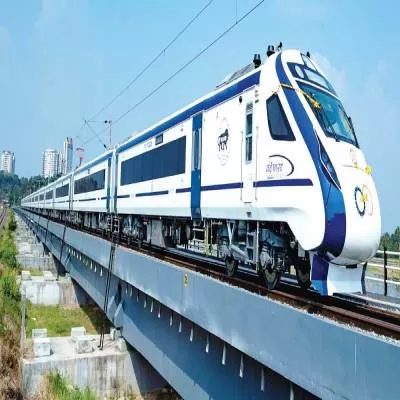
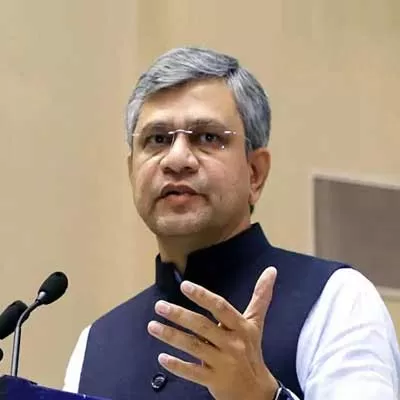
Railway Minister Ashwini Vaishnaw announced that the Mumbai suburban railway will soon introduce new trains with improved features aimed at enhancing passenger comfort and alleviating overcrowding. Speaking through a video link from New Delhi, Vaishnaw outlined several ongoing and upcoming projects for Mumbai’s suburban network, valued at Rs 164 billion, which are being carried out across both the Central and Western Railways. 

The Minister also mentioned plans to reduce the time interval between local trains. Currently, trains operate with a 180-second gap, which will be gradually reduced to 150 seconds and eventually to 120 seconds, enabling more frequent services and reducing congestion.

A new fleet of trains with upgraded design will be introduced, Vaishnaw revealed, emphasizing better acceleration, enhanced ventilation systems to increase oxygen levels, and improved suspension systems for greater passenger comfort. 

In addition to these upgrades, Vaishnaw stated that nearly 300 additional local train services will be added in phases, expanding the current daily operations of 3,000 services. The increased services will be made possible by the completion of infrastructure projects, including the laying of around 300 kilometers of new tracks. 

In the Union Budget 2025-26, a record allocation of Rs 237.78 billion has been earmarked for railway projects in Maharashtra, an amount 20 times greater than the allocations made under previous UPA governments. Vaishnaw also highlighted that Maharashtra has entered into a tripartite agreement with the central government and the Reserve Bank of India to ensure timely financing and completion of these vital railway projects. 
                                                                                      

Railway Minister Ashwini Vaishnaw announced that the Mumbai suburban railway will soon introduce new trains with improved features aimed at enhancing passenger comfort and alleviating overcrowding. Speaking through a video link from New Delhi, Vaishnaw outlined several ongoing and upcoming projects for Mumbai’s suburban network, valued at Rs 164 billion, which are being carried out across both the Central and Western Railways. The Minister also mentioned plans to reduce the time interval between local trains. Currently, trains operate with a 180-second gap, which will be gradually reduced to 150 seconds and eventually to 120 seconds, enabling more frequent services and reducing congestion.A new fleet of trains with upgraded design will be introduced, Vaishnaw revealed, emphasizing better acceleration, enhanced ventilation systems to increase oxygen levels, and improved suspension systems for greater passenger comfort. In addition to these upgrades, Vaishnaw stated that nearly 300 additional local train services will be added in phases, expanding the current daily operations of 3,000 services. The increased services will be made possible by the completion of infrastructure projects, including the laying of around 300 kilometers of new tracks. In the Union Budget 2025-26, a record allocation of Rs 237.78 billion has been earmarked for railway projects in Maharashtra, an amount 20 times greater than the allocations made under previous UPA governments. Vaishnaw also highlighted that Maharashtra has entered into a tripartite agreement with the central government and the Reserve Bank of India to ensure timely financing and completion of these vital railway projects.                                                                                       

Next Story
Infrastructure Urban

Implementation Status of Jal Jeevan Mission

Since August 2019 the Government has implemented Jal Jeevan Mission to provide assured potable water through household tap connections in rural India. At the start of the mission only 32.3 million (mn) rural households, representing 16.7 per cent, were reported to have tap water connections. States and union territories have reported that 125.8 mn additional rural households have since been provided with tap connections. As a result, of about 193.6 mn rural households roughly 158.2 mn, or 81.71 per cent, are reported to have tap water supply at home.\n\nThe State, district and village level st..

Next Story
Infrastructure Urban

Jal Jeevan Mission Reaches Eighty One Per Cent Rural Coverage

The Government reported substantial progress under the Jal Jeevan Mission, launched in August 2019 to provide tap water to every rural household. At launch only 32.3 million (mn) rural households had tap connections and states and Union territories reported provision of 125.8 mn additional households by March 2026. Consequently, out of about 193.6 mn rural households around 158.2 mn, or 81.71 per cent, are reported to have tap water at home. The Finance Minister announced extension of the mission until 2028 in the 2025-26 budget speech. The Swachh Bharat Mission Grameen, launched in October 20..

Next Story
Infrastructure Urban

Empowering Local Governance for Sustainable Rural Water Supply

The Ministry of Jal Shakti has aligned the Jal Jeevan Mission (JJM) with the 73rd Amendment to strengthen village level planning and community ownership of water supply. Gram Panchayats, village water and sanitation committees and Pani Samitis are to plan, implement, manage and maintain piped water systems, with gram sabha processes formalising handover and oversight. Implementation support agencies including non government organisations, community based organisations and self help groups have been empanelled to train local committees and promote women participation. Under JJM, the department ..

Advertisement

Subscribe to Our Newsletter

Get daily newsletters around different themes from Construction world.

STAY CONNECTED

Advertisement

Advertisement

Advertisement