AUDA Prepares 20-Year Development Plan as Ahmedabad Eyes 2036 Olympics
ECONOMY & POLICY

AUDA Prepares 20-Year Development Plan as Ahmedabad Eyes 2036 Olympics

The Ahmedabad Urban Development Authority (AUDA) is preparing a 20-year Development Plan, DP-2041, departing from the conventional 10-year cycle to align long-term growth plans for Ahmedabad and Gandhinagar with aspirations to host the 2036 Olympics. The authority has initiated work on the blueprint and is seeking technical assistance from the Indian Space Research Organisation (Isro) while augmenting staff through outsourced recruitment. Officials have framed the extended horizon as a means to coordinate metropolitan-scale infrastructure and land use decisions over two decades.

AUDA previously prepared DP-2011 and DP-2021 following staggered timelines, with the second plan approved by the state government in December 2014 after drafting between 2011 and 2014. In July 2022 the authority approved the proposal for a 20-year plan and sanctioned a dedicated Development Plan Unit with funds allocated for consultants and operational expenses. The unit is expected to steer public consultations and coordinate technical inputs during the drafting process.

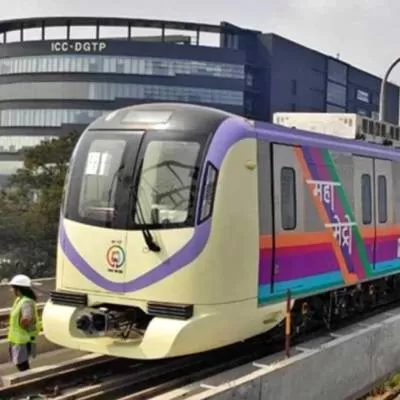
The forthcoming blueprint is likely to include provisions that anticipate the potential requirements of the 2036 Olympic bid, with emphasis on developing sports infrastructure through public-private partnerships (PPP) and securing land for such projects. Planners intend to retain elements of the earlier compact city approach that prioritised public transport corridors, while calibrating floor space indices to support concentrated business districts. The DP-2021 model permitted an FSI of four point zero along Metro and BRTS corridors and five point four in the Ashram Road business district.

AUDA is expected to prioritise about 20 villages located within a five-km radius outside the SP Ring Road for major infrastructure upgrades, integrating them into long-term service plans and transport networks. Although the development plan spans 20 years the authority may build in a formal review after 10 years to allow course correction. Officials view the extended horizon as a tool to position Ahmedabad as a global metropolitan city and to synchronise investments in housing, mobility and urban amenities.

The Ahmedabad Urban Development Authority (AUDA) is preparing a 20-year Development Plan, DP-2041, departing from the conventional 10-year cycle to align long-term growth plans for Ahmedabad and Gandhinagar with aspirations to host the 2036 Olympics. The authority has initiated work on the blueprint and is seeking technical assistance from the Indian Space Research Organisation (Isro) while augmenting staff through outsourced recruitment. Officials have framed the extended horizon as a means to coordinate metropolitan-scale infrastructure and land use decisions over two decades. AUDA previously prepared DP-2011 and DP-2021 following staggered timelines, with the second plan approved by the state government in December 2014 after drafting between 2011 and 2014. In July 2022 the authority approved the proposal for a 20-year plan and sanctioned a dedicated Development Plan Unit with funds allocated for consultants and operational expenses. The unit is expected to steer public consultations and coordinate technical inputs during the drafting process. The forthcoming blueprint is likely to include provisions that anticipate the potential requirements of the 2036 Olympic bid, with emphasis on developing sports infrastructure through public-private partnerships (PPP) and securing land for such projects. Planners intend to retain elements of the earlier compact city approach that prioritised public transport corridors, while calibrating floor space indices to support concentrated business districts. The DP-2021 model permitted an FSI of four point zero along Metro and BRTS corridors and five point four in the Ashram Road business district. AUDA is expected to prioritise about 20 villages located within a five-km radius outside the SP Ring Road for major infrastructure upgrades, integrating them into long-term service plans and transport networks. Although the development plan spans 20 years the authority may build in a formal review after 10 years to allow course correction. Officials view the extended horizon as a tool to position Ahmedabad as a global metropolitan city and to synchronise investments in housing, mobility and urban amenities.

Next Story
Real Estate

Housing Sales Dip 7 per cent QoQ Across Top Cities

India’s housing market saw a 7 per cent quarter-on-quarter decline in sales across the top seven cities in Q1 2026, with approximately 1,01,675 units sold compared to 1,08,970 units in Q4 2025, according to ANAROCK Group. However, on a yearly basis, sales rose 9 per cent, indicating continued underlying demand.The total sales value stood at around Rs 1.51 trillion, reflecting a 5 per cent quarterly drop but a 6 per cent annual increase. Mumbai Metropolitan Region and Bengaluru together accounted for nearly 48 per cent of total sales, while Chennai recorded the highest quarterly decline at 18..

Next Story
Real Estate

Birla Estates Enters Mumbai Redevelopment

Birla Estates has announced its entry into Mumbai’s redevelopment segment with a luxury residential project in Khar West, developed in partnership with Parinee Real Estate Builders. The project will redevelop Anmol Co-operative Housing Society and Bhartiya Bhavan Co-operative Housing Society, marking the company’s first redevelopment initiative in the Mumbai Metropolitan Region.Spread across 1.3 acres, the development will offer a saleable area of 2.9 lakh sq ft with an estimated revenue potential of Rs 17 billion. Positioned in one of Mumbai’s prime residential micro-markets, the projec..

Next Story
Infrastructure Urban

Hitachi, MUFG Expand EV Financing Model

Hitachi and MUFG Bank have expanded their NextGen business co-creation model to accelerate decarbonised mobility by financing electric vehicles and charging infrastructure. The renewed collaboration aims to address key barriers to electrification, including limited access to capital and the need for integrated energy solutions.Building on earlier partnerships, the expanded model extends beyond battery-focused solutions to include electric mobility assets, charging systems and energy management infrastructure across global markets. The initiative will leverage structured financing through speci..

Advertisement

Subscribe to Our Newsletter

Get daily newsletters around different themes from Construction world.

STAY CONNECTED

Advertisement

Advertisement

Advertisement