

Auto Component Makers Bet On Lightweight Parts
ECONOMY & POLICY

Auto Component Makers Bet On Lightweight Parts

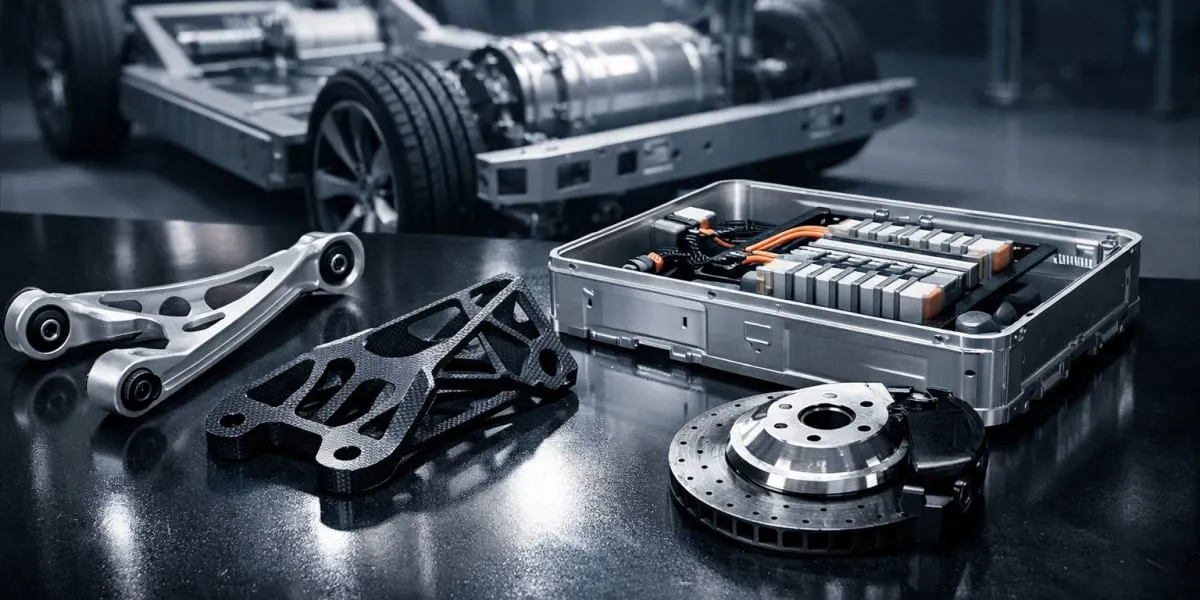
Suppliers of electric vehicle (EV) components are accelerating adoption of lightweight materials and redesigned parts to address range anxiety and energy efficiency concerns. The shift encompasses substitution of traditional steel with aluminium and engineered polymers, together with use of composite structures and topology optimisation to remove redundant mass. Manufacturers are aligning product development with vehicle makers to integrate lightweight subassemblies without compromising safety or regulatory standards.

Engineering teams are investing in simulation, rapid prototyping and testing to validate fatigue life, crashworthiness and thermal management for battery enclosures and powertrain components. Supply chain adjustments include qualification of new vendors and retooling of factories to handle different forming processes and adhesives, which raises upfront capital costs and requires longer qualification cycles. Procurement and product teams are balancing lifecycle benefits against cost and recyclability considerations. Companies are exploring circular economy approaches to reuse components and reduce embodied carbon.

Component suppliers expect demand for lighter parts to grow as vehicle manufacturers pursue higher efficiency and consumers demand greater real-world range. Collaboration between suppliers and original equipment manufacturers focuses on modular designs that are easier to assemble and repair, enabling quicker time to market and potential reductions in total vehicle mass. Standardisation efforts and shared platforms are cited as ways to spread development costs among multiple vehicle programmes.

Analysts note that the move towards lightweighting complements improvements in battery energy density and power electronics, offering a multipronged route to extend vehicle range without proportionate increases in battery capacity. The transition will depend on material availability, manufacturing scale-up and regulatory frameworks that incentivise efficiency and end of life management. Suppliers that can deliver validated, widely proven cost effective solutions are likely to capture a larger share of the evolving EV supply chain. Policy incentives and industry standards could accelerate adoption while addressing end of life challenges.

Suppliers of electric vehicle (EV) components are accelerating adoption of lightweight materials and redesigned parts to address range anxiety and energy efficiency concerns. The shift encompasses substitution of traditional steel with aluminium and engineered polymers, together with use of composite structures and topology optimisation to remove redundant mass. Manufacturers are aligning product development with vehicle makers to integrate lightweight subassemblies without compromising safety or regulatory standards. Engineering teams are investing in simulation, rapid prototyping and testing to validate fatigue life, crashworthiness and thermal management for battery enclosures and powertrain components. Supply chain adjustments include qualification of new vendors and retooling of factories to handle different forming processes and adhesives, which raises upfront capital costs and requires longer qualification cycles. Procurement and product teams are balancing lifecycle benefits against cost and recyclability considerations. Companies are exploring circular economy approaches to reuse components and reduce embodied carbon. Component suppliers expect demand for lighter parts to grow as vehicle manufacturers pursue higher efficiency and consumers demand greater real-world range. Collaboration between suppliers and original equipment manufacturers focuses on modular designs that are easier to assemble and repair, enabling quicker time to market and potential reductions in total vehicle mass. Standardisation efforts and shared platforms are cited as ways to spread development costs among multiple vehicle programmes. Analysts note that the move towards lightweighting complements improvements in battery energy density and power electronics, offering a multipronged route to extend vehicle range without proportionate increases in battery capacity. The transition will depend on material availability, manufacturing scale-up and regulatory frameworks that incentivise efficiency and end of life management. Suppliers that can deliver validated, widely proven cost effective solutions are likely to capture a larger share of the evolving EV supply chain. Policy incentives and industry standards could accelerate adoption while addressing end of life challenges.

Next Story
Infrastructure Transport

Noida Emerges as Key Economic Hub: Cushman Report

Cushman & Wakefield’s recent report, Noida Runway for Growth, highlights the city’s emergence as a major economic and real estate hub contributing nearly 10 per cent to Uttar Pradesh’s GSDP. A key driver is the upcoming Noida International Airport, which will be inaugurated by Prime Minister Narendra Modi on March 28 in Gautam Buddha Nagar's Jewar. The project is set to enhance connectivity and reshape the region’s economic and real estate landscape. Noida’s office market has expanded to 43.4 million sq ft, including 26.6 million sq ft of Grade A+ assets, with a 40 per cent..

Next Story
Real Estate

Bent Collective Unveils Sculptural Ravon Chair

Bent Collective has recently introduced the Ravon Chair, a striking design piece that redefines the intersection of art and functionality. Characterised by sharp geometry, bold angles, and a vivid marbled finish, the chair stands out as a sculptural element rather than conventional seating.Designed with a strong architectural language, the Ravon Chair features clean lines and intersecting planes that create a dynamic silhouette. Its distinctive triangular cut-out detail enhances depth and asymmetry, allowing light and shadow to interact across its surface. Finished in a rich red marbled patter..

Next Story
Infrastructure Transport

DP World Opens Golf Clubhouse in Gurugram

DP World has delivered a permanent clubhouse to ZEN Golf Range & Academy in Gurugram, strengthening grassroots golf development in India ahead of the Hero Indian Open. The facility marks the second under its global clubhouse programme, following the first in Cape Town in 2025.Constructed using a repurposed shipping container, the clubhouse provides golf equipment, sheltered training areas, and a dedicated space for young players to build both sporting and life skills. The initiative aligns with DP World’s broader commitment to community development across its global operations.India cont..

Advertisement

Subscribe to Our Newsletter

Get daily newsletters around different themes from Construction world.

STAY CONNECTED

Advertisement

Advertisement

Advertisement