Automakers Line Up 25+ EV Launches As India Enters Next Phase
ECONOMY & POLICY

Automakers Line Up 25+ EV Launches As India Enters Next Phase

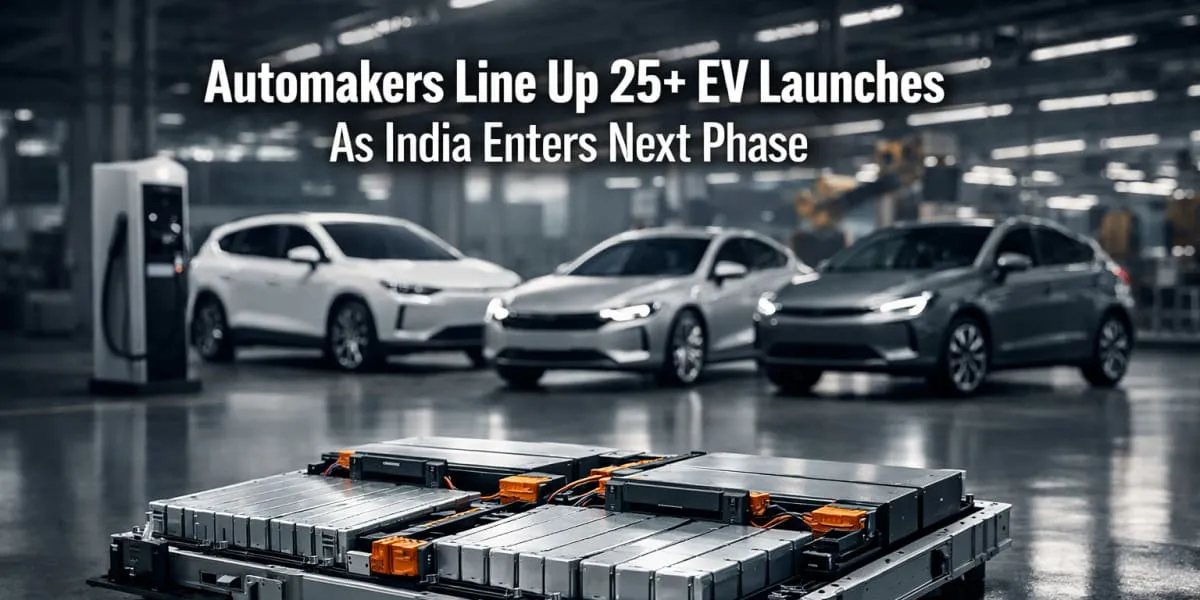
Automakers across India have scheduled more than 25 new electric vehicle launches as the country's electric mobility market moves into a new phase. Manufacturers are accelerating product rollouts in response to improving battery economics, growing consumer acceptance and clearer policy signals from authorities. The move reflects a shift from early adopter models to mainstream offerings designed for mass uptake. Companies are also increasing investment in research and development of battery chemistry and vehicle software to improve efficiency and lower costs.

A wave of new models is expected to cover multiple segments, from compact city cars to commercial vehicles, intensifying competition on price, range and features. Companies are focusing on localisation of components and development of domestic supply chains to reduce costs and improve margins. Joint ventures and technology partnerships are being pursued to fast track development and scale production. Product differentiation will extend to after sales services such as extended warranties and flexible leasing to attract mainstream buyers.

Expansion of charging infrastructure is running in parallel, with public charging networks growing alongside home and workplace solutions to address range anxiety. Fleet electrification for cab services and last mile logistics is providing steady demand and encouraging investment in depot charging and grid integration. Greater availability of finance and total cost of ownership advantages are beginning to influence purchase decisions. Coordination on interoperability standards and fast charging protocols is becoming an industry priority to ensure a seamless customer experience.

Analysts expect that sustained policy support, stable regulations and investment in the power grid will be crucial to maintain momentum and avoid bottlenecks. Manufacturers will need to balance ambition with execution as they move from concept reveals to mass production and sales. Consumer education, service networks and second life battery strategies will shape how quickly electric mobility becomes the dominant norm. The transition is expected to create jobs in manufacturing, charging infrastructure and services while requiring reskilling of technicians.

Automakers across India have scheduled more than 25 new electric vehicle launches as the country's electric mobility market moves into a new phase. Manufacturers are accelerating product rollouts in response to improving battery economics, growing consumer acceptance and clearer policy signals from authorities. The move reflects a shift from early adopter models to mainstream offerings designed for mass uptake. Companies are also increasing investment in research and development of battery chemistry and vehicle software to improve efficiency and lower costs. A wave of new models is expected to cover multiple segments, from compact city cars to commercial vehicles, intensifying competition on price, range and features. Companies are focusing on localisation of components and development of domestic supply chains to reduce costs and improve margins. Joint ventures and technology partnerships are being pursued to fast track development and scale production. Product differentiation will extend to after sales services such as extended warranties and flexible leasing to attract mainstream buyers. Expansion of charging infrastructure is running in parallel, with public charging networks growing alongside home and workplace solutions to address range anxiety. Fleet electrification for cab services and last mile logistics is providing steady demand and encouraging investment in depot charging and grid integration. Greater availability of finance and total cost of ownership advantages are beginning to influence purchase decisions. Coordination on interoperability standards and fast charging protocols is becoming an industry priority to ensure a seamless customer experience. Analysts expect that sustained policy support, stable regulations and investment in the power grid will be crucial to maintain momentum and avoid bottlenecks. Manufacturers will need to balance ambition with execution as they move from concept reveals to mass production and sales. Consumer education, service networks and second life battery strategies will shape how quickly electric mobility becomes the dominant norm. The transition is expected to create jobs in manufacturing, charging infrastructure and services while requiring reskilling of technicians.

Next Story
Infrastructure Urban

Coal Minister Inaugurates Projects and Reviews WCL in Nagpur

G. Kishan Reddy, Coal Minister, inaugurated several key infrastructure projects and reviewed operations of Western Coalfields Limited (WCL) at a programme in Nagpur. The minister opened new facilities aimed at strengthening production capacity and logistics and undertook a comprehensive review of mining, transportation and safety arrangements. He assessed project readiness and operational planning with senior WCL officials and emphasised the need for timely completion and strict adherence to statutory norms. During the visit the minister inspected mining works, mechanisation initiatives, pithe..

Next Story
Infrastructure Transport

Modi To Inaugurate Redeveloped Kakinada Railway Station

Prime Minister Narendra Modi is scheduled to inaugurate the redeveloped Kakinada railway station in Andhra Pradesh on March 31. The ceremony will mark the completion of a redevelopment initiative intended to upgrade the station's infrastructure and services. The event will be presented as a milestone in efforts to modernise regional rail facilities. The redevelopment focuses on improved passenger amenities, enhanced accessibility and better circulation within the station complex. Upgrades are reported to encompass modernised waiting areas, upgraded sanitation facilities and signage, and measur..

Next Story
Infrastructure Energy

Kerala Able to Meet Peak Electricity Demand, Minister Says

Kerala will be able to meet peak electricity demand and there will be no power cuts, the state energy minister Krishnankutty has said. He provided assurance that supply arrangements and operational measures are in place to handle peak loads and to maintain stability across the grid. The statement followed routine assessments by the state electricity department and other agencies tasked with monitoring system health and reserve margins. The minister indicated that the administration has intensified monitoring of demand patterns and generation output to pre-empt stress on the network. He said co..

Advertisement

Subscribe to Our Newsletter

Get daily newsletters around different themes from Construction world.

STAY CONNECTED

Advertisement

Advertisement

Advertisement