+
Balrampur Chini Secures First Institutional Order For PLA Products
ECONOMY & POLICY

Balrampur Chini Secures First Institutional Order For PLA Products

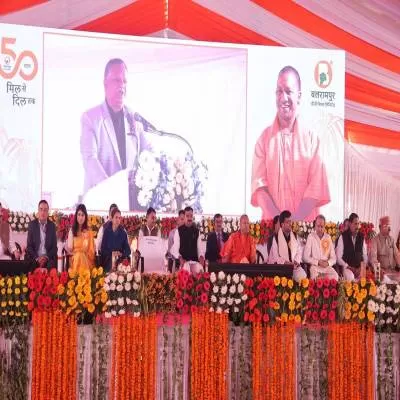
Balrampur Chini Mills Ltd has secured its first institutional order from the Lucknow Cantonment Board to supply compostable bioplastic items through its PLA vertical, Balrampur Bioyug. The order covers renewable, bio-based products for institutional use. The company, headquartered in Kolkata, has diversified into bioplastic production and is building a PLA manufacturing plant at Kumbhi in Uttar Pradesh. The development aligns with a company strategy to expand beyond sugar operations.

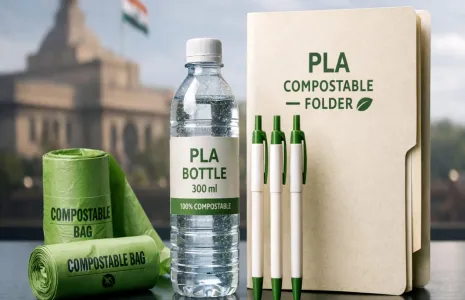
The order includes compostable garbage bags in two sizes, 300 millilitre PLA bottles, three-dimensional printed PLA compostable pens and PLA folders, all made from renewable polylactic acid, a material the company describes as 100 per cent compostable with a low carbon footprint and no microplastics. The items are intended for operational categories within the cantonment and signal institutional adoption of biopolymer solutions.

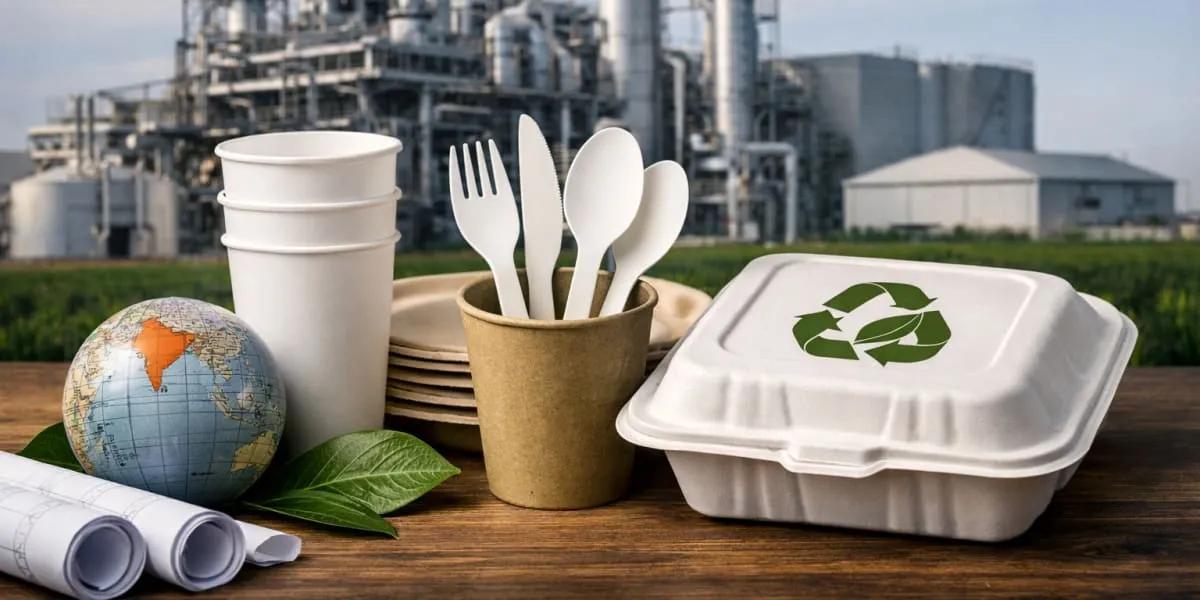
The PLA plant at Kumbhi will have an annual capacity of 80,000 tonne (t) and is expected to be operational in October. Balrampur Chini said the plant will support domestic institutional demand and underpin Balrampur Bioyug. The company is one of India's largest integrated sugar producers with 10 sugar factories in Uttar Pradesh and an aggregate sugarcane crushing capacity of 80,000 t per day. Its operations also include a distillery with capacity of 1,050 kilolitre per day and co-generation facilities of 175.7 megawatt (MW).

Company executives said the contract reflects institutional trust in India's emerging biopolymer capabilities and indicates a shift from fossil-based materials to bio-based alternatives within institutional systems. The move responds to growing concern about single-use plastics and microplastic contamination and forms part of the firm's sustainability agenda. The Lucknow Cantonment covers 6,760 acres and is administered by a statutory cantonment board under the Director General of Defence Estates in the Ministry of Defence. The order represents an initial large-scale deployment of compostable PLA products in a government-administered institution.

Balrampur Chini Mills Ltd has secured its first institutional order from the Lucknow Cantonment Board to supply compostable bioplastic items through its PLA vertical, Balrampur Bioyug. The order covers renewable, bio-based products for institutional use. The company, headquartered in Kolkata, has diversified into bioplastic production and is building a PLA manufacturing plant at Kumbhi in Uttar Pradesh. The development aligns with a company strategy to expand beyond sugar operations. The order includes compostable garbage bags in two sizes, 300 millilitre PLA bottles, three-dimensional printed PLA compostable pens and PLA folders, all made from renewable polylactic acid, a material the company describes as 100 per cent compostable with a low carbon footprint and no microplastics. The items are intended for operational categories within the cantonment and signal institutional adoption of biopolymer solutions. The PLA plant at Kumbhi will have an annual capacity of 80,000 tonne (t) and is expected to be operational in October. Balrampur Chini said the plant will support domestic institutional demand and underpin Balrampur Bioyug. The company is one of India's largest integrated sugar producers with 10 sugar factories in Uttar Pradesh and an aggregate sugarcane crushing capacity of 80,000 t per day. Its operations also include a distillery with capacity of 1,050 kilolitre per day and co-generation facilities of 175.7 megawatt (MW). Company executives said the contract reflects institutional trust in India's emerging biopolymer capabilities and indicates a shift from fossil-based materials to bio-based alternatives within institutional systems. The move responds to growing concern about single-use plastics and microplastic contamination and forms part of the firm's sustainability agenda. The Lucknow Cantonment covers 6,760 acres and is administered by a statutory cantonment board under the Director General of Defence Estates in the Ministry of Defence. The order represents an initial large-scale deployment of compostable PLA products in a government-administered institution.

Next Story
Infrastructure Urban

Implementation Status of Jal Jeevan Mission

Since August 2019 the Government has implemented Jal Jeevan Mission to provide assured potable water through household tap connections in rural India. At the start of the mission only 32.3 million (mn) rural households, representing 16.7 per cent, were reported to have tap water connections. States and union territories have reported that 125.8 mn additional rural households have since been provided with tap connections. As a result, of about 193.6 mn rural households roughly 158.2 mn, or 81.71 per cent, are reported to have tap water supply at home.\n\nThe State, district and village level st..

Next Story
Infrastructure Urban

Jal Jeevan Mission Reaches Eighty One Per Cent Rural Coverage

The Government reported substantial progress under the Jal Jeevan Mission, launched in August 2019 to provide tap water to every rural household. At launch only 32.3 million (mn) rural households had tap connections and states and Union territories reported provision of 125.8 mn additional households by March 2026. Consequently, out of about 193.6 mn rural households around 158.2 mn, or 81.71 per cent, are reported to have tap water at home. The Finance Minister announced extension of the mission until 2028 in the 2025-26 budget speech. The Swachh Bharat Mission Grameen, launched in October 20..

Next Story
Infrastructure Urban

Empowering Local Governance for Sustainable Rural Water Supply

The Ministry of Jal Shakti has aligned the Jal Jeevan Mission (JJM) with the 73rd Amendment to strengthen village level planning and community ownership of water supply. Gram Panchayats, village water and sanitation committees and Pani Samitis are to plan, implement, manage and maintain piped water systems, with gram sabha processes formalising handover and oversight. Implementation support agencies including non government organisations, community based organisations and self help groups have been empanelled to train local committees and promote women participation. Under JJM, the department ..

Advertisement

Subscribe to Our Newsletter

Get daily newsletters around different themes from Construction world.

STAY CONNECTED

Advertisement

Advertisement

Advertisement