




Bengaluru to Deploy 1,750 E-Buses Under PM E-Drive
ECONOMY & POLICY

Bengaluru to Deploy 1,750 E-Buses Under PM E-Drive

The Union government has awarded the first contract under the PM E-Drive Scheme for deploying electric buses in Bengaluru, marking a major milestone in India’s public electric mobility push.

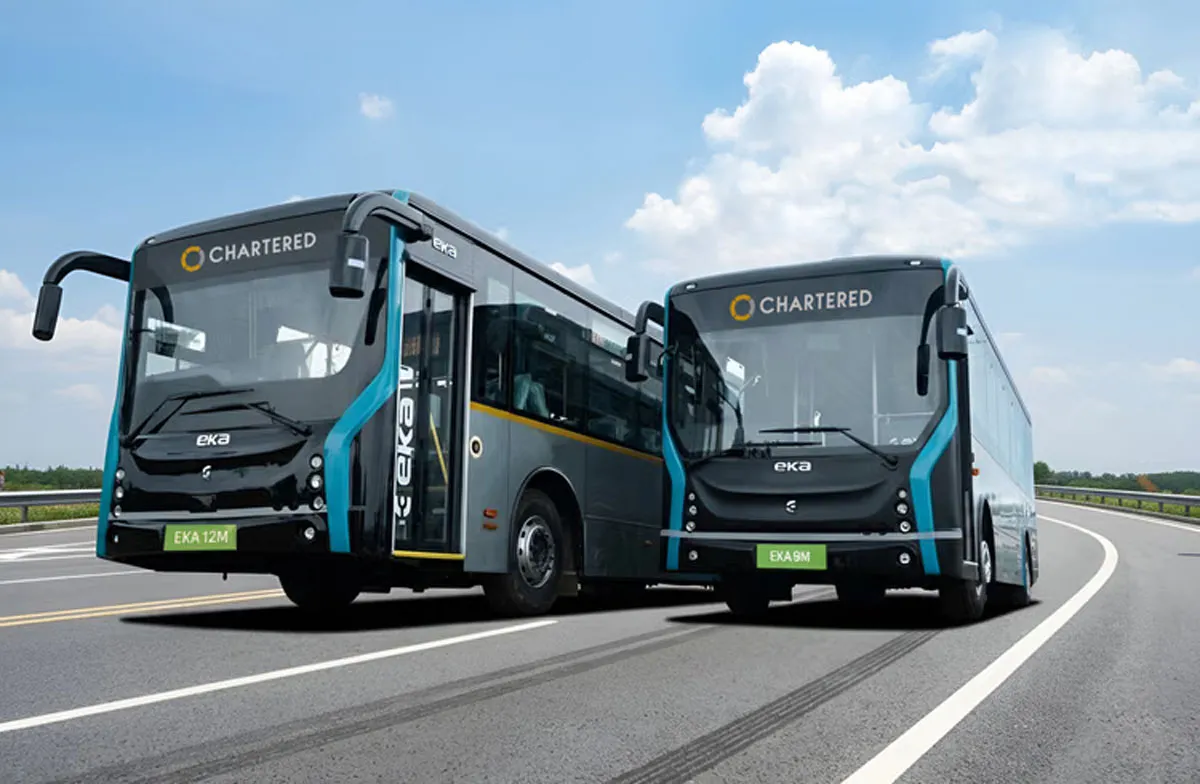
Pune-based EV manufacturer EKA Mobility and Ahmedabad-based mobility services company Chartered Speed have secured the Letter of Confirmation of Quantity to deploy 1,750 electric buses in the city. The contract was awarded through Convergence Energy Services Limited, a Ministry of Power entity, which floated a mega tender in November 2025 to lease 10,900 e-buses under the gross cost contract model.

Bengaluru will receive the largest share with 4,500 buses, followed by Delhi with 2,800, Hyderabad with 2,000, Ahmedabad with 1,000 and Surat with 600. The procurement drive is being positioned as India’s largest-ever electric bus induction programme.

Under the PM E-Drive Scheme, the Centre will provide subsidies of Rs 3.5 million per standard bus (10–12 metres), Rs 2.5 million per midi bus (8–10 metres) and Rs 2 million per minibus (6–8 metres). Only e-buses with an ex-factory price below Rs 20 million are eligible for incentives.

The induction of new buses is expected to significantly expand the fleet of the Bengaluru Metropolitan Transport Corporation (BMTC), which currently operates around 6,740 vehicles, including 1,700 e-buses. The 1,750-bus allocation accounts for nearly 39 per cent of Bengaluru’s total planned induction of 4,500 electric buses under the PM E-Drive programme.

Under the contract, EKA Mobility will manufacture the buses, while Chartered Speed will create charging infrastructure at BMTC depots, deploy drivers and maintain the vehicles. BMTC will provide conductors for operations.

However, concerns have been raised over the quality and performance of electric buses deployed under earlier schemes. In October, Karnataka Transport Minister Ramalinga Reddy flagged issues such as technical failures, battery-related breakdowns, accidents, poor maintenance and driver shortages, calling for stricter contractual provisions and joint compliance monitoring mechanisms. It remains unclear whether these concerns have been fully addressed in the new contract.

The latest deployment underscores Bengaluru’s growing role in India’s electric public transport transition, aligning with national decarbonisation goals and Karnataka’s clean mobility strategy.

The Union government has awarded the first contract under the PM E-Drive Scheme for deploying electric buses in Bengaluru, marking a major milestone in India’s public electric mobility push. Pune-based EV manufacturer EKA Mobility and Ahmedabad-based mobility services company Chartered Speed have secured the Letter of Confirmation of Quantity to deploy 1,750 electric buses in the city. The contract was awarded through Convergence Energy Services Limited, a Ministry of Power entity, which floated a mega tender in November 2025 to lease 10,900 e-buses under the gross cost contract model. Bengaluru will receive the largest share with 4,500 buses, followed by Delhi with 2,800, Hyderabad with 2,000, Ahmedabad with 1,000 and Surat with 600. The procurement drive is being positioned as India’s largest-ever electric bus induction programme. Under the PM E-Drive Scheme, the Centre will provide subsidies of Rs 3.5 million per standard bus (10–12 metres), Rs 2.5 million per midi bus (8–10 metres) and Rs 2 million per minibus (6–8 metres). Only e-buses with an ex-factory price below Rs 20 million are eligible for incentives. The induction of new buses is expected to significantly expand the fleet of the Bengaluru Metropolitan Transport Corporation (BMTC), which currently operates around 6,740 vehicles, including 1,700 e-buses. The 1,750-bus allocation accounts for nearly 39 per cent of Bengaluru’s total planned induction of 4,500 electric buses under the PM E-Drive programme. Under the contract, EKA Mobility will manufacture the buses, while Chartered Speed will create charging infrastructure at BMTC depots, deploy drivers and maintain the vehicles. BMTC will provide conductors for operations. However, concerns have been raised over the quality and performance of electric buses deployed under earlier schemes. In October, Karnataka Transport Minister Ramalinga Reddy flagged issues such as technical failures, battery-related breakdowns, accidents, poor maintenance and driver shortages, calling for stricter contractual provisions and joint compliance monitoring mechanisms. It remains unclear whether these concerns have been fully addressed in the new contract. The latest deployment underscores Bengaluru’s growing role in India’s electric public transport transition, aligning with national decarbonisation goals and Karnataka’s clean mobility strategy.

Next Story
Real Estate

Union Budge: Infra-Led Urban Shift

The Union Budget FY27 reinforces infrastructure-led urbanisation as the backbone of India’s real estate and housing growth. Higher public capital expenditure, City Economic Regions, risk-mitigation mechanisms and REIT-led asset monetisation are being widely viewed as long-term enablers, even as the industry continues to seek sharper supply-side reforms and affordability-focused measures. Here are a few industry insights:Dr Niranjan Hiranandani, Chairman, NAREDCO & Hiranandani Group“The Union Budget 2026-27 is growth-oriented and stability-focused, supporting consumption and aiming to s..

Next Story
Infrastructure Urban

Budget 2026 Charts Path for Infrastructure-Led, Tech-Driven Growth

The Union Budget 2026–27 signals strong continuity in India’s macroeconomic strategy, anchored in elevated public capital expenditure, fiscal discipline, and a sharper focus on manufacturing, infrastructure, and regional development. With capital outlay pegged at ₹12.2 lakh crore and a fiscal deficit target of around 4.3 per cent, the Budget balances growth ambition with stability, offering long-term visibility to investors and project developers.A dominant theme is the centrality of infrastructure as a multiplier for economic expansion. Public capex now accounts for over 3.3 per cent of..

Next Story
Infrastructure Energy

Tata Power Arm Crosses 10 GW EPC Milestone

Tata Power Renewable Energy Ltd (TPREL) has achieved a major milestone by executing 10 gigawatts of engineering, procurement and construction (EPC) renewable energy projects to date, reinforcing its position in India’s clean energy infrastructure sector. According to the company, the executed portfolio comprises 4.2 gigawatts of in-house projects and 5.8 gigawatts of third-party projects. Of the total 10 gigawatts commissioned so far, 9.7 gigawatts are solar projects and 290 megawatts are wind projects. In the first nine months of FY26, TPREL commissioned 1.88 gigawatts of EPC renewable en..

Advertisement

Subscribe to Our Newsletter

Get daily newsletters around different themes from Construction world.

STAY CONNECTED

Advertisement

Advertisement

Advertisement

Advertisement

Open In App














