Budget 2022 allots Rs 60k cr for 3.8 crore households
ECONOMY & POLICY

Budget 2022 allots Rs 60k cr for 3.8 crore households

Under the Har Ghar, Nal Se Jal Scheme 2022-23 will allocate Rs 60,000 crore to cover 3.8 crore households.

Presenting the Budget 2022-23, the Minister of Finance, Nirmala Sitharaman, said that since 2014, the government has focused on the empowerment of citizens, especially the poor and marginalised classes. Many initiatives include programmes that have provided housing, electricity, cooking gas and access to the water supply.

She added that Har Ghar, Nal Se Jal is 8.7 crore, from which 5.5 crore houses have been given tap water supply in the past two years.

She also announced the allocation of Rs 48,000 crore for completing 80 lakh houses for the identified eligible beneficiaries under the Pradhan Mantri Awas Yojana, both rural and urban, in the 2022-23 Budget.

The centre will work with the state governments for reducing the time required for land and construction approvals and promote affordable housing for middle-class citizens and Economically Weaker Sections (EWS) in the urban areas. Additionally, the government will work with the financial sector regulators to expand access to capital, reducing the cost of intermediation.

The Minister proposed to cover villages and rural areas on the Northern border under the new Vibrant Villages Programme.

She said that border villages having a limited population, limited connectivity and infrastructure are often left out from development. Such villages will be included in the Vibrant Village Programme.

The programme will include constructing rural infrastructure, housing, tourist spots, road connectivity, provisioning of decentralised renewable energy, direct to home access for Doordarshan and educational channels and support for livelihood generation. These activities will witness more funding and cover the existing schemes in the programme. The Ministry will define the outcomes of the programme and monitor them regularly.

In her Budget Speech 2022-23, the Minister focuses on the Aspirational Districts Programme and the Blocks, having less progress in some key sectors.

She added that the government aims at improving the quality of life of the citizens in the backward districts of India through the Aspirational Districts Programme. About 95% of these 112 backwards districts have shown significant progress in many sectors, including health, nutrition, financial inclusion and basic infrastructure and exceeded the state average values. However, some blocks still lag in those districts. In 2022-23, the Aspirational Districts Programme will focus on those blocks in such backward districts.

Image Source

Under the Har Ghar, Nal Se Jal Scheme 2022-23 will allocate Rs 60,000 crore to cover 3.8 crore households. Presenting the Budget 2022-23, the Minister of Finance, Nirmala Sitharaman, said that since 2014, the government has focused on the empowerment of citizens, especially the poor and marginalised classes. Many initiatives include programmes that have provided housing, electricity, cooking gas and access to the water supply. She added that Har Ghar, Nal Se Jal is 8.7 crore, from which 5.5 crore houses have been given tap water supply in the past two years. She also announced the allocation of Rs 48,000 crore for completing 80 lakh houses for the identified eligible beneficiaries under the Pradhan Mantri Awas Yojana, both rural and urban, in the 2022-23 Budget. The centre will work with the state governments for reducing the time required for land and construction approvals and promote affordable housing for middle-class citizens and Economically Weaker Sections (EWS) in the urban areas. Additionally, the government will work with the financial sector regulators to expand access to capital, reducing the cost of intermediation. The Minister proposed to cover villages and rural areas on the Northern border under the new Vibrant Villages Programme. She said that border villages having a limited population, limited connectivity and infrastructure are often left out from development. Such villages will be included in the Vibrant Village Programme. The programme will include constructing rural infrastructure, housing, tourist spots, road connectivity, provisioning of decentralised renewable energy, direct to home access for Doordarshan and educational channels and support for livelihood generation. These activities will witness more funding and cover the existing schemes in the programme. The Ministry will define the outcomes of the programme and monitor them regularly. In her Budget Speech 2022-23, the Minister focuses on the Aspirational Districts Programme and the Blocks, having less progress in some key sectors. She added that the government aims at improving the quality of life of the citizens in the backward districts of India through the Aspirational Districts Programme. About 95% of these 112 backwards districts have shown significant progress in many sectors, including health, nutrition, financial inclusion and basic infrastructure and exceeded the state average values. However, some blocks still lag in those districts. In 2022-23, the Aspirational Districts Programme will focus on those blocks in such backward districts. Image Source

Related Stories

Gold Stories

Next Story
Infrastructure Urban

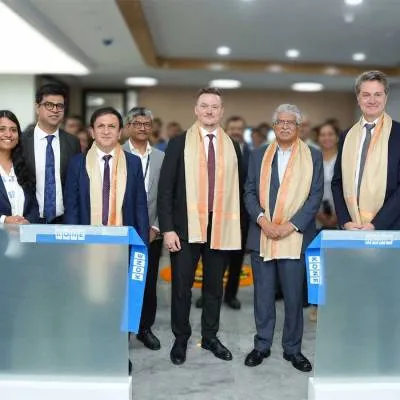
KONE Opens India's First Digital Experience Centre in Pune

KONE, a global elevator and escalator manufacturer, has inaugurated its first Digital Experience Centre (DEC) in India, located in Pune. The facility aims to showcase how artificial intelligence (AI), connectivity and data-driven technologies can enhance customer experiences and improve building operations.The centre was inaugurated by Jussi Herlin, Executive Vice Chair, KONE Corporation; Philippe Delorme, President and CEO, KONE; and Nandan Nilekani, Co-founder and Chairman of the Board, Infosys.Designed as an interactive customer environment, the facility demonstrates digital solutions cover..

Next Story
Infrastructure Urban

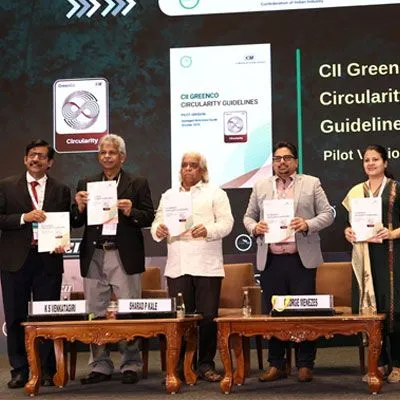
CII GreenCo Launches Circularity Guidelines for Indian Industry

The Confederation of Indian Industry (CII) GreenCo Council has launched the CII GreenCo Circularity Guidelines – Pilot Version at the 17th CII GreenCo Waste & Resource Management Summit 2026 in Chennai. The initiative aims to strengthen resource efficiency, waste reduction and circular economy practices across Indian manufacturing and process industries.The guidelines introduce a structured framework with circularity indices covering raw materials, consumables, packaging and other resource inputs. These indicators will help industries assess existing practices, identify opportunities to ..

Next Story
Infrastructure Energy

Global Electronics Association Launches IPC-1783-CO2E Standard

The Global Electronics Association has introduced IPC-1783-CO2E, a new international standard aimed at improving consistency, transparency and comparability in product carbon footprint reporting across the electronics manufacturing industry.The standard, titled International Standard for Data Collection and Reporting of CO2 Equivalent (CO2e) Emissions for the Electronics Manufacturing Supply Chain, provides industry-specific guidance for collecting, estimating and reporting carbon emissions data.With increasing regulatory requirements and customer expectations, electronics manufacturers face c..

Advertisement

Subscribe to Our Newsletter

Get daily newsletters around different themes from Construction world.

STAY CONNECTED

Advertisement

SPECIAL OFFER
QR Code