Cabinet Approves 1720 MW Kamala Hydro Electric Project
ECONOMY & POLICY

Cabinet Approves 1720 MW Kamala Hydro Electric Project

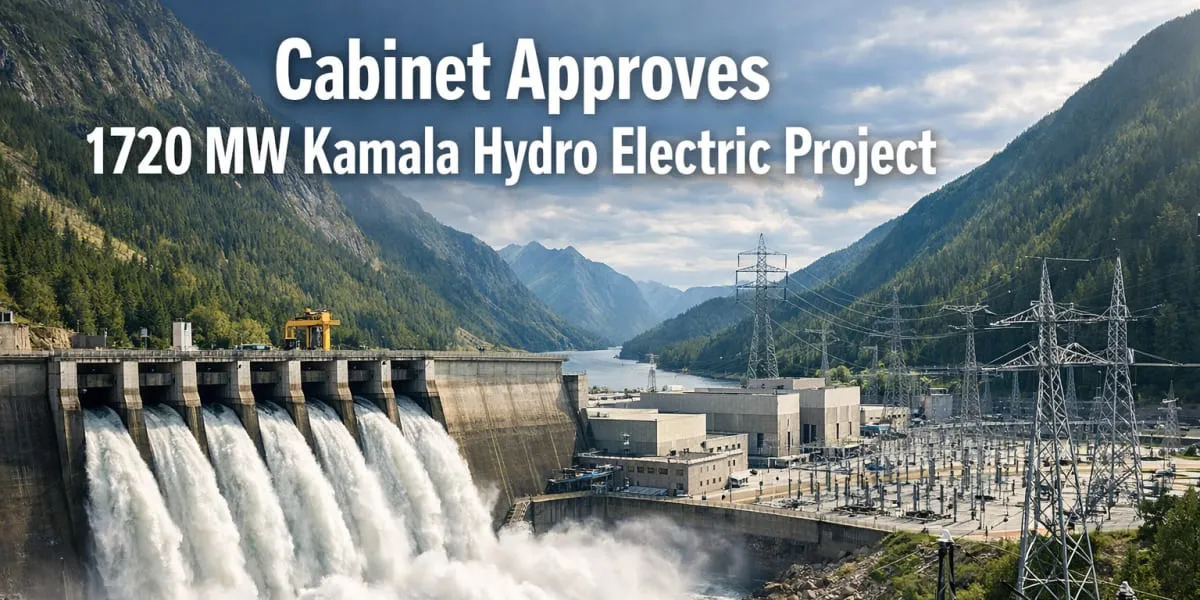
The Cabinet Committee on Economic Affairs has approved an investment of Rs 260,695 mn for the Kamala Hydro Electric Project in Kamle, Kra Daadi and Kurung Kumey districts of Arunachal Pradesh. The project will have an installed capacity of 1720 megawatt (MW) and is expected to generate 6870 MU of energy. The estimated completion period is 96 months and the project will be implemented through a joint venture between NHPC Limited and the government of Arunachal Pradesh.

The power produced is intended to strengthen supply in Arunachal Pradesh, aid peak demand management and support national grid balancing while offering flood moderation benefits in the Brahmaputra valley. Central budgetary support comprises Rs 47,439.8 mn for flood moderation, Rs 13,400 mn for enabling infrastructure such as roads, bridges and associated transmission works, and Rs 7,500 mn as central financial assistance towards the state equity share. Dedicated project funds of Rs 80 mn will finance essential community infrastructure.

The state will receive 12 per cent free power and an additional one per cent set aside for a Local Area Development Fund to support socio-economic initiatives in host districts. The project will deliver about 196 km of roads and bridges for local use and provide compensation and employment opportunities for affected communities. Corporate social responsibility measures and other community benefits will be financed from project resources.

NHPC Limited is also developing Subansiri Lower, Dibang Multipurpose and Etalin in the north east, with capacities of 2000 MW, 2880 MW and 3097 MW respectively. Subansiri Lower has 750 MW commissioned with the remaining capacity expected by December 2026. All projects will allocate 12 per cent free power to host states and one per cent for local development through a Local Area Development Fund, reinforcing regional energy infrastructure and development.

The Cabinet Committee on Economic Affairs has approved an investment of Rs 260,695 mn for the Kamala Hydro Electric Project in Kamle, Kra Daadi and Kurung Kumey districts of Arunachal Pradesh. The project will have an installed capacity of 1720 megawatt (MW) and is expected to generate 6870 MU of energy. The estimated completion period is 96 months and the project will be implemented through a joint venture between NHPC Limited and the government of Arunachal Pradesh. The power produced is intended to strengthen supply in Arunachal Pradesh, aid peak demand management and support national grid balancing while offering flood moderation benefits in the Brahmaputra valley. Central budgetary support comprises Rs 47,439.8 mn for flood moderation, Rs 13,400 mn for enabling infrastructure such as roads, bridges and associated transmission works, and Rs 7,500 mn as central financial assistance towards the state equity share. Dedicated project funds of Rs 80 mn will finance essential community infrastructure. The state will receive 12 per cent free power and an additional one per cent set aside for a Local Area Development Fund to support socio-economic initiatives in host districts. The project will deliver about 196 km of roads and bridges for local use and provide compensation and employment opportunities for affected communities. Corporate social responsibility measures and other community benefits will be financed from project resources. NHPC Limited is also developing Subansiri Lower, Dibang Multipurpose and Etalin in the north east, with capacities of 2000 MW, 2880 MW and 3097 MW respectively. Subansiri Lower has 750 MW commissioned with the remaining capacity expected by December 2026. All projects will allocate 12 per cent free power to host states and one per cent for local development through a Local Area Development Fund, reinforcing regional energy infrastructure and development.

Next Story
Infrastructure Transport

AFCONS & Navayuga set world records with Missing Link Expressway

Maharashtra’s most ambitious greenfield bypass — a 13.3-km alignment carrying twin record-setting tunnels and India’s tallest cable-stayed road bridge — was thrown open to traffic on Maharashtra Day, finally completing the Mumbai–Pune Expressway after a 23-year wait. CW reports…The 650-m cable-stayed bridge over Tiger Valley at sunset — the package executed by Afcons Infrastructure Ltd carries 182-m pylons, the tallest on any Indian road bridge.On 1 May 2026, Chief Minister Devendra Fadnavis, flanked by Deputy Chief Ministers Eknath Shinde and Sunetra Pawar (representing the late..

Next Story
Infrastructure Transport

Mumbai–Pune Missing Link boosts realty prospects

The recently opened ‘missing link’ on the Mumbai–Pune Expressway is set to significantly transform connectivity between the two cities by reducing travel time and bypassing the challenging ghat section. The new alignment, featuring tunnels and viaducts, is designed to improve safety, ease congestion and ensure a smoother, faster commute for both passenger and commercial traffic.With improved travel efficiency, the corridor is expected to strengthen intercity movement, encouraging more frequent travel for work, leisure and logistics. This enhanced accessibility is likely to benefit real e..

Next Story
Infrastructure Urban

How Hormuz is Hijacking Indian Highways

At the recently held RAHSTA Round Table on 29th April in Pune, and earlier during our webinars for Cement Expo by Indian Cement Review and by FIRST Construction Council on manufacturing construction equipment for the world, one thread lay common: the industry is being subjected to a cost-push chain reaction moving from crude oil → freight/insurance → steel, cement fuel, bitumen, polymers, packaging, logistics and finally project margins. Indeed, the West Asia crisis caused by the war and the Hormuz Strait blockade, which does not directly concern us, has turned around and hit us. If the wa..

Advertisement

Subscribe to Our Newsletter

Get daily newsletters around different themes from Construction world.

STAY CONNECTED

Advertisement

Advertisement

Advertisement