Cabinet Approves DSIR’s Rs 22.77 Bn Capacity Building Scheme
ECONOMY & POLICY

Cabinet Approves DSIR’s Rs 22.77 Bn Capacity Building Scheme

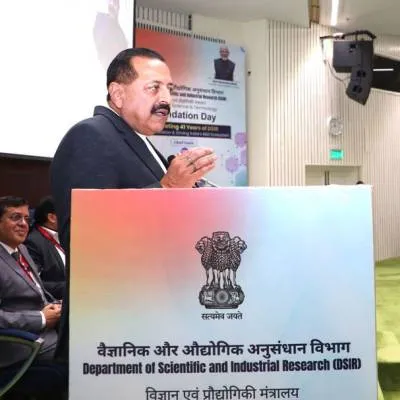
The Cabinet, chaired by Prime Minister Narendra Modi, has approved the Department of Scientific and Industrial Research (DSIR) / Council of Scientific and Industrial Research (CSIR) scheme on “Capacity Building and Human Resource Development” with an outlay of Rs 22.77 billion for the Fifteenth Finance Commission period (2021-22 to 2025-26).
Implemented by CSIR, the scheme covers R&D institutions, national laboratories, Institutes of National Importance, Institutes of Eminence, and universities nationwide. It provides a platform for young researchers aspiring to careers in academia, industry, and national R&D labs, fostering growth in Science, Technology & Engineering, Medical, and Mathematical Sciences (STEMM).
The scheme supports Sustainable Development Goals (SDGs) by increasing researchers per million population, expanding India’s high-quality S&T workforce, and contributing to the nation’s improved Global Innovation Index ranking—39th in 2024. It has already aided thousands of scholars, enhancing India’s position among the top three countries for scientific paper publications, according to NSF, USA data.
CSIR’s umbrella scheme includes four sub-programmes:
1. Doctoral and Postdoctoral Fellowships
2. Extramural Research Scheme, Emeritus Scientist Scheme, and Bhatnagar Fellowship
3. Promotion and Recognition of Excellence through Awards
4. Knowledge sharing via Travel and Symposia Grants
This approval marks a historic milestone for CSIR in its 84-year legacy, strengthening India’s R&D capabilities for present and future generations.

News source: PIB

The Cabinet, chaired by Prime Minister Narendra Modi, has approved the Department of Scientific and Industrial Research (DSIR) / Council of Scientific and Industrial Research (CSIR) scheme on “Capacity Building and Human Resource Development” with an outlay of Rs 22.77 billion for the Fifteenth Finance Commission period (2021-22 to 2025-26).Implemented by CSIR, the scheme covers R&D institutions, national laboratories, Institutes of National Importance, Institutes of Eminence, and universities nationwide. It provides a platform for young researchers aspiring to careers in academia, industry, and national R&D labs, fostering growth in Science, Technology & Engineering, Medical, and Mathematical Sciences (STEMM).The scheme supports Sustainable Development Goals (SDGs) by increasing researchers per million population, expanding India’s high-quality S&T workforce, and contributing to the nation’s improved Global Innovation Index ranking—39th in 2024. It has already aided thousands of scholars, enhancing India’s position among the top three countries for scientific paper publications, according to NSF, USA data.CSIR’s umbrella scheme includes four sub-programmes:1. Doctoral and Postdoctoral Fellowships2. Extramural Research Scheme, Emeritus Scientist Scheme, and Bhatnagar Fellowship3. Promotion and Recognition of Excellence through Awards4. Knowledge sharing via Travel and Symposia GrantsThis approval marks a historic milestone for CSIR in its 84-year legacy, strengthening India’s R&D capabilities for present and future generations.News source: PIB

Next Story
Resources

Jyoti Structures Launches Heat Safety Drive Across Sites

Jyoti Structures (JSL) has strengthened heat safety measures across its project sites and manufacturing facilities as temperatures rise across India. The company has implemented a Summer Safety Plan covering all transmission line projects to address risks related to heat stress, dehydration and worker fatigue.The initiative includes rescheduling work away from peak afternoon temperatures, provision of drinking water, ORS and lemon-salt solutions, and installation of rest shelters near work areas. Daily toolbox talks, worker health monitoring, first-aid preparedness, emergency transport arrange..

Next Story
Real Estate

MHADA Declares 82 Buildings Most Dangerous in Central and South Mumbai

The Maharashtra Housing and Area Development Authority (MHADA) has declared 82 buildings as most dangerous across Central and South Mumbai and has appealed to residents to vacate immediately. The list, prepared after structural assessments by the authority, identifies buildings judged to pose imminent risk to occupants and to passersby. Local civic bodies have been asked to coordinate evacuations and to make arrangements for temporary shelter and rehabilitation for displaced households. Officials said the authority prioritised buildings with visible structural distress, severe cracking, tiltin..

Next Story
Infrastructure Transport

Damage Reported At Halwara Airport Terminal After First Rains

Severe damage was reported at the terminal of Halwara Airport during the first major rain spell of the season, prompting immediate concern among aviation and local authorities. Images from the site showed water ingress and visible deterioration of the terminal interior, affecting passenger areas and ancillary services. The airport authority suspended certain operations temporarily to assess structural safety and ensure passenger wellbeing. Preliminary inspections have prioritised electrical systems and roof seals to prevent further water ingress. State aviation officials ordered a formal inqui..

Advertisement

Subscribe to Our Newsletter

Get daily newsletters around different themes from Construction world.

STAY CONNECTED

Advertisement

Advertisement

Advertisement