+
CIAL Inducts New Rubber Removal Machine For Smooth Runway Ops
ECONOMY & POLICY

CIAL Inducts New Rubber Removal Machine For Smooth Runway Ops

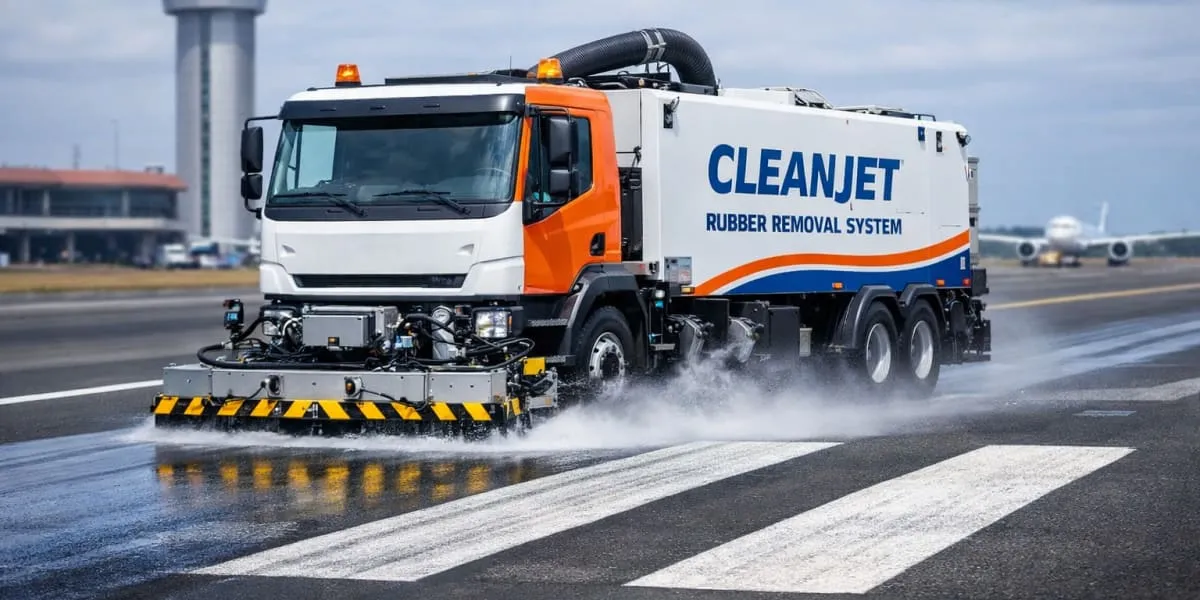
Cochin International Airport Limited has strengthened its airside safety infrastructure with the induction of a state-of-the-art runway rubber removal machine called CleanJet. The new equipment has been introduced at Kochi to improve runway surface condition and operational safety. The airport authority has brought the machine into service as part of routine maintenance upgrades. The induction forms part of a wider programme to maintain compliance with civil aviation safety standards.

Each aircraft on touchdown deposits about one and a half pounds of rubber per tyre in the touchdown zone, and these deposits accumulate over time. The build-up clogs cavities and the microstructure of the runway surface, producing a polished, glassy finish that reduces runway friction. Anlon Technology Solutions advised that the resulting reduction in friction increases the braking distance required by aircraft and therefore the runway length needed for safer landings, particularly in wet conditions. Engineers noted that regular removal helps preserve skid resistance and reduces wear on braking systems.

The machine uses high-pressure water jets operating at around 2,500 bar together with specially angled rotating discs to dislodge embedded rubber deposits. The loosened material is immediately suctioned into a waste-water tank so that no water or residue remains on the runway surface. Manufacturer Anlon Technology Solutions supplied the equipment and provided technical support for its induction. The process includes containment measures and treatment of collected effluent to meet environmental safeguards.

CIAL expects routine use of the system to restore surface texture and reduce the frequency of runway friction-related restrictions, improving operational resilience. The removal process is intended to limit the time runways are out of service for maintenance and to support safer landing operations throughout the year. Airport engineers will monitor results and adjust maintenance schedules as needed to sustain surface performance. Operational data will inform future procurement and scheduling to optimise runway availability.

Cochin International Airport Limited has strengthened its airside safety infrastructure with the induction of a state-of-the-art runway rubber removal machine called CleanJet. The new equipment has been introduced at Kochi to improve runway surface condition and operational safety. The airport authority has brought the machine into service as part of routine maintenance upgrades. The induction forms part of a wider programme to maintain compliance with civil aviation safety standards. Each aircraft on touchdown deposits about one and a half pounds of rubber per tyre in the touchdown zone, and these deposits accumulate over time. The build-up clogs cavities and the microstructure of the runway surface, producing a polished, glassy finish that reduces runway friction. Anlon Technology Solutions advised that the resulting reduction in friction increases the braking distance required by aircraft and therefore the runway length needed for safer landings, particularly in wet conditions. Engineers noted that regular removal helps preserve skid resistance and reduces wear on braking systems. The machine uses high-pressure water jets operating at around 2,500 bar together with specially angled rotating discs to dislodge embedded rubber deposits. The loosened material is immediately suctioned into a waste-water tank so that no water or residue remains on the runway surface. Manufacturer Anlon Technology Solutions supplied the equipment and provided technical support for its induction. The process includes containment measures and treatment of collected effluent to meet environmental safeguards. CIAL expects routine use of the system to restore surface texture and reduce the frequency of runway friction-related restrictions, improving operational resilience. The removal process is intended to limit the time runways are out of service for maintenance and to support safer landing operations throughout the year. Airport engineers will monitor results and adjust maintenance schedules as needed to sustain surface performance. Operational data will inform future procurement and scheduling to optimise runway availability.

Next Story
Infrastructure Urban

We’ve cut 50,000 tonnes of carbon emmissions since 2019

MatchLog is challenging a decades-old logistics norm and empty container miles by directly matching import flows with export demand. Indeed, the platform is unlocking measurable cost savings, cutting emissions and driving structural change in landside operations. Dhruv Taneja, Founder and Global CEO, outlines the quantified impact, adoption  journey and the evolving future of container reuse in an exclusive interview with Construction World. MatchLog has partnered with carriers such as Maersk, ONE and HMM in India. Could you share quantified outcomes from one specific corri..

Next Story
Infrastructure Transport

Airports: Capacity is Key

A lotus-inspired terminal design in Navi Mumbai International Airport. A terminal in a garden in Bengaluru’s Kempegowda International Airport. A peacock-inspired canopy in Chhatrapati Shivaji Maharaj International Airport. A nature-inspired terminal in Guwahati’s Lokpriya Gopinath Bordoloi International Airport.Truly, “India’s airports are no longer constrained by architectural ambition,” avers Ravikanth Mididhodi, Chief Technical Officer, J&F, a German-based engineering firm with over 25 years of global legacy in delivering advanced engineering and BIM services for air..

Next Story
Real Estate

In 2025, Amaravati attracted ₹ 28,075 crore in investments

In an exclusive interview with Construction World, Kanna Babu, IAS, Commissioner, Andhra Pradesh Capital Region Development Authority (APCRDA), reveals how Amaravati is entering a decisive new phase of capital city development. With 36 MoUs worth ₹ 45,589 crore, a ₹ 58,000 crore tender pipeline, and rising institutional investments, he explains the strategic execution, infrastructure rollout, and governance framework driving Amaravati’s emergence as a structured, investment-ready, and future-focused capital.APCRDA has recently secured major financial tie-ups, including loans from NA..

Advertisement

Subscribe to Our Newsletter

Get daily newsletters around different themes from Construction world.

STAY CONNECTED

Advertisement

Advertisement

Advertisement

Open In App