
CII Kerala Urges AI Adoption to Transform MSMEs
ECONOMY & POLICY

CII Kerala Urges AI Adoption to Transform MSMEs

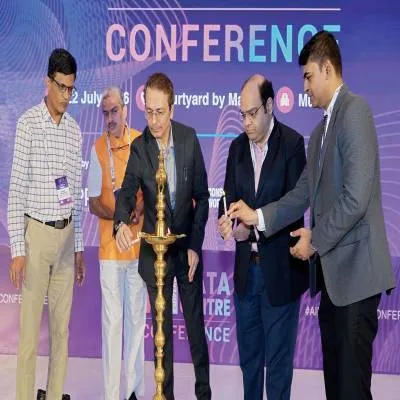
The Confederation of Indian Industry Kerala highlighted the transformative potential of artificial intelligence (AI) for the state's micro, small and medium enterprises (MSMEs) at its Annual Members Meeting 2025–26 in Kochi. The event formed part of the Application & Digi-Tech Series 2026 and included a seminar titled AI for MSMEs: Driving Productivity, Profitability, and Growth that examined practical pathways for adoption. Organisers emphasised that AI can provide a competitive edge to local businesses when integrated with strategic planning. The meeting brought together industry leaders and stakeholders to discuss implementation challenges.\n\nDr Saji Gopinath, Vice Chancellor of the Kerala University of Digital Sciences, Innovation and Technology, delivered the keynote address and characterised artificial intelligence as a general purpose technology and a great equaliser. He urged entrepreneurs to move beyond applying AI to legacy processes and to rethink business models so that technology enables new value. Speakers noted that adoption should focus on redesigning workflows and developing digital skills across the workforce. The discussion considered regulatory, infrastructure and finance constraints.\n\nPanel contributions highlighted automation of routine and repetitive tasks as a primary productivity gain, enabling staff to shift toward higher value roles such as innovation, customer engagement and strategic planning. Thomas John Muthoot, Chairman of CII Southern Region, stressed the strategic importance of technology for regional competitiveness and said that MSMEs can use AI to free time for purpose driven work and authentic human interaction. Presenters outlined practical tools, pilot projects and collaboration models that can scale within supply chains and service sectors.\n\nJoseph M. Kallivayalil, Chairman of CII Kerala, advocated immediate adoption of AI tools, identifying them as a critical lever for maintaining competitive advantage in a rapidly evolving market. VKC Razak, Immediate Past Chairman, observed that while artificial intelligence will not replace humans, enterprises that embrace the technology will supplant those that do not, making adoption essential. By transitioning from traditional operations to data driven, high performance entities, Kerala's MSMEs can position themselves to lead the next wave of industrial growth and to compete on a global scale.

The Confederation of Indian Industry Kerala highlighted the transformative potential of artificial intelligence (AI) for the state's micro, small and medium enterprises (MSMEs) at its Annual Members Meeting 2025–26 in Kochi. The event formed part of the Application & Digi-Tech Series 2026 and included a seminar titled AI for MSMEs: Driving Productivity, Profitability, and Growth that examined practical pathways for adoption. Organisers emphasised that AI can provide a competitive edge to local businesses when integrated with strategic planning. The meeting brought together industry leaders and stakeholders to discuss implementation challenges.\n\nDr Saji Gopinath, Vice Chancellor of the Kerala University of Digital Sciences, Innovation and Technology, delivered the keynote address and characterised artificial intelligence as a general purpose technology and a great equaliser. He urged entrepreneurs to move beyond applying AI to legacy processes and to rethink business models so that technology enables new value. Speakers noted that adoption should focus on redesigning workflows and developing digital skills across the workforce. The discussion considered regulatory, infrastructure and finance constraints.\n\nPanel contributions highlighted automation of routine and repetitive tasks as a primary productivity gain, enabling staff to shift toward higher value roles such as innovation, customer engagement and strategic planning. Thomas John Muthoot, Chairman of CII Southern Region, stressed the strategic importance of technology for regional competitiveness and said that MSMEs can use AI to free time for purpose driven work and authentic human interaction. Presenters outlined practical tools, pilot projects and collaboration models that can scale within supply chains and service sectors.\n\nJoseph M. Kallivayalil, Chairman of CII Kerala, advocated immediate adoption of AI tools, identifying them as a critical lever for maintaining competitive advantage in a rapidly evolving market. VKC Razak, Immediate Past Chairman, observed that while artificial intelligence will not replace humans, enterprises that embrace the technology will supplant those that do not, making adoption essential. By transitioning from traditional operations to data driven, high performance entities, Kerala's MSMEs can position themselves to lead the next wave of industrial growth and to compete on a global scale.

Related Stories

Gold Stories

Next Story
Infrastructure Urban

KONE Opens India's First Digital Experience Centre in Pune

KONE, a global elevator and escalator manufacturer, has inaugurated its first Digital Experience Centre (DEC) in India, located in Pune. The facility aims to showcase how artificial intelligence (AI), connectivity and data-driven technologies can enhance customer experiences and improve building operations.The centre was inaugurated by Jussi Herlin, Executive Vice Chair, KONE Corporation; Philippe Delorme, President and CEO, KONE; and Nandan Nilekani, Co-founder and Chairman of the Board, Infosys.Designed as an interactive customer environment, the facility demonstrates digital solutions cover..

Next Story
Infrastructure Urban

CII GreenCo Launches Circularity Guidelines for Indian Industry

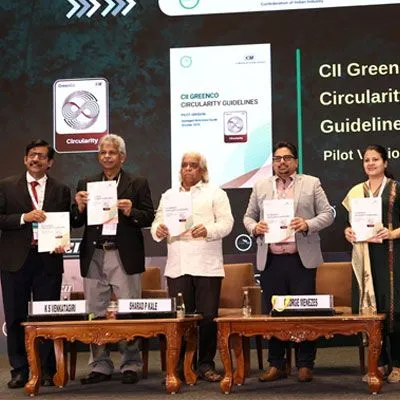
The Confederation of Indian Industry (CII) GreenCo Council has launched the CII GreenCo Circularity Guidelines – Pilot Version at the 17th CII GreenCo Waste & Resource Management Summit 2026 in Chennai. The initiative aims to strengthen resource efficiency, waste reduction and circular economy practices across Indian manufacturing and process industries.The guidelines introduce a structured framework with circularity indices covering raw materials, consumables, packaging and other resource inputs. These indicators will help industries assess existing practices, identify opportunities to ..

Next Story
Infrastructure Energy

Global Electronics Association Launches IPC-1783-CO2E Standard

The Global Electronics Association has introduced IPC-1783-CO2E, a new international standard aimed at improving consistency, transparency and comparability in product carbon footprint reporting across the electronics manufacturing industry.The standard, titled International Standard for Data Collection and Reporting of CO2 Equivalent (CO2e) Emissions for the Electronics Manufacturing Supply Chain, provides industry-specific guidance for collecting, estimating and reporting carbon emissions data.With increasing regulatory requirements and customer expectations, electronics manufacturers face c..

Advertisement

Subscribe to Our Newsletter

Get daily newsletters around different themes from Construction world.

STAY CONNECTED

Advertisement

SPECIAL OFFER
QR Code