CleanMax Commissions 185 MW Hybrid Project in Kalavad
ECONOMY & POLICY

CleanMax Commissions 185 MW Hybrid Project in Kalavad

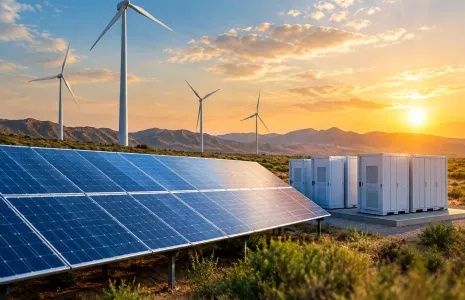
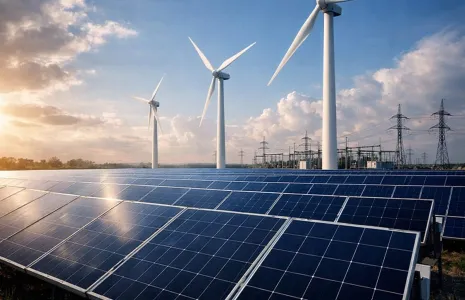
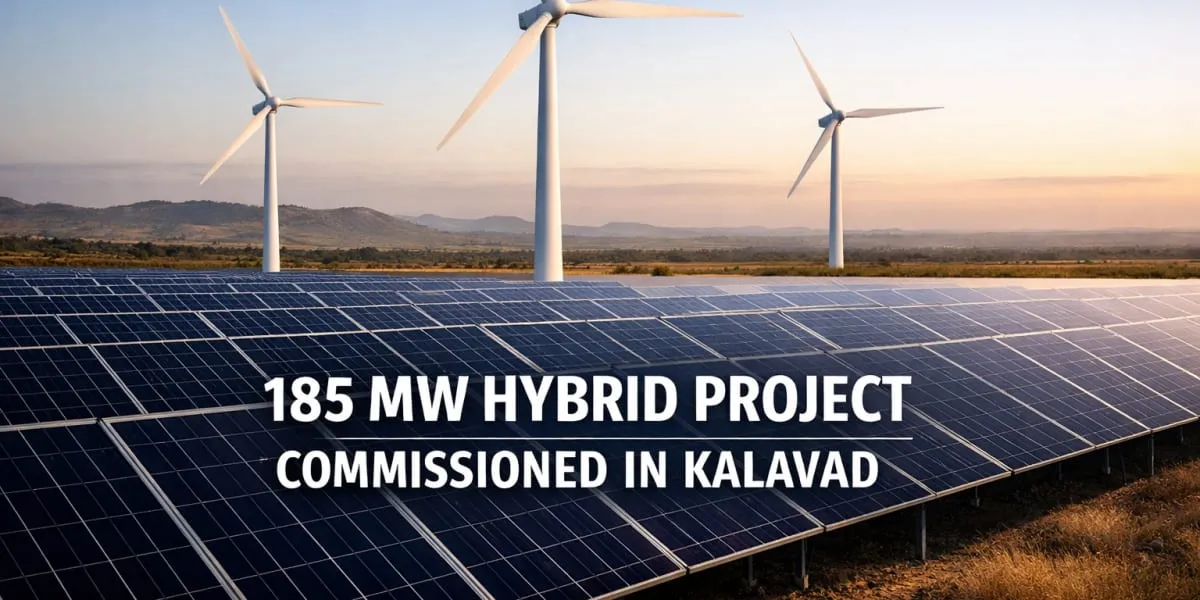
CleanMax has commissioned a 185 megawatt (MW) wind-solar hybrid project at Kalavad in Gujarat, expanding its industrial renewable portfolio. The integrated solar and wind facility was developed over approximately 12 months and supplies green energy to 17 corporate customers under a group captive model. The project forms part of the company's strategy to offer round the clock renewable solutions for energy intensive manufacturing and commercial operations.

Kalavad increases CleanMax's hybrid capacity in Gujarat to about 844 MW as of 31st March 2026, strengthening its ability to provide more consistent renewable supply for round the clock industrial demand. The group captive structure involves corporate customers investing equity in the project while securing long term access to clean power under regulatory captive rules. Publicly listed firms are among the offtakers, reflecting corporate demand for reliable decarbonisation. The company noted that state regulatory clarifications have improved access and banking provisions for hybrid supplies.

The expansion is expected to enhance the company's revenue base by Rs 1,650 million (mn) annually once stabilised in FY2027, supported by 25 year fixed tariff power purchase agreements that provide cash flow visibility. The company indicated that these contractual terms underpin long term financial stability and support project financing and lifecycle operations. The Kalavad project is projected to offset 0.361 mn tonne (t) of carbon dioxide emissions annually and deliver broader environmental benefits. That impact was contextualised in the release as equivalent to the planting of 20.9 mn trees per year.

CleanMax reported Rs 3,426 mn of revenue from Gujarat in FY2024-25, representing about 30 per cent of its renewable energy power sale revenue and underscoring the strategic importance of the region. At a company level, operational energy sale capacity stands at three point one gigawatt (GW) as of 31st March 2026, spanning states and diverse customer base. The firm highlighted its focus on serving sectors such as data centres, manufacturing, technology and large scale industrial users that require stable clean power. The Kalavad commissioning therefore reinforces the company's position as a net zero partner for commercial and industrial customers.

CleanMax has commissioned a 185 megawatt (MW) wind-solar hybrid project at Kalavad in Gujarat, expanding its industrial renewable portfolio. The integrated solar and wind facility was developed over approximately 12 months and supplies green energy to 17 corporate customers under a group captive model. The project forms part of the company's strategy to offer round the clock renewable solutions for energy intensive manufacturing and commercial operations. Kalavad increases CleanMax's hybrid capacity in Gujarat to about 844 MW as of 31st March 2026, strengthening its ability to provide more consistent renewable supply for round the clock industrial demand. The group captive structure involves corporate customers investing equity in the project while securing long term access to clean power under regulatory captive rules. Publicly listed firms are among the offtakers, reflecting corporate demand for reliable decarbonisation. The company noted that state regulatory clarifications have improved access and banking provisions for hybrid supplies. The expansion is expected to enhance the company's revenue base by Rs 1,650 million (mn) annually once stabilised in FY2027, supported by 25 year fixed tariff power purchase agreements that provide cash flow visibility. The company indicated that these contractual terms underpin long term financial stability and support project financing and lifecycle operations. The Kalavad project is projected to offset 0.361 mn tonne (t) of carbon dioxide emissions annually and deliver broader environmental benefits. That impact was contextualised in the release as equivalent to the planting of 20.9 mn trees per year. CleanMax reported Rs 3,426 mn of revenue from Gujarat in FY2024-25, representing about 30 per cent of its renewable energy power sale revenue and underscoring the strategic importance of the region. At a company level, operational energy sale capacity stands at three point one gigawatt (GW) as of 31st March 2026, spanning states and diverse customer base. The firm highlighted its focus on serving sectors such as data centres, manufacturing, technology and large scale industrial users that require stable clean power. The Kalavad commissioning therefore reinforces the company's position as a net zero partner for commercial and industrial customers.

Next Story
Infrastructure Urban

Cabinet Approves Two Year Scheme To Replace Old Trucks And Buses

The Union Cabinet, chaired by the Prime Minister, approved a two-year scheme to reduce air pollution in the Delhi–NCR region and promote cleaner mobility. The programme will be funded through the National Capital Region Planning Board under the Ministry of Housing and Urban Affairs and implemented by the Ministry of Road Transport and Highways and the Ministry of Petroleum and Natural Gas, with participating States and Union Territories of Delhi, Haryana, Rajasthan and Uttar Pradesh. The total financial outlay has been set at Rs 95.85 billion (bn), with the Central Government contributing Rs..

Next Story
Infrastructure Transport

Bengaluru Suburban Rail And Metro To Share 500-Metre Corridor

Bengaluru suburban rail and the Metro will share a 500-metre corridor at Benniganahalli, a decision that planners say will reduce capital expenditure and urban disruption. The consolidation of alignments across the short stretch is intended to avoid duplication of elevated structures and station facilities while cutting land acquisition needs. Authorities put the maximum savings at Rs 1.69 bn (1,690 mn). The arrangement also aims to streamline construction interfaces between the two systems. The shared corridor will require coordinated design of track beds, piers and passenger access so that s..

Next Story
Infrastructure Urban

DRDO And IAF Complete Successful RudraM-II Flight Tests

The Defence Research and Development Organisation (DRDO) and the Indian Air Force (IAF) have conducted successful flight tests of the RudraM-II air-to-surface missile from an airborne platform. The trials were carried out under extreme release conditions with a critical trajectory that established the capability of all subsystems. The series of releases tested the missile's guidance, seeker and propulsion elements in an operationally representative environment. The missiles, released from the aircraft, were guided to a predefined target with pinpoint accuracy and all test objectives were fully..

Advertisement

Subscribe to Our Newsletter

Get daily newsletters around different themes from Construction world.

STAY CONNECTED

Advertisement

Advertisement

Advertisement