

Construction Costs to Rise 3–5% in 2026: JLL
ECONOMY & POLICY

Construction Costs to Rise 3–5% in 2026: JLL

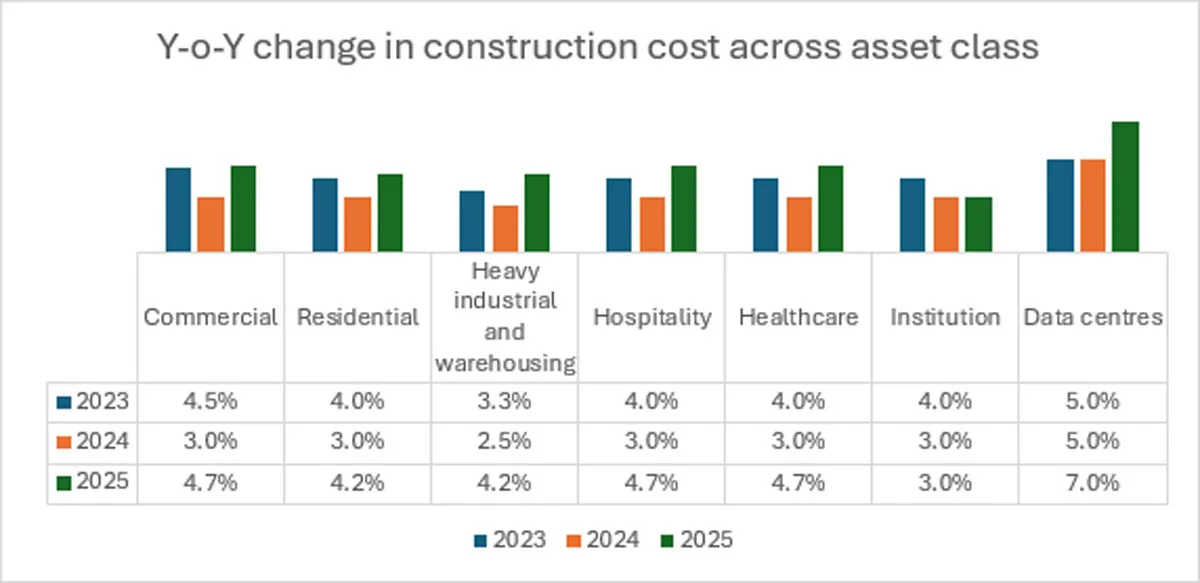
Construction costs across asset classes in India are expected to rise by 3–5 per cent in 2026, according to a new report by JLL, reflecting a sector undergoing structural transformation amid regulatory shifts and evolving market dynamics.

The report highlights mixed trends in material costs during 2025. Cement, steel and diesel prices declined by 1–2 per cent, 3–4 per cent and 5–6 per cent respectively, while aluminium and copper recorded sharper increases of 8–9 per cent and 9–10 per cent, driven by global demand and supply chain pressures. For 2026, prices of steel, aluminium and copper are projected to increase moderately by 2–4 per cent, while cement costs remain lower following tax reforms.

A major cost driver is labour. Wages are expected to rise 5–12 per cent after the implementation of the new labour codes in November 2025, which mandate enhanced social security, healthcare benefits and standardised wages. Even in 2025, labour costs rose steadily by 5–6 per cent due to skilled workforce shortages and strong infrastructure demand.

The government’s GST 2.0 reform has provided some relief, reducing cement taxation by 10 per cent, translating into savings of 2–3 per cent for developers and up to 1.5 per cent for homebuyers. However, these gains are likely to be offset by rising labour expenses.

Aditya Desai, Executive Director, PDS, India, JLL, said cost variations across cities are reshaping investment patterns, with Mumbai commanding Rs 4,600–5,200 per sq ft for luxury projects, while Chennai, Bengaluru and Hyderabad remain relatively competitive.

Ashok VS, Head of Cost Management, JLL PDS India, noted that digital adoption and sustainability-focused practices will be key to managing cost pressures while unlocking long-term value.

Despite global uncertainties and energy market disruptions, the sector remains resilient. Stable material costs, supportive policy reforms and continued expansion are expected to sustain growth, with developers focusing on efficiency, technology adoption and workforce formalisation to stay competitive.

"Join industry leaders at RAHSTA Expo, India's premier platform for roads, highways and traffic infrastructure. Register now to explore innovations, network with experts and shape the future of mobility."

Construction costs across asset classes in India are expected to rise by 3–5 per cent in 2026, according to a new report by JLL, reflecting a sector undergoing structural transformation amid regulatory shifts and evolving market dynamics.The report highlights mixed trends in material costs during 2025. Cement, steel and diesel prices declined by 1–2 per cent, 3–4 per cent and 5–6 per cent respectively, while aluminium and copper recorded sharper increases of 8–9 per cent and 9–10 per cent, driven by global demand and supply chain pressures. For 2026, prices of steel, aluminium and copper are projected to increase moderately by 2–4 per cent, while cement costs remain lower following tax reforms.A major cost driver is labour. Wages are expected to rise 5–12 per cent after the implementation of the new labour codes in November 2025, which mandate enhanced social security, healthcare benefits and standardised wages. Even in 2025, labour costs rose steadily by 5–6 per cent due to skilled workforce shortages and strong infrastructure demand.The government’s GST 2.0 reform has provided some relief, reducing cement taxation by 10 per cent, translating into savings of 2–3 per cent for developers and up to 1.5 per cent for homebuyers. However, these gains are likely to be offset by rising labour expenses.Aditya Desai, Executive Director, PDS, India, JLL, said cost variations across cities are reshaping investment patterns, with Mumbai commanding Rs 4,600–5,200 per sq ft for luxury projects, while Chennai, Bengaluru and Hyderabad remain relatively competitive.Ashok VS, Head of Cost Management, JLL PDS India, noted that digital adoption and sustainability-focused practices will be key to managing cost pressures while unlocking long-term value.Despite global uncertainties and energy market disruptions, the sector remains resilient. Stable material costs, supportive policy reforms and continued expansion are expected to sustain growth, with developers focusing on efficiency, technology adoption and workforce formalisation to stay competitive.

Next Story
Infrastructure Urban

ABS Marine Sees CRISIL Credit Rating Upgrade

ABS Marine Services has secured an upgrade to its long term and short term credit ratings from CRISIL, reflecting improved profitability and revenue growth through long term contracts. CRISIL moved the long term rating from BBB+/Stable to A-/Stable and revised the short term rating from A2 to A2+. The action signals strengthened financial metrics and operational resilience. The company benefited from durable client relationships with firms such as ONGC and Schlumberger. The rating decision followed stronger cash flows and an enlarged bank loan facility, which increased from Rs 3,705 million (m..

Next Story
Infrastructure Transport

Project BRAHMANK Marks 16 Years Of Strategic Roads In Arunachal

Project BRAHMANK is marking 16 years of work to establish strategic road and bridge links across Arunachal Pradesh, maintaining and developing 811 kilometres of roads and nearly 86 bridges that range from small culverts to large steel and arch bridges. These transport links are described as critical for ensuring year-round movement of defence personnel, equipment and essential supplies while improving everyday travel for people in remote villages. The project balances national security requirements with regional development by focusing on reliable access in challenging terrain. Notable enginee..

Next Story
Infrastructure Transport

Longleng CSOs Give One Week Ultimatum Over Two-Lane Highway

Civil society organisations (CSOs) in Longleng district have demanded immediate restoration of the deteriorating Changtongya–Longleng two-lane road and sought a detailed status report on the stalled construction within one week. The demand followed a consultative meeting convened under the Phom Peoples' Council (PPC) to discuss welfare and development concerns. PPC president YB Angam Phom said prolonged non-maintenance had caused hardship to commuters and affected transportation, local commerce and the district's development. The meeting urged authorities to undertake immediate restoration a..

Advertisement

Subscribe to Our Newsletter

Get daily newsletters around different themes from Construction world.

STAY CONNECTED

Advertisement

Advertisement

Advertisement














