Crop Residue to Bio?Bitumen Could Save Rs 400 Billion in Imports
ECONOMY & POLICY

Crop Residue to Bio?Bitumen Could Save Rs 400 Billion in Imports

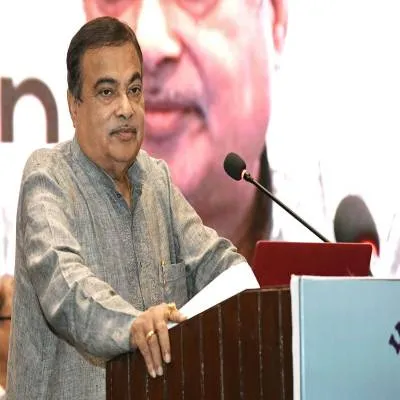
Union minister Dr Jitendra Singh said that converting crop residue into bio-bitumen could save around Rs 400 billion (bn) in annual imports and that the technology was developed indigenously by the CSIR–Central Road Research Institute and the CSIR–Indian Institute of Petroleum. He said the process and its large-scale adoption were being promoted through a technology transfer event aimed at industry uptake and that partial substitution of petro-based binders would strengthen economic resilience and reduce supply vulnerability.

He noted that India produces nearly 600 million tonnes (mn t) of crop residue every year and that much of it is routinely burnt, causing severe air pollution. He added that national consumption of bitumen amounts to eight point eight mn t annually, of which 50–58 per cent is imported at an estimated cost of Rs 250–300 bn. He said the new technology could bridge waste management and infrastructure requirements simultaneously.

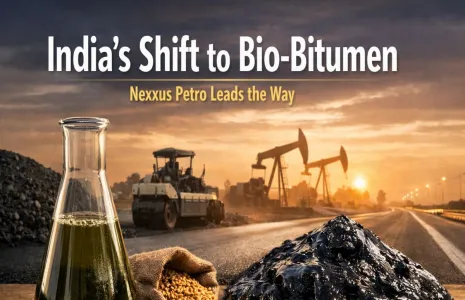
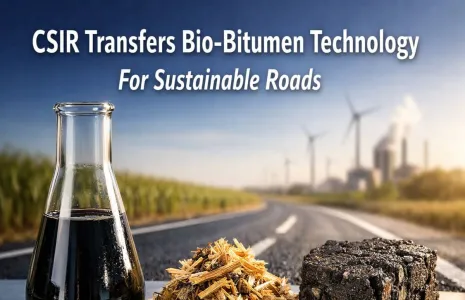
Officials described the bio-bitumen process as a thermochemical pyrolysis conversion of lignocellulosic biomass such as rice straw and wheat straw into a renewable binder that can replace up to 30 per cent of conventional bitumen without compromising performance. They noted trial applications on road stretches that have demonstrated enhanced durability and significantly lower carbon emissions. The initiative was presented as a multifunctional intervention that could provide additional income streams for farmers while advancing circular economy objectives.

CSIR leadership and the ministry representatives outlined plans for standardisation, field validation and capacity building with industry partners and the Ministry of Road Transport and Highways to enable nationwide deployment. They said outreach and digital engagement would be prioritised to connect laboratories with industry and farmers and that cross?sector collaboration had accelerated adoption. The programme was framed as contributing to Atmanirbhar Bharat and Viksit Bharat 2047 by reducing import dependence and supporting sustainable infrastructure.

Union minister Dr Jitendra Singh said that converting crop residue into bio-bitumen could save around Rs 400 billion (bn) in annual imports and that the technology was developed indigenously by the CSIR–Central Road Research Institute and the CSIR–Indian Institute of Petroleum. He said the process and its large-scale adoption were being promoted through a technology transfer event aimed at industry uptake and that partial substitution of petro-based binders would strengthen economic resilience and reduce supply vulnerability. He noted that India produces nearly 600 million tonnes (mn t) of crop residue every year and that much of it is routinely burnt, causing severe air pollution. He added that national consumption of bitumen amounts to eight point eight mn t annually, of which 50–58 per cent is imported at an estimated cost of Rs 250–300 bn. He said the new technology could bridge waste management and infrastructure requirements simultaneously. Officials described the bio-bitumen process as a thermochemical pyrolysis conversion of lignocellulosic biomass such as rice straw and wheat straw into a renewable binder that can replace up to 30 per cent of conventional bitumen without compromising performance. They noted trial applications on road stretches that have demonstrated enhanced durability and significantly lower carbon emissions. The initiative was presented as a multifunctional intervention that could provide additional income streams for farmers while advancing circular economy objectives. CSIR leadership and the ministry representatives outlined plans for standardisation, field validation and capacity building with industry partners and the Ministry of Road Transport and Highways to enable nationwide deployment. They said outreach and digital engagement would be prioritised to connect laboratories with industry and farmers and that cross?sector collaboration had accelerated adoption. The programme was framed as contributing to Atmanirbhar Bharat and Viksit Bharat 2047 by reducing import dependence and supporting sustainable infrastructure.

Next Story
Infrastructure Urban

InsideFPV Delivers ₹10 Crore Kamikaze Drone Order Under MoD’s EPR Route

InsideFPV, a Surat-based drone technology manufacturer, has successfully executed a ₹10 crore defence contract to supply indigenous kamikaze drones under the Ministry of Defence’s Emergency Procurement Route (EPR). The company completed the delivery of hundreds of FPV kamikaze drone platforms within a rapid two-month timeframe, highlighting its ability to meet urgent military procurement timelines.The supply orders were fulfilled under the emergency procurement mechanism, which is aimed at fast-tracking acquisitions for immediate operational needs. InsideFPV’s quick execution reflects it..

Next Story
Infrastructure Energy

Vedanta Resources Secures Fitch Upgrade to ‘BB-’, Best Rating Since 2015

Vedanta Resources Limited (VRL), a global player in metals, oil & gas, critical minerals, power and technology, has received a credit rating upgrade from Fitch Ratings, marking its strongest bond rating in over a decade.Fitch has raised Vedanta Resources’ Long-Term Foreign-Currency Issuer Default Rating (IDR) to ‘BB-’ from ‘B+’, while maintaining a Stable Outlook. The agency also upgraded VRL’s senior unsecured rating, along with the ratings of US dollar-denominated bonds issued by Vedanta Resources Finance II Plc and guaranteed by VRL, to ‘BB-’.The upgrade represents Vedan..

Next Story
Real Estate

NAREDCO NextGen NCR Chapter Launched

The NAREDCO NextGen NCR Chapter was recently launched at Excelerate 2026 in Mumbai, marking a key step towards integrating emerging real estate leaders from the National Capital Region with the national platform. The initiative aims to promote sustainable and responsible urban development through collaboration and knowledge exchange.The event brought together young developers, entrepreneurs, and professionals from across NCR, including Noida, Gurugram, Ghaziabad, Faridabad, Bhiwadi, and Meerut. Discussions focused on urban development, finance, sustainability, innovation, and policy, emphasisi..

Advertisement

Subscribe to Our Newsletter

Get daily newsletters around different themes from Construction world.

STAY CONNECTED

Advertisement

Advertisement

Advertisement