Cyclone Michaung wreaks havoc in Andhra Coastal Region
ECONOMY & POLICY

Cyclone Michaung wreaks havoc in Andhra Coastal Region

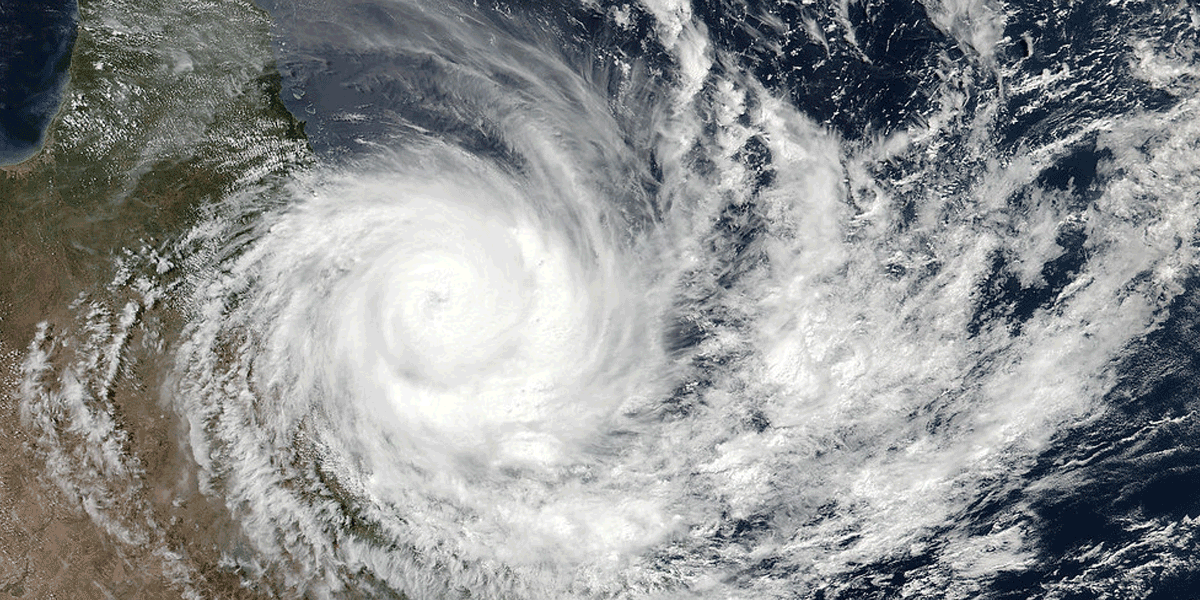
The severe cyclonic storm Michaung, which had made landfall near Bapatla in Andhra Pradesh, resulted in torrential rains and caused extensive destruction in at least six coastal districts, disrupting the transport and communication networks and damaging standing crops. Gusty winds, ranging from 90 kmph to 110 kmph, lashed the coastline, and an official from the state's cyclone warning center mentioned that the storm is expected to gradually weaken.

Chittoor, Nellore, Prakasam, Guntur, Bapatla, and Krishna districts experienced very heavy rains, with the India Meteorological Department (IMD) officials warning of continued heavy rains across the coastal and Rayalaseema regions in the next 24 hours. West Godavari and Konaseema districts also witnessed heavy rains on Tuesday afternoon.

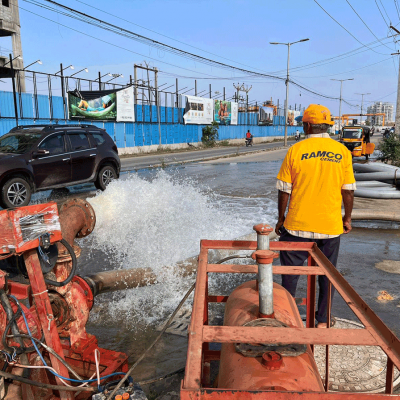
In the coastal region, trees and electric poles were uprooted at various locations, and relief teams are actively involved in clearing the debris. An official from the agriculture department stated, "Standing crops in thousands of acres have been damaged."

Responding to the situation, the state government deployed 50 special teams in Bapatla to undertake cyclone relief measures. As a precautionary measure, people from low-lying areas were relocated to relief camps established in schools and government office buildings in the district. In Bapatla alone, over 1,350 people have been moved to 27 relief camps.

District collector P Ranjit Bhasha instructed officials to visit 111 villages severely impacted by the cyclone, while agriculture department officials conducted field visits to assess crop damage. Residents in coastal areas, including Repalle, Vemuru, Bapatla, and Nizampatnam, were advised not to venture out.

The severe cyclonic storm Michaung, which had made landfall near Bapatla in Andhra Pradesh, resulted in torrential rains and caused extensive destruction in at least six coastal districts, disrupting the transport and communication networks and damaging standing crops. Gusty winds, ranging from 90 kmph to 110 kmph, lashed the coastline, and an official from the state's cyclone warning center mentioned that the storm is expected to gradually weaken. Chittoor, Nellore, Prakasam, Guntur, Bapatla, and Krishna districts experienced very heavy rains, with the India Meteorological Department (IMD) officials warning of continued heavy rains across the coastal and Rayalaseema regions in the next 24 hours. West Godavari and Konaseema districts also witnessed heavy rains on Tuesday afternoon. In the coastal region, trees and electric poles were uprooted at various locations, and relief teams are actively involved in clearing the debris. An official from the agriculture department stated, Standing crops in thousands of acres have been damaged. Responding to the situation, the state government deployed 50 special teams in Bapatla to undertake cyclone relief measures. As a precautionary measure, people from low-lying areas were relocated to relief camps established in schools and government office buildings in the district. In Bapatla alone, over 1,350 people have been moved to 27 relief camps. District collector P Ranjit Bhasha instructed officials to visit 111 villages severely impacted by the cyclone, while agriculture department officials conducted field visits to assess crop damage. Residents in coastal areas, including Repalle, Vemuru, Bapatla, and Nizampatnam, were advised not to venture out.

Next Story
Infrastructure Urban

Implementation Status of Jal Jeevan Mission

Since August 2019 the Government has implemented Jal Jeevan Mission to provide assured potable water through household tap connections in rural India. At the start of the mission only 32.3 million (mn) rural households, representing 16.7 per cent, were reported to have tap water connections. States and union territories have reported that 125.8 mn additional rural households have since been provided with tap connections. As a result, of about 193.6 mn rural households roughly 158.2 mn, or 81.71 per cent, are reported to have tap water supply at home.\n\nThe State, district and village level st..

Next Story
Infrastructure Urban

Jal Jeevan Mission Reaches Eighty One Per Cent Rural Coverage

The Government reported substantial progress under the Jal Jeevan Mission, launched in August 2019 to provide tap water to every rural household. At launch only 32.3 million (mn) rural households had tap connections and states and Union territories reported provision of 125.8 mn additional households by March 2026. Consequently, out of about 193.6 mn rural households around 158.2 mn, or 81.71 per cent, are reported to have tap water at home. The Finance Minister announced extension of the mission until 2028 in the 2025-26 budget speech. The Swachh Bharat Mission Grameen, launched in October 20..

Next Story
Infrastructure Urban

Empowering Local Governance for Sustainable Rural Water Supply

The Ministry of Jal Shakti has aligned the Jal Jeevan Mission (JJM) with the 73rd Amendment to strengthen village level planning and community ownership of water supply. Gram Panchayats, village water and sanitation committees and Pani Samitis are to plan, implement, manage and maintain piped water systems, with gram sabha processes formalising handover and oversight. Implementation support agencies including non government organisations, community based organisations and self help groups have been empanelled to train local committees and promote women participation. Under JJM, the department ..

Advertisement

Subscribe to Our Newsletter

Get daily newsletters around different themes from Construction world.

STAY CONNECTED

Advertisement

Advertisement

Advertisement