+
Data Centres Explore Uranium Funding As AI Drives Power Demand
ECONOMY & POLICY

Data Centres Explore Uranium Funding As AI Drives Power Demand

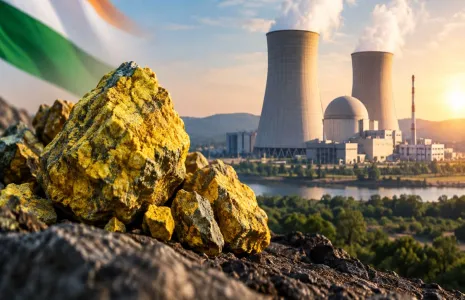
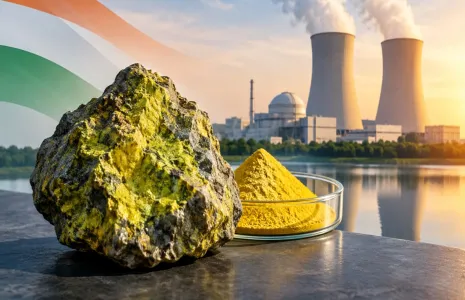
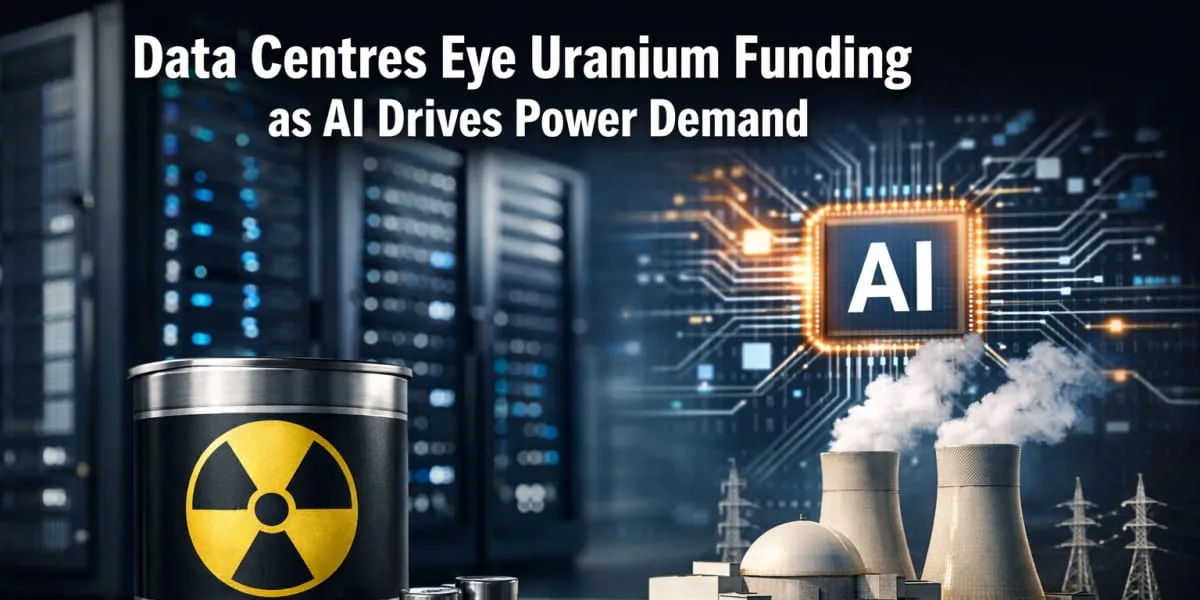
Data centre operators are beginning to explore direct financing of uranium projects as artificial intelligence drives a rapid expansion of energy intensive infrastructure, according to NexGen Energy. The company said its chief executive described early discussions with major technology providers about long term supply arrangements and potential financing for the Rook I project in Saskatchewan. NexGen is advancing permitting and anticipates final government approval by mid year.

The surge in demand for reliable, large scale electricity from AI workloads is increasing interest in nuclear power as a stable, low carbon source. Executives compared the shift to the electric vehicle sector, where manufacturers invested in mining to secure battery materials, and suggested technology firms may adopt analogous strategies to underpin heavy investment in compute. Such moves are seen as a way to de risk future energy supply.

NexGen said it expects to finalise a funding package in the second quarter after securing a key permit, and that if approvals proceed the Rook I project could begin production around 2030. The company indicated any commercial arrangements with data centre operators would be focused on financing or long term supply agreements and would not entail a change in corporate control. Specific partners were not disclosed as discussions are at an early stage.

Uranium prices have traded near Rs88 per pound after briefly topping Rs100 earlier this year, reflecting renewed global interest as countries including China and India expand low carbon generation to meet rising electricity needs. The prospect of direct backing from large technology customers highlights how the AI boom is beginning to influence commodity markets and long term energy planning. Industry participants say securing dependable, low carbon power could become as strategic as securing semiconductor supply, potentially opening new funding channels for uranium developers and accelerating nuclear investment.

Data centre operators are beginning to explore direct financing of uranium projects as artificial intelligence drives a rapid expansion of energy intensive infrastructure, according to NexGen Energy. The company said its chief executive described early discussions with major technology providers about long term supply arrangements and potential financing for the Rook I project in Saskatchewan. NexGen is advancing permitting and anticipates final government approval by mid year. The surge in demand for reliable, large scale electricity from AI workloads is increasing interest in nuclear power as a stable, low carbon source. Executives compared the shift to the electric vehicle sector, where manufacturers invested in mining to secure battery materials, and suggested technology firms may adopt analogous strategies to underpin heavy investment in compute. Such moves are seen as a way to de risk future energy supply. NexGen said it expects to finalise a funding package in the second quarter after securing a key permit, and that if approvals proceed the Rook I project could begin production around 2030. The company indicated any commercial arrangements with data centre operators would be focused on financing or long term supply agreements and would not entail a change in corporate control. Specific partners were not disclosed as discussions are at an early stage. Uranium prices have traded near Rs88 per pound after briefly topping Rs100 earlier this year, reflecting renewed global interest as countries including China and India expand low carbon generation to meet rising electricity needs. The prospect of direct backing from large technology customers highlights how the AI boom is beginning to influence commodity markets and long term energy planning. Industry participants say securing dependable, low carbon power could become as strategic as securing semiconductor supply, potentially opening new funding channels for uranium developers and accelerating nuclear investment.

Related Stories

Gold Stories

Next Story
Infrastructure Transport

Mumbai-Ahmedabad Bullet Train’s Surat-Vapi Section Set for 2027

The first section of the Mumbai-Ahmedabad Bullet Train corridor, linking Surat and Vapi, is targeted to begin services in 2027. Construction is expected to be completed by December 2026, while Railway Minister Ashwini Vaishnaw has indicated that an inauguration could take place around the middle of 2027. The National High Speed Rail Corporation (NHSRCL) said the train being manufactured in India is expected to reach the tracks around April or May 2027. The train will undergo extensive testing before the section is opened for passenger services. The project began construction in 2021 and includ..

Next Story
Infrastructure Transport

Indian Railways Approves Four Projects Worth Rs. 7.36 bn Across Four States

Indian Railways has approved four projects with a combined value of Rs. 7.36 bn across Uttar Pradesh, Maharashtra, Andhra Pradesh and Gujarat. The programme covers train protection, signalling, electric traction supply and a road overbridge, with each project assigned to a different railway zone. In Uttar Pradesh, Rs. 2.52 bn has been approved to extend the Kavach 4.0 automatic train protection system across 607.7 km in the Lucknow Division of North Eastern Railway. The system monitors train movements and can apply the brakes if a driver fails to observe a signal or exceeds a safe speed. The w..

Next Story
Infrastructure Urban

Chandru Raheja Sells 1.49% Stake in Mindspace REIT for Rs. 5 bn

Billionaire Chandru Lachmandas Raheja has sold a 1.49 per cent holding in Mindspace Business Parks REIT for Rs. 5 bn through a bulk deal on the BSE. The transaction involved 9.9 mn units and was executed at an average price of Rs. 505 per unit, according to exchange data. Following the sale, units of Mindspace Business Parks REIT were trading 0.18 per cent lower at Rs. 504.05 on Tuesday. Exchange data did not identify the buyers involved in the transaction. Raheja is the chairman of real estate company K Raheja Corp. The sale involved 99,00,990 units, representing 1.49 per cent of the Mumbai-b..

Advertisement

Subscribe to Our Newsletter

Get daily newsletters around different themes from Construction world.

STAY CONNECTED

Advertisement

SPECIAL OFFER
QR Code