Data Driven Exploration Conference Strengthens Offshore Ecosystem
ECONOMY & POLICY

Data Driven Exploration Conference Strengthens Offshore Ecosystem

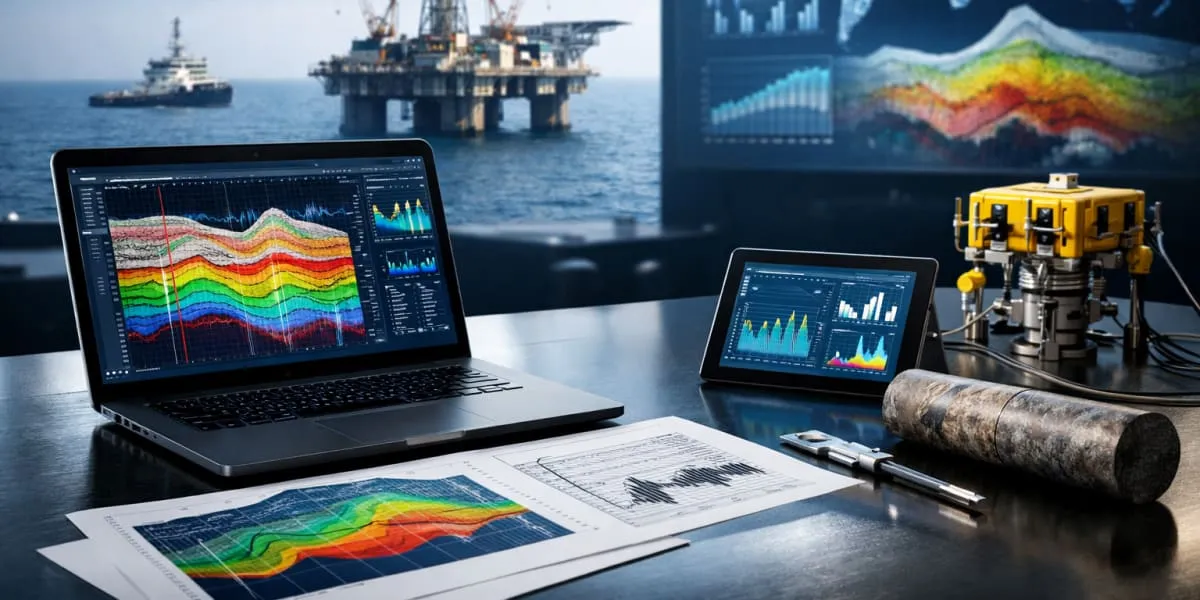
The Directorate General of Hydrocarbons (DGH) convened a Data Driven Exploration conference under the Samudra Manthan – National Offshore Mission to engage industry on strengthening the data ecosystem for exploration. The event, chaired by the Secretary, Ministry of Petroleum and Natural Gas (M/o PNG), drew over 80 participants including national oil companies, global Exploration and Production (E&P) firms, private operators and seismic service and technology providers. The focus was offshore and frontier basin development and the role of seismic data in improving exploration outcomes.

The Minister for Petroleum and Natural Gas, Hardeep Singh Puri, used social media to indicate that India is shifting from blind exploration to a multi-client model designed to broaden interpretation, innovation and discovery and thus reduce sector uncertainty. He framed Samudra Manthan as a mechanism to unlock offshore potential through openness, collaboration and advanced science to support energy Aatmanirbharta. The remarks reinforced government intent to foster a data driven approach.

Delegates agreed that availability, quality and accessibility of seismic data are primary determinants of exploration success and that data gaps in frontier and deepwater basins constrain prospectivity and investment. Reprocessing and reinterpretation of legacy datasets, combined with improved imaging and AI driven interpretation, were identified as immediate avenues to unlock value.

Participants urged targeted and accelerated seismic acquisition aligned with upcoming licensing rounds, noting that early data densification improves participation and investment outcomes. Multi-client seismic models were proposed as cost efficient accelerators, with a phased and calibrated application suited to basin maturity and existing data ownership. The role of government was seen as critical in providing policy clarity and predictability.

The government was presented as a key enabler through policy support, continued investment in data acquisition and strengthened data access frameworks such as the National Data Repository (NDR). Delegates also called for robust procurement and execution frameworks that combine quality and cost criteria and invite multiple service providers to ensure timely delivery.

Recommended next steps include finalising a prioritised seismic data acquisition roadmap focused on frontier and deepwater basins, initiating a structured programme for reprocessing and integrating existing datasets, and defining commercial frameworks that allow selective use of multi-client and hybrid models. Emphasis was placed on translating consensus into operational execution with time bound operationalisation. The conference reaffirmed that seismic data is the foundational lever for accelerating exploration participation and investment.

The Directorate General of Hydrocarbons (DGH) convened a Data Driven Exploration conference under the Samudra Manthan – National Offshore Mission to engage industry on strengthening the data ecosystem for exploration. The event, chaired by the Secretary, Ministry of Petroleum and Natural Gas (M/o PNG), drew over 80 participants including national oil companies, global Exploration and Production (E&P) firms, private operators and seismic service and technology providers. The focus was offshore and frontier basin development and the role of seismic data in improving exploration outcomes. The Minister for Petroleum and Natural Gas, Hardeep Singh Puri, used social media to indicate that India is shifting from blind exploration to a multi-client model designed to broaden interpretation, innovation and discovery and thus reduce sector uncertainty. He framed Samudra Manthan as a mechanism to unlock offshore potential through openness, collaboration and advanced science to support energy Aatmanirbharta. The remarks reinforced government intent to foster a data driven approach. Delegates agreed that availability, quality and accessibility of seismic data are primary determinants of exploration success and that data gaps in frontier and deepwater basins constrain prospectivity and investment. Reprocessing and reinterpretation of legacy datasets, combined with improved imaging and AI driven interpretation, were identified as immediate avenues to unlock value. Participants urged targeted and accelerated seismic acquisition aligned with upcoming licensing rounds, noting that early data densification improves participation and investment outcomes. Multi-client seismic models were proposed as cost efficient accelerators, with a phased and calibrated application suited to basin maturity and existing data ownership. The role of government was seen as critical in providing policy clarity and predictability. The government was presented as a key enabler through policy support, continued investment in data acquisition and strengthened data access frameworks such as the National Data Repository (NDR). Delegates also called for robust procurement and execution frameworks that combine quality and cost criteria and invite multiple service providers to ensure timely delivery. Recommended next steps include finalising a prioritised seismic data acquisition roadmap focused on frontier and deepwater basins, initiating a structured programme for reprocessing and integrating existing datasets, and defining commercial frameworks that allow selective use of multi-client and hybrid models. Emphasis was placed on translating consensus into operational execution with time bound operationalisation. The conference reaffirmed that seismic data is the foundational lever for accelerating exploration participation and investment.

Next Story
Equipment

India CE Industry Ends FY26 on a Steady Recovery Path

India’s construction equipment industry closed FY26 on a stable note, reflecting measured resilience and gradually improving momentum. Total sales in Q4 FY26 rose 4 per cent year on year to 42,906 units, extending the recovery seen over the past two years.Domestic demand for the full year remained under pressure, declining 7 per cent, but exports provided strong support. Overall exports grew 31 per cent, while non-OEM exports increased 13 per cent, highlighting sustained demand from overseas markets.March 2026 further underlined the recovery, with sales rising 6 per cent year on year and 13 ..

Next Story
Infrastructure Urban

Leaders Question FIR Against Anil Agarwal

Several industry and public figures have questioned the FIR filed against Anil Agarwal following the boiler accident in Chhattisgarh, while also expressing condolences over the loss of lives and calling for a thorough investigation.Naveen Jindal said the tragedy was deeply painful and stressed that compensation, livelihood support for affected families and a fair probe were essential. He also questioned naming Agarwal in the FIR before completion of the investigation.Kiran Bedi urged restraint, saying investigations should focus on learning lessons and strengthening systems rather than prematu..

Next Story
Infrastructure Urban

Tier 2, 3 Cities Drive 66% of New D2C Orders

Tier 2 and Tier 3 cities accounted for 66 per cent of new direct-to-consumer (D2C) orders in FY 2026, according to a new analysis by Unicommerce.The report said buyers from smaller cities also contributed 60 per cent of incremental gross merchandise value (GMV) in FY 2026 compared with FY 2025, highlighting rising demand beyond metro markets.Overall, India’s D2C segment recorded strong growth, with order volumes rising 33 per cent and GMV increasing 32 per cent year-on-year. The findings are based on more than 400 million order items processed through brand websites on Unicommerce’s Uniwar..

Advertisement

Subscribe to Our Newsletter

Get daily newsletters around different themes from Construction world.

STAY CONNECTED

Advertisement

Advertisement

Advertisement