



Delhi Activates Stage-III Curbs As AQI Hits 425
ECONOMY & POLICY

Delhi Activates Stage-III Curbs As AQI Hits 425

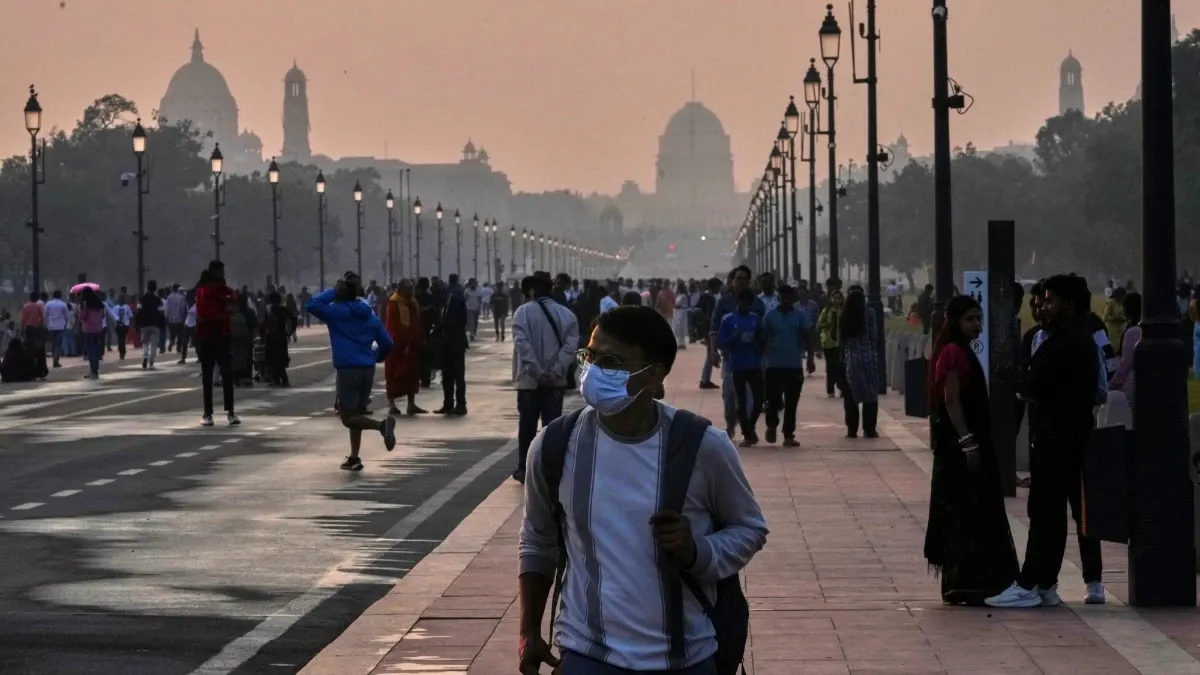
Delhi’s average Air Quality Index (AQI) reached a severe level of 425 at 9 a.m. today, prompting authorities to enforce stricter pollution controls. In response to the worsening air quality, the Sub-Committee on the Graded Response Action Plan (GRAP) under the Commission for Air Quality Management (CAQM) has invoked Stage-III measures across the National Capital Region (NCR) with immediate effect.

The decision follows a review of Delhi’s air pollution trends, driven by calm winds, a stable atmosphere, and unfavourable meteorological conditions that have allowed pollutants to accumulate. The Stage-III or “Severe” category, applicable when the AQI ranges between 401 and 450, adds to the restrictions already in place under Stages I and II.

Pollution Control Boards across NCR, including the Delhi Pollution Control Committee (DPCC), have been instructed to ensure strict implementation of the nine-point Stage-III action plan. Key measures include:

Suspension of major construction and demolition activities such as excavation, piling, roadworks, and the operation of ready-mix concrete plants. Only essential projects—such as railways, metro works, hospitals, and national security infrastructure—are permitted to continue under strict dust control norms.

Closure of stone crushers, mining, and related operations across NCR.

Banning BS-III petrol and BS-IV diesel vehicles in Delhi and nearby districts including Gurugram, Faridabad, Ghaziabad, and Gautam Buddh Nagar, except for vehicles used by persons with disabilities.

Restrictions on diesel goods vehicles registered in Delhi or outside, with exemptions for those carrying essential goods or providing critical services.

Hybrid learning for schools up to Class V, allowing classes to continue online or in person, depending on feasibility.

Staggered office timings for public and municipal offices across Delhi and NCR to reduce peak-hour congestion and emissions.

The CAQM has also urged citizens to cooperate with authorities by following the GRAP Citizen Charter, which encourages residents to use public transport, avoid short car trips, refrain from burning wood or biomass, and enable work-from-home arrangements where possible.

Officials will continue to monitor air quality trends and forecasts from the India Meteorological Department (IMD) and the Indian Institute of Tropical Meteorology (IITM) to decide on further measures. Complete details of the GRAP schedule are available on the CAQM’s official website.

Delhi’s average Air Quality Index (AQI) reached a severe level of 425 at 9 a.m. today, prompting authorities to enforce stricter pollution controls. In response to the worsening air quality, the Sub-Committee on the Graded Response Action Plan (GRAP) under the Commission for Air Quality Management (CAQM) has invoked Stage-III measures across the National Capital Region (NCR) with immediate effect. The decision follows a review of Delhi’s air pollution trends, driven by calm winds, a stable atmosphere, and unfavourable meteorological conditions that have allowed pollutants to accumulate. The Stage-III or “Severe” category, applicable when the AQI ranges between 401 and 450, adds to the restrictions already in place under Stages I and II. Pollution Control Boards across NCR, including the Delhi Pollution Control Committee (DPCC), have been instructed to ensure strict implementation of the nine-point Stage-III action plan. Key measures include: Suspension of major construction and demolition activities such as excavation, piling, roadworks, and the operation of ready-mix concrete plants. Only essential projects—such as railways, metro works, hospitals, and national security infrastructure—are permitted to continue under strict dust control norms. Closure of stone crushers, mining, and related operations across NCR. Banning BS-III petrol and BS-IV diesel vehicles in Delhi and nearby districts including Gurugram, Faridabad, Ghaziabad, and Gautam Buddh Nagar, except for vehicles used by persons with disabilities. Restrictions on diesel goods vehicles registered in Delhi or outside, with exemptions for those carrying essential goods or providing critical services. Hybrid learning for schools up to Class V, allowing classes to continue online or in person, depending on feasibility. Staggered office timings for public and municipal offices across Delhi and NCR to reduce peak-hour congestion and emissions. The CAQM has also urged citizens to cooperate with authorities by following the GRAP Citizen Charter, which encourages residents to use public transport, avoid short car trips, refrain from burning wood or biomass, and enable work-from-home arrangements where possible. Officials will continue to monitor air quality trends and forecasts from the India Meteorological Department (IMD) and the Indian Institute of Tropical Meteorology (IITM) to decide on further measures. Complete details of the GRAP schedule are available on the CAQM’s official website.

Next Story
Equipment

Schwing Stetter India Unveils New Innovations at Excon 2025

Schwing Stetter India unveiled more than 20 new machines at Excon 2025, marking one of its most significant showcases and introducing several India-first technologies to the construction equipment sector. The company launched the country’s first 56-metre boom pump designed and manufactured in India, the first fully electric truck mixer, the first CNG mixer variant and the first hybrid boom pump. Executives said the launch portfolio was engineered to support India’s move toward faster, greener and more vertically oriented infrastructure through advanced engineering, clean-energy solutions a..

Next Story
Infrastructure Energy

SEPC Resolves Hindustan Copper Dispute, Wins Rs 725 Mn Order

Engineering, procurement and construction firm SEPC Ltd has recently settled a dispute with Hindustan Copper Ltd (HCL) and secured a mining infrastructure order valued at Rs 725 million from the state-owned company. SEPC informed the stock exchanges that it has executed a settlement deed with HCL, bringing closure to all inter-se claims and counterclaims arising from arbitration proceedings. As part of the settlement, SEPC will receive Rs 304.5 million as full and final payment, marking the resolution of all pending disputes between the two entities. The company also stated that Hindustan Co..

Next Story
Infrastructure Energy

20% Ethanol Blending Cuts India’s CO2 Emissions by 73.6 Mn Tonnes

Union Road Transport and Highways Minister Nitin Gadkari recently said that India has reduced carbon dioxide emissions by 73.6 million metric tonnes due to the adoption of 20 per cent ethanol blending in petrol. He made the statement while replying to supplementary questions during the Question Hour in the Lok Sabha. Describing ethanol as a green fuel, the minister said it plays a key role in reducing pollution while also supporting higher incomes for farmers. He underlined that ethanol blending contributes both to environmental sustainability and rural economic growth. Nitin Gadkari also po..

Advertisement

Subscribe to Our Newsletter

Get daily newsletters around different themes from Construction world.

STAY CONNECTED

Advertisement

Advertisement

Advertisement

Advertisement

Open In App














