+
India Needs 4.7 Million Logistics Workers by 2030: LSSC CEO
WAREHOUSING & LOGISTICS

India Needs 4.7 Million Logistics Workers by 2030: LSSC CEO

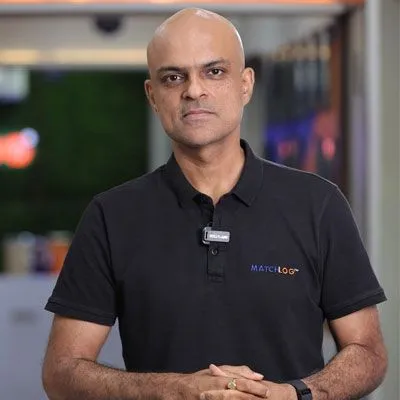
India’s logistics sector will require an additional 47 lakh workers by 2030, underscoring the urgent need for large-scale skilling reforms and creation of a digital-ready workforce, according to Ravikanth Yamarthy, CEO of the Logistics Sector Skill Council. He was addressing industry leaders at LogiMAT India 2026 recently.

Despite strong hiring momentum in 2025—marked by an estimated 10.8 per cent net employment growth in the second half—the sector faces widening gaps across freight, warehousing, transportation and supply chain functions. Yamarthy said industry-aligned certification programmes and hands-on training would be essential to bridge this demand–supply mismatch. The Logistics Sector Skill Council has partnered with LogiMAT India to promote workforce upskilling and position India as a global talent capital for logistics.

The third edition of LogiMAT India 2026 opened at the Bombay Exhibition Centre, Mumbai, featuring more than 350 global brands from 10 nations. The event aims to strengthen collaboration between policy, technology and industry to accelerate workforce transformation and supply chain competitiveness.

Bernhard Müller, Vice President, Landesmesse Stuttgart GmbH & Co. KG, said LogiMAT India has evolved into a strategic platform supporting India’s ambition to become a global supply chain hub, with strong international participation reflecting growing global interest.

Highlighting inclusion, Shyam Jagannathan, I.A.S., Director General of Shipping and Additional Secretary, Ministry of Ports, Shipping and Waterways, emphasised the need to expand employment opportunities for women in logistics, noting that investing in people and inclusivity would accelerate India’s growth narrative.

Key partners for LogiMAT India 2026 include Addverb Technologies, Jungheinrich India, Armstrong Dematic, MHE Bazar and Jay Storage Solutions, alongside over 15 international associations. The event features white papers, conferences on AI, automation and robotics, and dedicated pavilions showcasing innovations across logistics, shipping, freight and green transportation—reinforcing India’s push towards a skilled, future-ready logistics workforce.

India’s logistics sector will require an additional 47 lakh workers by 2030, underscoring the urgent need for large-scale skilling reforms and creation of a digital-ready workforce, according to Ravikanth Yamarthy, CEO of the Logistics Sector Skill Council. He was addressing industry leaders at LogiMAT India 2026 recently. Despite strong hiring momentum in 2025—marked by an estimated 10.8 per cent net employment growth in the second half—the sector faces widening gaps across freight, warehousing, transportation and supply chain functions. Yamarthy said industry-aligned certification programmes and hands-on training would be essential to bridge this demand–supply mismatch. The Logistics Sector Skill Council has partnered with LogiMAT India to promote workforce upskilling and position India as a global talent capital for logistics. The third edition of LogiMAT India 2026 opened at the Bombay Exhibition Centre, Mumbai, featuring more than 350 global brands from 10 nations. The event aims to strengthen collaboration between policy, technology and industry to accelerate workforce transformation and supply chain competitiveness. Bernhard Müller, Vice President, Landesmesse Stuttgart GmbH & Co. KG, said LogiMAT India has evolved into a strategic platform supporting India’s ambition to become a global supply chain hub, with strong international participation reflecting growing global interest. Highlighting inclusion, Shyam Jagannathan, I.A.S., Director General of Shipping and Additional Secretary, Ministry of Ports, Shipping and Waterways, emphasised the need to expand employment opportunities for women in logistics, noting that investing in people and inclusivity would accelerate India’s growth narrative. Key partners for LogiMAT India 2026 include Addverb Technologies, Jungheinrich India, Armstrong Dematic, MHE Bazar and Jay Storage Solutions, alongside over 15 international associations. The event features white papers, conferences on AI, automation and robotics, and dedicated pavilions showcasing innovations across logistics, shipping, freight and green transportation—reinforcing India’s push towards a skilled, future-ready logistics workforce.

Next Story
Infrastructure Urban

Eicher Delivers First 13.5 m Electric Intercity Sleeper Bus

Eicher Trucks & Buses, a business unit of VE Commercial Vehicles Ltd., has recently delivered its first 13.5 m electric intercity sleeper bus, marking a key milestone in India’s long-distance electric mobility segment. The first bus is being operated by LeafyBus, with plans to deploy 35 buses by March 2026 across high-demand intercity corridors in North India.The initial deployment will cover routes such as Delhi–Dehradun and Delhi–Lucknow, supporting LeafyBus’ expansion across environmentally sensitive and high-density travel corridors.Commenting on the partnership, Suresh Chettia..

Next Story
Infrastructure Urban

HCSS Showcases Unified Construction Platform at CONEXPO 2026

HCSS will recently present the next evolution of its connected construction management platform at CONEXPO-CON/AGG 2026, bringing together construction workflows, data and teams on a single platform across the entire project lifecycle. The event will be held from 3–7 March 2026 in Las Vegas, Nevada. HCSS will host two booths at the show, demonstrating how its integrated software ecosystem enables seamless collaboration between the office, field and shop, from bid stage through to project closeout. Steve McGough, President and CEO, HCSS, said, “For 40 years, we’ve done everything within..

Next Story
Building Material

Berger Paints Q3 Profit Declines Despite Volume Growth

Berger Paints India has reported a mixed performance for the quarter ended 31 December 2025, with healthy volume growth and margin improvement offset by softer demand conditions and cost pressures. On a consolidated basis, revenue from operations for the quarter stood at Rs 29,840 million, compared to Rs 29,751 million in the corresponding quarter last year, reflecting a marginal increase of 0.3 per cent. EBITDA (excluding other income) was Rs 4,710 million, slightly lower than Rs 4,717 million a year earlier. Net profit declined by 8.3 per cent to Rs 2,713 million from Rs 2,960 million. Sta..

Advertisement

Subscribe to Our Newsletter

Get daily newsletters around different themes from Construction world.

STAY CONNECTED

Advertisement

Advertisement

Advertisement

Open In App